
Sharofiddin Gadoev,
President of the Foundation for the Defense of Democracy in Central Asia
1. Women as a Factor of National Development: Between Tradition and Modernization
This report does not seek to examine the position of women in Tajikistan through the lens of the rhetoric of “gender oppression” that is widespread in the international policy discourse, nor does it advocate a radical transformation of traditional society. Its purpose is not to set the family against women’s professional fulfilment, to criticize religious or cultural norms, or, still less, to promote models of social development shaped under fundamentally different civilizational conditions.
Tajikistan possesses its own history, culture, and social structure, within which the family remains a foundational institution. It is the principal mechanism through which cultural traditions are transmitted, children are raised, and social stability is maintained. Any proposal in the field of social policy should therefore be assessed first and foremost in terms of whether it strengthens the family and creates the conditions necessary for its sustainable development.
At the same time, family values cannot be preserved unless families themselves enjoy adequate socioeconomic conditions. One of the most serious challenges facing Tajik society today is not the transformation of traditional culture as such, but large-scale involuntary labour migration. For many years, hundreds of thousands of Tajik citizens—and, during certain periods, more than one million—have been compelled to seek employment abroad, primarily in Russia. This has resulted in the prolonged separation of families, the redistribution of responsibilities among family members, psychological and economic strain, and a high degree of dependence of the national economy on external sources of income.
Under these conditions, women have in practice assumed a much broader range of responsibilities. They raise children, manage households, make a substantial share of decisions concerning family finances, and frequently engage in agriculture or small-scale entrepreneurship. Yet this expansion of responsibilities has not always been accompanied by a corresponding expansion of economic opportunities or access to resources.
The broader participation of women in economic life should therefore be understood not as a concession to external political pressure, but as an internal imperative of national development. Greater involvement of women in education, entrepreneurship, skilled employment, and public life can strengthen the national economy, reduce dependence on labour migration, and create the conditions necessary for the preservation of families themselves.
This does not imply the mechanical adoption of Western models of social organization. On the contrary, international experience demonstrates that modernization can follow multiple paths. A number of Asian states have succeeded in combining respect for cultural traditions and a strong role for the family and religion with the active participation of women in the economy, education, and public administration. Modernization does not require a society to abandon its own identity.
Misleading comparisons should also be avoided. Tajikistan is not a society in which women are entirely excluded from public life or denied access to education. The historical legacy of the twentieth century produced high levels of literacy, broad female participation in education and healthcare, and a degree of experience of women’s employment in the public sector. At the same time, the modern economy places new demands on human capital that cannot be met while only part of society’s existing potential is being utilized.
The position of women should therefore be understood primarily as a question of the effective use of human capital. In a country characterized by limited natural resources, rapid population growth, and continuing dependence on external labour migration, the development of human potential is becoming one of the principal foundations of long-term resilience. Women account for almost half of Tajikistan’s population, and the extent to which their educational, professional, and entrepreneurial potential is realized will play a major role in determining the country’s ability to sustain economic growth over the coming decades.
In assessing the position of women, particular attention should be paid not only to their role as independent participants in economic life, but also to their central role in the formation of family human capital. In most households, women play a decisive role in raising children, safeguarding their health, organizing everyday family life, making decisions concerning education, allocating household resources, and transmitting cultural values to the next generation.
Investment in women’s educational, professional, and entrepreneurial development therefore produces effects that extend far beyond a simple increase in the number of economically active workers. Improving a woman’s qualifications contributes to the development of the human capital of the entire family, broadens children’s educational opportunities, strengthens household economic resilience, and creates more favourable conditions for the long-term development of society.
For this reason, the report does not treat the expansion of women’s opportunities as an isolated objective of social policy. It regards it as one of the most important instruments for strengthening the family, developing human capital, and advancing the modernization of the state.
2. The Socioeconomic Position of Women in Contemporary Tajikistan
Women constitute nearly half of Tajikistan’s population, numbering approximately 5.3 million. At the same time, the country remains one of the youngest in Eurasia: the median age of women is around 23 years, while the total fertility rate exceeds three children per woman. Although high fertility supports continued population growth, it also places increasing pressure on the education system, healthcare services, and the labour market. Under these conditions, the effective utilization of human capital becomes particularly important.
One of Tajikistan’s key advantages is its high level of female literacy. Among women aged 15–24, the literacy rate exceeds 98%, while the expected years of schooling amount to approximately eleven years. The challenge, therefore, lies not in access to basic education but in the limited conversion of educational attainment into economic participation.
The labour market remains the most problematic area. According to international estimates, the female labour force participation rate stands at around 22%, compared to more than 55% for men. Even alternative national estimates based on different methodologies reveal the same overall pattern: women’s economic participation remains substantially lower than that of men. As a result, women account for less than one-third of the country’s total labour force.
At the same time, official female unemployment figures remain relatively low. However, these statistics do not accurately reflect the real situation. Most women without paid employment are not considered unemployed because they are not formally part of the labour force. According to World Bank estimates, approximately 69% of working-age women are not engaged in paid employment. Consequently, the central challenge is not unemployment in its conventional sense, but rather the limited participation of women in economic activity.
Even among employed women, a significant proportion work in the most vulnerable forms of employment, including family farming, the informal sector, and other low-paid occupations that frequently provide neither adequate social protection nor stable incomes. Nearly one-third of employed women fall into this category.
The situation of young women deserves particular attention. Nearly half of young women are neither in education, employment, nor vocational training. This means that a substantial share of the country’s human potential remains underutilized during the most productive stage of life, creating long-term constraints on economic development.
Another major obstacle is women’s limited economic autonomy. Although many women possess certain property rights within the household, fewer than one percent are sole owners of residential property. Similar constraints exist with regard to access to land and entrepreneurial activity. Only about one-quarter of formally registered enterprises include female ownership, and in most cases this involves joint rather than controlling ownership. Limited property rights significantly restrict women’s access to bank credit, business creation, and capital accumulation.
As a result, women’s contribution to the national economy remains well below their actual potential. According to World Bank estimates, women’s aggregate contribution to gross national income is approximately four and a half times lower than that of men. This reflects the combined effects of lower labour force participation, shorter periods of paid employment, and persistent income disparities.
At the same time, the analysis suggests that most of the identified constraints stem not from a lack of education or ability among women, but from institutional and economic barriers that prevent the fuller realization of existing human capital. Removing these barriers represents one of the most accessible domestic sources of accelerating Tajikistan’s socioeconomic development.
The principal challenge facing contemporary Tajikistan, therefore, is not that women are insufficiently active. Millions of women already perform an enormous amount of economically and socially valuable work on a daily basis. Much of this work, however, remains unpaid, informal, or institutionally unrecognized. The objective of public policy should therefore not be to increase the volume of women’s work, but rather to make their existing contribution more productive, better remunerated, and more effectively protected.
3. A Pragmatic Model for Unlocking Women’s Potential
The analysis presented above demonstrates that the principal barriers to women’s participation in Tajikistan’s socioeconomic development do not stem from a lack of education or professional capabilities. Rather, they result from an economic and social policy framework that fails to make effective use of the country’s existing human capital. A large proportion of women receive an education and perform substantial economic and social functions within their families and local communities, yet much of this contribution remains only partially integrated into the modern economy and is frequently unpaid, informal, or excluded from systems of social protection.
The strategic objective of public policy should therefore not be to fundamentally transform the country’s traditional social model, but to adapt it to the realities of a modern economy. The challenge is not to set the family against women’s professional activity, but to create a system in which women’s economic participation reinforces family stability, improves household prosperity, and enhances the resilience of the national economy.
The approach proposed in this report may be described as a model of pragmatic, family-centred modernization. It rests on several fundamental principles.
First, the family should be regarded as the primary social institution and the principal environment in which human capital is created and reproduced. Public policy should therefore aim not to replace the family with state institutions, but to strengthen its capacity to fulfil its social, educational, and economic functions under contemporary conditions.
Second, women’s participation in the economy should not be viewed as an end in itself or as an ideological project. Rather, it should be understood as a means of strengthening the family itself. At a time when large numbers of men are compelled to seek employment abroad and the country requires new domestic sources of economic growth, expanding women’s opportunities for education, employment, and entrepreneurship becomes an important instrument for improving household welfare and reducing dependence on external labour migration.
Third, the proposed model rejects the false dichotomy between family life and professional fulfilment. For most women, life consists of several distinct stages during which the balance between family responsibilities and economic activity inevitably changes. Public policy should therefore avoid imposing a single employment model and instead create conditions that enable women to move freely between these stages without losing professional skills, income, or access to social protection.
Rather than promoting uninterrupted full-time employment throughout the working life, the model advocates a combined pattern of economic participation, allowing women to alternate between periods of childbearing and childcare, family responsibilities, paid employment, entrepreneurship, education, and professional retraining. Flexible, part-time, remote, and project-based forms of work should be recognized as integral components of the modern labour market rather than as exceptional arrangements.
Fourth, public policy should recognize the economic value of women’s existing activities. Today, many women are already engaged in family farming, handicraft production, trade, household services, and home-based businesses. However, much of this activity remains within the informal economy, limiting access to credit, pension systems, health insurance, and other forms of social protection. Consequently, one of the central policy priorities should be not the creation of entirely new forms of employment, but the gradual formalization of existing economic activity through simple, accessible, and low-cost legal mechanisms.
Fifth, investment in women should be understood as an investment in the human capital of the family. In traditional societies, the family remains the principal social and economic unit. Improvements in women’s education, professional skills, and economic opportunities therefore generate benefits not only for women themselves, but also for their children, other family members, and society as a whole. For this reason, unlocking women’s potential should be regarded as one of the most effective long-term public investments available to the state.
The proposed model ultimately rests on the recognition that human capital constitutes Tajikistan’s most valuable strategic resource. The country possesses a young population, relatively high levels of literacy, and considerable demographic potential. Yet these advantages cannot be fully realized without making more effective use of the intellectual, professional, and entrepreneurial capacities of women. Investment in women’s human capital should therefore be understood not merely as an element of social policy, but as a central component of Tajikistan’s long-term economic development strategy.
4. Practical Human Capital: Employment-Oriented Education
4.1. Transforming the Educational Model
While the first half of the twentieth century was characterized by the eradication of illiteracy and the second by the expansion of universal secondary and higher education, the current stage of development requires a different priority: the formation of practical, market-oriented professional competencies. In Tajikistan, the principal challenge is no longer women’s access to basic education, but rather the insufficient alignment between the education system and the needs of a modern economy.
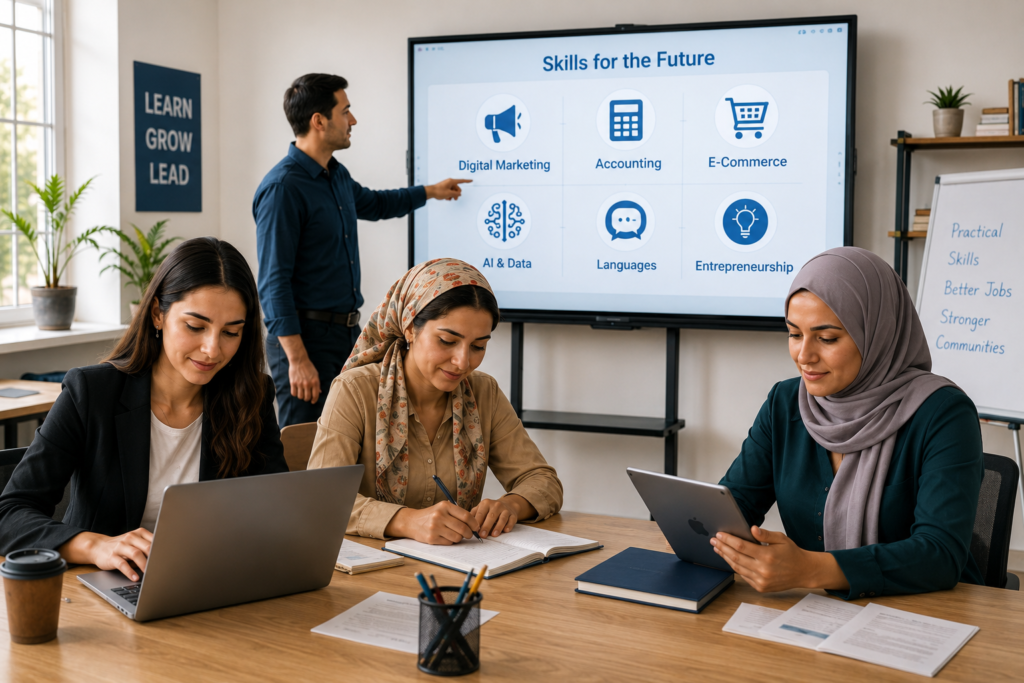
Educational policy should therefore shift its emphasis from the acquisition of formal qualifications to the development of practical skills that enable women to enter the labour market more rapidly, establish their own businesses, or engage in remote employment. In this context, short-term vocational training programmes lasting from several weeks to several months deserve particular attention, as they allow participants to combine learning with family responsibilities.
Such programmes may include training in accounting, digital marketing, e-commerce, hospitality and tourism, healthcare support services, graphic design, foreign languages, software development, marketplace management, and other occupations that are in demand both within Tajikistan and in the growing international market for remote services.
Priority should also be given to expanding regional training infrastructure, online learning platforms, and mobile vocational training centres, enabling women to acquire new qualifications without prolonged separation from their families or communities.
Policy Measures
- Establish a national system of short-term professional certification recognized by employers.
- Introduce educational voucher programmes for women returning to economic activity after childbirth or extended career interruptions.
- Create regional centres for digital skills and vocational training.
- Expand free online courses focused on practical labour market competencies.
- Strengthen partnerships between educational institutions and employers in the design and delivery of vocational training programmes.
Ultimately, modern education policy should be assessed not by the number of diplomas awarded, but by its contribution to building human capital capable of supporting sustainable family development. From this perspective, investing in women’s practical skills represents an investment extending across generations, as women play a decisive role in shaping their children’s educational trajectories and in fostering the everyday culture of human capital development within the family.
4.2. Lifelong Learning as a Continuous Process
One of the defining characteristics of today’s economy is the rapid pace at which professional skills and labour market requirements evolve. As a result, education can no longer be confined to the years spent in school or university.
The model proposed in this report is based on the principle of lifelong learning, whereby education and professional development accompany individuals throughout their lives. This approach is particularly important for women, whose life trajectories often include periods of childbirth, childcare, family responsibilities, and temporary reductions in labour market participation.
Public policy should therefore create conditions that enable women to return to education whenever necessary, acquire new qualifications, or upgrade existing skills without the need to undertake lengthy full-time academic programmes.
Such an approach would substantially reduce the loss of professional competencies associated with career interruptions, improve labour market mobility, and accelerate the adaptation of the workforce to technological and economic change.
4.3. Prioritizing Short-Term Vocational Training
Particular emphasis should be placed on expanding short-term vocational training programmes lasting from several weeks to several months.
This format is especially well suited to the needs of women who combine education with family responsibilities. Unlike conventional university programmes, short-term training enables participants to acquire practical, job-ready skills within a relatively short period of time, facilitating either rapid entry into the labour market or the establishment of a small business.
Priority areas for such programmes may include:
- accounting;
- digital marketing;
- e-commerce;
- marketplace management;
- hospitality and tourism services;
- entrepreneurship and small business management;
- financial literacy;
- digital literacy;
- foreign languages;
- translation and interpretation;
- graphic design;
- software development and programming;
- social media management;
- healthcare support services;
- early childhood education;
- high-value-added crafts and artisanal production.
The content of these programmes should be regularly updated to reflect changing labour market demands and emerging economic opportunities, ensuring that vocational education remains closely aligned with the needs of employers, entrepreneurs, and the broader economy.
4.4. Developing Digital Skills
The digital transformation of the economy will play an increasingly important role in Tajikistan’s development over the coming years. For a country with a predominantly rural population, digital technologies offer new opportunities to participate in economic life without the need for large-scale internal or international migration.
Strengthening women’s digital competencies enables them to:
- engage in remote employment;
- obtain freelance work and online contracts;
- market and sell products through domestic and international e-commerce platforms;
- provide accounting and administrative services;
- deliver professional consulting services;
- work in fields such as graphic design, translation, software development, and online education.
In this context, digital skills should be viewed not merely as an additional qualification but as an important instrument for strengthening family resilience. By enabling women to generate income while remaining within their communities, digital employment helps reduce the social costs associated with prolonged labour migration and supports greater family cohesion.
4.5. Expanding Regional Access to Education
Another significant challenge is the geographical concentration of educational opportunities. For many women, particularly those living in rural areas, relocating to a major city for extended periods of study is neither economically nor socially feasible.
Public policy should therefore prioritize the development of a decentralized educational infrastructure capable of delivering high-quality training across the country.
Such a system may include:
- district-level vocational training centres;
- mobile training units serving remote communities;
- online and distance learning programmes;
- the use of school and college facilities outside regular teaching hours for adult education;
- partnerships with local employers to design and deliver training programmes;
- workplace-based vocational training and apprenticeship schemes.
A decentralized model of vocational education would significantly expand access to professional training while requiring comparatively modest public investment. At the same time, it would reduce regional disparities in educational opportunities and make skills development more accessible to women whose family responsibilities limit their ability to relocate.
5. Women’s Economic Agency: Entrepreneurship and Family Business
5.1. The Family as an Economic Actor
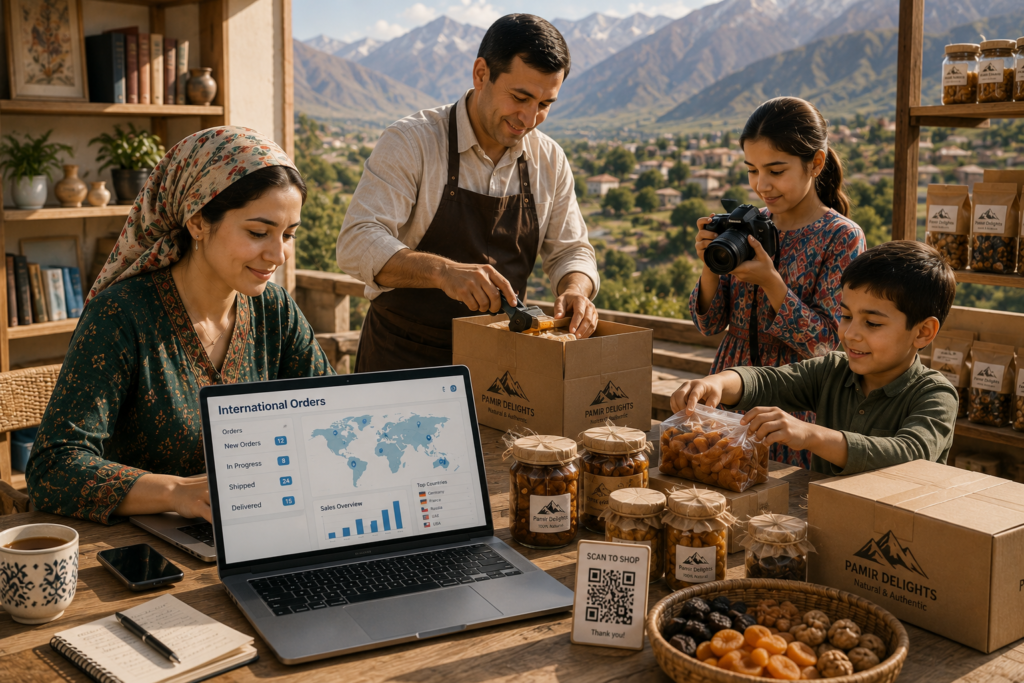
In contemporary Tajikistan, small and family-owned businesses represent one of the most accessible pathways for women’s economic participation. For a significant share of the population, entrepreneurship provides an opportunity to generate income while fulfilling family responsibilities, making it particularly well suited to the country’s social and demographic realities.
Public policy should therefore extend beyond improving access to finance and focus on building a comprehensive entrepreneurial ecosystem. Such an ecosystem should combine business advisory services, entrepreneurship training, mentoring programmes, access to digital marketplaces, and the development of professional support networks capable of assisting entrepreneurs throughout the various stages of business development.
Particular attention should be given to Islamic financial instruments and other financing mechanisms that are compatible with the country’s cultural and religious context. Expanding access to Sharia-compliant financial products would broaden opportunities for aspiring entrepreneurs while increasing public confidence in state-supported business development programmes.
Family entrepreneurship deserves special policy support because it simultaneously promotes job creation, strengthens family cohesion, and enhances household economic resilience. Rather than viewing entrepreneurship solely as an individual undertaking, public policy should recognize the family enterprise as an important economic institution capable of generating sustainable income, transferring professional skills across generations, and contributing to local economic development.
Policy Measures
- Expand preferential microfinance programmes for family businesses.
- Develop Islamic financial products tailored to micro- and small enterprises.
- Introduce state-backed guarantees for small business loans.
- Provide temporary tax incentives for newly established family enterprises.
- Establish mentoring programmes for first-time entrepreneurs.
- Create women’s business incubators offering integrated business development services.
The expansion of family entrepreneurship does not assign women a new social role. Rather, it increases the productivity and economic value of the role they already perform within most households. Public policy should therefore seek not to replace traditional family-based economic arrangements with entirely new models, but to strengthen their productivity, resilience, and long-term competitiveness under the conditions of a modern economy.
5.2. Family Entrepreneurship as an Alternative to Labour Migration
Family entrepreneurship represents one of the most promising mechanisms for strengthening Tajikistan’s domestic economy. Unlike large-scale investment projects, it requires relatively modest start-up capital, can be developed in virtually every region of the country, and makes effective use of the resources, skills, and social capital already available within households.
Family enterprises offer several important advantages. They enable a more flexible distribution of responsibilities among family members, facilitate the combination of income-generating activities with childcare and the care of elderly relatives, and encourage the intergenerational transfer of professional knowledge and entrepreneurial experience.
For women, family entrepreneurship provides an opportunity to expand their economic participation gradually without requiring them to abandon family responsibilities. At the same time, it creates additional domestic employment opportunities for men, thereby reducing the economic incentives for long-term labour migration.
It is important to emphasize that family entrepreneurship should not be viewed as an alternative to wage employment. A balanced economy requires both forms of economic activity. Nevertheless, the expansion of family-owned enterprises has the potential to become one of the most effective mechanisms for fostering a resilient middle class, particularly in small towns and rural communities where opportunities for formal employment remain limited.
5.3. From Exporting Labour to Exporting Goods and Services
For several decades, Tajikistan’s principal export has effectively been its labour force. Remittances from migrant workers have played an essential role in sustaining household consumption and supporting macroeconomic stability. However, an economic model based primarily on labour migration neither promotes domestic capital accumulation nor provides a sustainable foundation for long-term development.
Over time, public policy should facilitate a gradual transition toward a development model based on the export of goods and services produced within Tajikistan. In this transition, family entrepreneurship can play a central role.
Digital technologies increasingly enable even small businesses to reach customers well beyond their local markets. Family workshops can market traditional handicrafts through e-commerce platforms, agricultural households can export higher-value processed products, and professionals working remotely can provide services to international clients without leaving the country.
Under such a model, export revenues are generated not through the migration of workers, but through the production of goods, knowledge, and services within Tajikistan itself. This approach simultaneously strengthens family cohesion, promotes domestic economic development, and reinforces the resilience of local communities while reducing dependence on external labour markets.
5.4. Building an Entrepreneurial Ecosystem Instead of Isolated Incentives
International experience demonstrates that preferential loans alone rarely lead to the sustainable development of small businesses. Far more effective are comprehensive support systems that accompany entrepreneurs throughout the entire business life cycle—from the initial idea to market expansion and long-term growth.
Such an approach requires the creation of a fully developed entrepreneurial ecosystem that combines business education, legal and accounting support, assistance with business planning, advice on taxation and regulatory compliance, guidance on digital commerce, and support for entering new domestic and international markets.
Particular attention should be devoted to strengthening regional business support infrastructure. District-level business development centres could simultaneously serve as training facilities, advisory hubs, and intermediaries linking entrepreneurs with financial institutions, government development agencies, and potential business partners.
The design of financial support mechanisms should also take into account the country’s cultural and religious context. Expanding Islamic banking and Islamic microfinance would improve access to financial resources for a broader segment of the population while increasing confidence in public entrepreneurship support programmes.
5.5. Strategic Priorities for Public Policy
The development of a sustainable family entrepreneurship sector requires a coherent set of mutually reinforcing policy measures.
First, the government should establish a dedicated national programme for family entrepreneurship, specifically targeting businesses created and managed by multiple members of the same household.
Second, procedures for registering small businesses and self-employed entrepreneurs should be substantially simplified through digitalization and the reduction of administrative burdens.
Third, the existing microfinance system should be expanded and complemented by Islamic financial instruments, state-backed guarantees for small business loans, and mentoring programmes designed to support first-time entrepreneurs during the early stages of business development.
Fourth, public policy should actively promote digital entrepreneurship by providing training in e-commerce, supporting participation in online marketplaces, developing national digital trading platforms, and facilitating access to international markets for products and services created by Tajik entrepreneurs.
Finally, targeted support should be provided for the establishment of family cooperatives in agriculture, handicrafts, tourism, and the service sector. Such cooperatives would enable several families to pool their resources, increase productivity, reduce business risks, and undertake projects that would be difficult to implement individually.
6. Formalizing the Family Economy and Promoting Flexible Employment Models
6.1. From Informal Employment to Protected Economic Activity
One of the defining characteristics of Tajikistan’s economy is the large share of informal employment. Women play a particularly significant role within this sector. In many cases, they are already actively engaged in the production of goods and the provision of services, yet their economic activities take place outside the formal economy and are largely excluded from systems of social protection.
Women are involved in agricultural production, food processing, textile and handicraft manufacturing, small-scale trade, household services, childcare, eldercare, and a wide range of home-based economic activities. Much of this work generates income for the household, yet it remains legally unregistered.
As a consequence, these women are often excluded from pension systems, health insurance, formal credit markets, and most government programmes designed to support entrepreneurship. Moreover, much of this economic activity is not reflected in official statistics, despite making a substantial contribution to household welfare and local economies.
Public policy should therefore focus not on creating entirely new employment opportunities for women, but on recognizing, formalizing, and supporting the economic activities they are already performing.
6.2. Formalization Should Create Incentives Rather Than New Barriers
In many countries, efforts to reduce informality have relied primarily on stricter regulation and more intensive tax enforcement. Such approaches have rarely produced sustainable results because they are often perceived by citizens as imposing additional burdens rather than creating new opportunities.
A more promising strategy for Tajikistan is to reverse this logic. Formal registration of economic activity should provide tangible benefits instead of merely introducing new administrative obligations.
Women who register a small business or obtain self-employed status should gain access to concrete advantages, including government support programmes, bank financing, pension schemes, health insurance, vocational training, and digital public services.
The availability of these practical benefits would become the principal incentive encouraging the voluntary transition from the informal economy to the formal sector.
6.3. A Modern Framework for Self-Employment
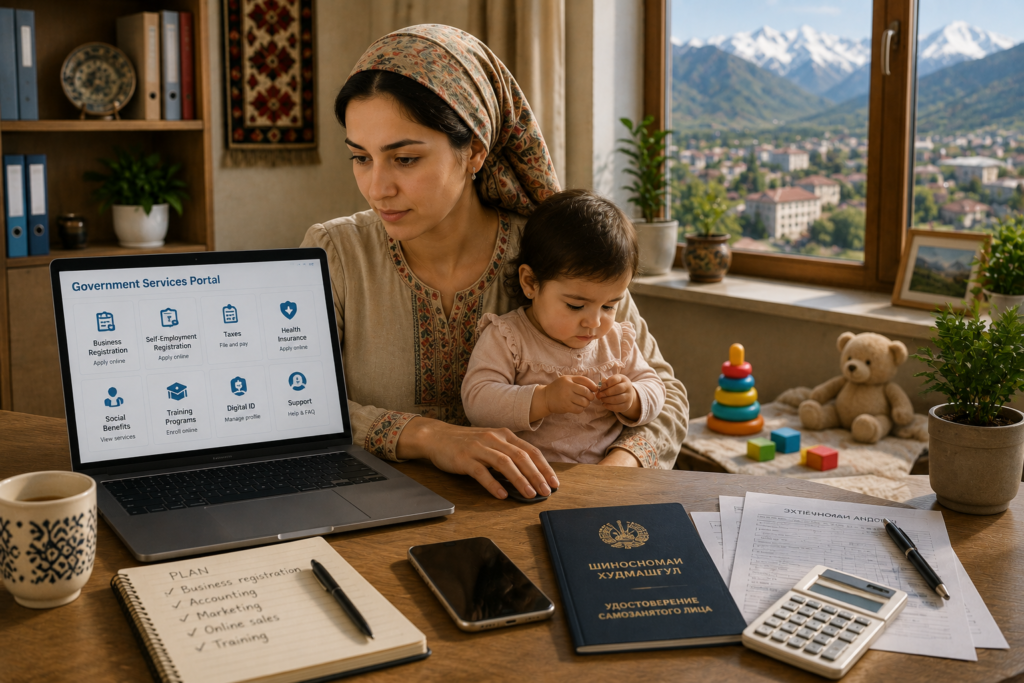
One of the key instruments for implementing this approach is the development of a modern legal framework for self-employment.
Registration should be as simple and accessible as possible. It should take only a few minutes, be conducted primarily through digital platforms, and require neither complex reporting procedures nor significant financial costs.
A dedicated tax regime should be introduced for self-employed individuals, featuring minimal administrative requirements and either fixed contributions or straightforward rules for calculating mandatory payments.
At the same time, registration should automatically connect self-employed workers to a system of basic social protection. Even modest regular contributions should generate pension entitlements, provide access to health insurance, and establish an official credit history, thereby improving future access to financial services.
Such a framework would enable a substantial share of the existing family economy to be gradually integrated into the formal economic system without imposing excessive administrative burdens or discouraging entrepreneurial initiative.
6.4. Flexible Employment as the New Norm
The traditional labour market model, based on uninterrupted full-time employment throughout an individual’s working life, is becoming increasingly inconsistent with both the realities of a modern economy and the life cycle of contemporary families.
This is particularly true for women, whose professional careers often alternate with periods of childbirth, childcare, and the care of other family members.
Public policy should therefore recognize flexible forms of employment not as exceptional arrangements, but as legitimate and integral components of a modern labour market.
These forms include part-time employment, remote work, project-based contracts, seasonal employment, self-employment, and family entrepreneurship.
Advances in digital technologies make such employment models increasingly viable. In many occupations, productive work no longer requires permanent presence at a traditional workplace, while flexible schedules make it considerably easier to combine professional responsibilities with family life.
Expanding opportunities for flexible employment is especially important in rural areas, where access to conventional wage employment remains limited. By enabling women to remain economically active without leaving their communities or sacrificing family responsibilities, flexible employment contributes simultaneously to household resilience, local economic development, and more effective utilization of the country’s human capital.
6.5. The Family Life Cycle and Continuous Economic Participation
The model proposed in this report is based on the understanding that women’s participation in economic life should not be viewed as a continuous linear process. At different stages of life, the priorities of the family naturally evolve, and public policy should be designed to accommodate these changing circumstances.
Periods devoted to childbirth and childcare should not result in a permanent interruption of a woman’s professional development. Women should be able to reduce their workload temporarily, undertake additional training, return to employment through flexible arrangements, establish their own businesses, or transition into new occupations without losing previously acquired skills and professional experience.
Such an approach eliminates the false choice between family responsibilities and professional fulfilment. Instead, public policy should facilitate smooth transitions between different stages of life while maintaining individuals’ long-term connection to the economy.
This model simultaneously strengthens family resilience and enables the more effective utilization of the country’s human capital by ensuring that temporary family responsibilities do not become permanent barriers to economic participation.
6.6. Strategic Directions for Public Policy
The successful implementation of this model requires a coordinated set of mutually reinforcing policy measures.
First, a simple and accessible legal framework for self-employment should be established, based on fully digital registration procedures and minimal administrative requirements.
Second, all registered self-employed individuals should be automatically integrated into basic social protection systems, including pension schemes and health insurance.
Third, government programmes supporting small business development and vocational training should be made equally accessible to self-employed individuals engaged in small-scale family economic activities, rather than being limited exclusively to formally registered companies.
Fourth, labour legislation should be modernized to expand opportunities for part-time, remote, and project-based employment while maintaining appropriate levels of social protection for workers.
Fifth, employers should be encouraged to create flexible employment opportunities for parents of young children, including remote work arrangements, flexible working hours, and individualized work schedules.
Finally, the continued development of digital public services should become a policy priority. Citizens should be able to register businesses, pay taxes, access government support programmes, and participate in training and professional development through integrated digital platforms, reducing the need for repeated visits to government offices and lowering administrative barriers to economic participation.
7. Conclusion
The model proposed in this report is founded on a simple yet fundamental premise: modernization and the preservation of traditional values are not mutually exclusive. On the contrary, under contemporary conditions they can reinforce one another. An economically resilient family serves simultaneously as the most reliable guardian of cultural continuity and the most effective environment for the creation and transmission of human capital.
Within this framework, women occupy a central position. They are viewed neither as passive recipients of social protection nor as independent economic actors positioned in opposition to the family. Rather, women are recognized as key participants in the family economy and as the principal architects of the human capital of future generations. Through their education, professional development, entrepreneurial engagement, and participation in household economic decision-making, women make a decisive contribution to strengthening family welfare, improving the quality of human capital, and creating new sources of sustainable domestic economic growth.
Accordingly, unlocking women’s potential should not be understood as an externally imposed ideological agenda or as an attempt to replicate foreign models of social organization. Instead, it should be recognized as a national development strategy rooted in Tajikistan’s own social realities and development priorities. Its objectives are to strengthen the family, reduce dependence on external labour migration, expand domestic entrepreneurship, and foster an economy driven by knowledge, initiative, and the productive capacities of its own citizens.
A family-centred model of modernization offers a framework through which respect for cultural and religious traditions can be reconciled with the demands of a modern economy. In this sense, expanding opportunities for women is not an alternative to the traditional family but one of the essential conditions for its long-term resilience and prosperity in the twenty-first century.
