
Analytical Group of the Foundation for the Defense of Democracy in Central Asia
Introduction
For more than three decades following the end of the Cold War, democratic movements across Central Asia developed their international strategies on the assumption that the promotion of democracy and human rights would remain a durable priority of Western foreign policy. This assumption shaped not only their engagement with foreign governments and international organizations but also the internal development of the movements themselves.
Within this framework, support for independent media, human rights organizations, civil society initiatives, and democratic opposition movements was regarded as a long-term commitment of the United States, the European Union, and other democratic countries. Such support extended well beyond financial assistance and expert cooperation. It also included diplomatic backing, sanctions against authoritarian regimes, and the provision of political asylum to activists, journalists, and political leaders forced to flee their home countries.
In recent years, however, the international political landscape has undergone significant change. Across much of the Western world, political forces advocating a fundamental reassessment of foreign policy priorities have gained influence. Despite their ideological differences, these actors share several common objectives: concentrating public resources on domestic challenges, reducing external expenditures, tightening immigration policies, and pursuing international engagement primarily through the lens of national interests rather than universal values.
These shifts are already having a direct impact on democratic movements operating under authoritarian rule. Funding for numerous international assistance programs has been reduced, the priorities of foreign ministries and development agencies have been revised, political asylum has become more difficult to obtain, and in some cases Western governments have begun normalizing relations with regimes that had previously faced diplomatic isolation.
For Central Asia’s democratic forces, these developments represent far more than a temporary setback. They signal the emergence of a fundamentally new international environment. Many of the mechanisms of cooperation with Western partners that had functioned for decades can no longer be taken for granted. As a result, democratic movements must reconsider not only their methods of international engagement but also their broader strategic approach—including how they position themselves internationally, how they engage foreign governments, what issues they place on the international agenda, and how they make the case for continued support for democratic transformation.
This report seeks to analyze these changes, assess their implications for democratic movements in Central Asia, and propose possible strategies for adapting to the new international environment. It proceeds from the premise that changing priorities among Western governments do not automatically imply the abandonment of support for democratic transformation. Rather, they signal a shift in the forms, motivations, and conditions of that support. Consequently, democratic forces must also rethink their own strategy—moving beyond an approach centered primarily on appeals to universal democratic values toward one that demonstrates how democratic transformation can advance the strategic interests of their international partners as well as the long-term interests of Central Asian societies themselves.
1.1. The Liberal International Order After the Cold War
The end of the Cold War and the collapse of the Soviet Union marked the beginning of what many scholars have described as the era of the Liberal International Order (LIO). The disappearance of global ideological confrontation, the unprecedented predominance of the United States and its allies, and the continued expansion of liberal democracy fostered the widespread expectation that the international system would evolve toward the gradual universalization of the liberal-democratic model of governance.
Perhaps the most influential expression of this optimism was Francis Fukuyama’s concept of the “end of history,” which presented liberal democracy not merely as one possible form of political organization but as the most viable and historically sustainable model for modern states. Although Fukuyama’s thesis has since been extensively debated and refined, it accurately captured the intellectual climate of the early 1990s.
At the same time, the concept of the Liberal International Order gained increasing prominence in both academic and policy circles, particularly through the work of G. John Ikenberry. According to this perspective, the stability of the international system depends not only on the balance of power but also on the expansion of democratic institutions, the rule of law, economic interdependence, multilateral cooperation, and effective international organizations.
Within this framework, support for democratic transformation gradually became an important instrument of Western foreign policy. As Thomas Carothers has observed, by the mid-1990s democracy promotion had evolved into a distinct field of international engagement for both the United States and European countries. It encompassed assistance for political reform, independent media, civil society organizations, human rights advocacy, electoral processes, and judicial independence.
It was within this broader international environment that most contemporary democratic movements across the post-Soviet space—including those in Central Asia—emerged and developed. Despite the region’s limited progress toward democratization, Western governments and international donors generally assumed that the gradual strengthening of civil society, broader political participation, and the consolidation of independent public institutions would eventually create the conditions for political liberalization.
As a result, a relatively stable pattern of cooperation developed between Central Asia’s democratic forces and their international partners. This framework rested on long-term international assistance programs, support for political exiles, cooperation with independent think tanks and non-governmental organizations, and sustained Western attention to human rights and democratic development in the region. For many opposition groups and civil society initiatives, this international environment became not merely a favorable external condition but one of the fundamental assumptions underlying their long-term strategic planning.
For roughly three decades after the end of the Cold War, therefore, Central Asia’s democratic movements operated within an international order in which support for democracy was widely regarded as a stable and institutionalized component of Western foreign policy. Yet by the beginning of the twenty-first century, a series of structural developments had begun to erode the foundations of this model. Their cumulative effect has transformed the international environment and made it necessary to rethink many of the assumptions that shaped democratic strategies during the preceding era.
1.2. Why the Liberal Consensus Began to Erode
Although the Liberal International Order established after the Cold War was widely regarded for many years as the new normal of international politics, its foundations gradually began to weaken in the early twenty-first century. No single event proved decisive. Rather, a combination of political, economic, and geopolitical developments progressively reshaped Western perceptions of their countries’ role in world affairs.
Among the most significant turning points were the military campaigns in Afghanistan and Iraq. Despite their initial successes, these interventions demonstrated that externally driven state-building and democratization efforts were far more costly, complex, and uncertain than many policymakers had anticipated. Attempts to combine military operations with ambitious programs of political transformation produced mixed results and ultimately generated growing skepticism among both political elites and the broader public across the West.
The mixed legacy of the Arab Spring further reinforced these doubts. While the wave of popular uprisings was initially welcomed as evidence of the universal appeal of democratic aspirations, subsequent developments in several countries demonstrated that the collapse of authoritarian regimes did not necessarily lead to the establishment of stable democratic institutions. In many cases, political liberalization was accompanied by internal conflict, economic disruption, or the growing influence of radical actors.
At the same time, Western societies were confronted with an increasing number of domestic challenges. The global financial crisis of 2008, rising public debt, widening social inequality, the migration crisis of the mid-2010s, the COVID-19 pandemic, and the economic disruptions that followed fundamentally altered public priorities. Voters increasingly expected their governments to focus public resources on domestic concerns rather than on ambitious projects of political transformation abroad.
The broader international environment also changed profoundly. Whereas the 1990s were characterized by confidence in the global expansion of liberal institutions, the twenty-first century has been increasingly shaped by renewed great-power competition. The rapid rise of China, Russia’s return to a confrontational foreign policy, accelerating technological rivalry, and growing competition over critical resources and strategic transport corridors have once again placed national security and geopolitical competition at the center of international affairs.
As a consequence, Western governments have increasingly come to view foreign policy through the prism of their own strategic interests and domestic priorities. This shift has not implied a rejection of democratic values themselves. Rather, democracy promotion has gradually ceased to be regarded as a sufficient justification for sustained political engagement in other countries.
The erosion of the liberal consensus should therefore be understood not as the result of a single political event or the electoral victory of particular governments, but as the cumulative outcome of profound structural changes in both the international system and Western societies. As these changes unfolded, democracy promotion gradually lost its status as an autonomous foreign policy priority, giving way to concerns centered on security, economic resilience, and the protection of national interests. It is this transformation that has created the new international environment in which Central Asia’s democratic movements now operate.
1.3. From Democracy Promotion to Great-Power Competition
The transformation of the international environment has not led Western governments to abandon democratic values. What has changed is their place within the hierarchy of foreign policy priorities. Whereas democracy promotion was often treated during the first decades after the Cold War as an objective in its own right, it is now increasingly subordinated to broader strategic concerns, including national security, economic resilience, and geopolitical competition.
The principal driver of this shift has been the return of great-power rivalry. China’s rapid rise, Russia’s war against Ukraine, growing tensions over Taiwan, persistent instability in the Middle East, and the increasing fragmentation of the global economy have once again placed strategic competition at the center of international politics. As a result, Western governments increasingly assess international partnerships in terms of their contribution to concrete security and geopolitical objectives.
At the same time, the very concept of security has expanded considerably. Traditionally associated primarily with military threats, it now encompasses the resilience of supply chains, energy security, access to critical raw materials, the development of strategic transport corridors, cybersecurity, migration management, technological sovereignty, and the protection of critical infrastructure. Consequently, foreign policy has become increasingly intertwined with questions of domestic economic resilience and long-term competitiveness.
These developments have also reshaped approaches to international cooperation. Countries possessing strategic geographic locations, critical natural resources, significant transit potential, or the capacity to diversify global supply chains have acquired growing geopolitical importance. Relations with such states are therefore increasingly guided by pragmatic assessments of mutual interests, even where their domestic political systems fall short of liberal democratic standards.
This trend is particularly evident in the case of Central Asia. The region is increasingly viewed as a critical link in Eurasian connectivity, a source of strategically important raw materials, an arena of competition with both Russia and China, and a key component of regional security in light of developments in Afghanistan. These considerations have objectively strengthened Western interest in engaging Central Asian governments regardless of the nature of their political regimes.
This does not signify a rejection of democracy as a normative value. Rather, it reflects a shift in the logic of foreign policymaking. Support for democratic transformation continues where it advances broader strategic objectives. Democracy promotion, however, is no longer sufficient on its own to justify sustained political engagement or long-term financial commitments.
Contemporary international politics is therefore shaped less by a simple confrontation between democracy and authoritarianism than by competition over security, critical resources, technological leadership, and strategic influence. In this environment, support for democratic forces is no longer an autonomous pillar of foreign policy but increasingly forms part of a broader framework of national interests. Consequently, the effectiveness of democratic movements will depend to a growing extent on their ability to demonstrate how the political transformations they advocate contribute to the strategic objectives of their international partners.

2. Implications of the Changing International Environment for Central Asia’s Democratic Movements
The transformation of the international environment has inevitably affected the position of democratic movements across Central Asia. Its consequences extend far beyond the reduction of individual assistance programs or changes in the policies of particular governments. Rather, they reflect the gradual transformation of the entire framework through which democratic actors in the region engage with their international partners.
During the three decades following the end of the Cold War, an extensive international support infrastructure for democratic transformation emerged across Central Asia. It encompassed government-funded development assistance programs, international organizations, private foundations, universities, research institutes, human rights organizations, independent media outlets, and professional expert communities. This ecosystem played a crucial role in training new generations of civic and political leaders, strengthening independent analytical capacity, supporting educational initiatives, promoting civil society, and preserving international networks even as authoritarian governments intensified pressure on democratic actors.
That infrastructure has not disappeared. It is, however, operating under fundamentally different conditions. Donor governments are reassessing both their foreign policy priorities and budgetary commitments, redirecting resources toward areas more directly linked to national security, geopolitical competition, migration management, energy security, and economic resilience. These shifts are, in turn, reshaping the priorities of many international organizations, foundations, and research programs that depend—directly or indirectly—on public funding.
As a consequence, the institutional resilience of the democratic sector itself has begun to weaken. Long-term programs are increasingly being scaled back, funding for research and educational initiatives is declining, some organizations have been forced to cease operations, experienced professionals are leaving the sector, and opportunities for long-term strategic planning are becoming more limited. For many democratic organizations, the central challenge is no longer launching new initiatives but preserving their institutional capacity and accumulated expertise.
Significant changes are also affecting the political exile community. For many years, Western countries regarded the provision of asylum to persecuted politicians, journalists, and civil society leaders as an integral component of their support for democratic transformation. Today, however, stricter immigration policies, growing public concern over migration, and broader efforts to tighten asylum systems have begun to alter this approach. In many countries, obtaining international protection has become a more complex and time-consuming process, while political exiles are increasingly treated within the broader framework of migration management rather than as a distinct category of democratic actors.
The international political position of democratic movements has also evolved. Whereas they were once widely viewed by Western governments as the principal interlocutors on issues of democratization in the region, greater priority is now being given to direct engagement with the governments of Central Asian states. This reflects the growing importance of strategic objectives such as the development of transport corridors linking Europe and Asia, secure access to critical raw materials, regional security, migration management, and balancing the influence of Russia and China. As a result, democratic movements no longer enjoy a privileged position within Western engagement with the region and instead operate in a far more competitive international environment.
Taken together, these developments suggest that the traditional strategy pursued by many democratic movements is gradually losing its effectiveness. For decades, it rested on the assumption that a commitment to democratic values and human rights would, by itself, ensure sustained Western attention and long-term international support. In the new international environment, however, this assumption is no longer sufficient. Democratic movements must increasingly take into account the evolving priorities of their international partners and demonstrate how their own agendas contribute to broader objectives related to security, economic development, and geopolitical competition.
The most important consequence of these changes is therefore not the abandonment of support for democratic transformation by Western countries, but a redefinition of the principles on which that support is based. For Central Asia’s democratic movements, this requires adapting to a new model of international engagement—one in which success depends not only on a demonstrated commitment to democratic values, but also on the ability to show how democratic transformation can contribute to addressing the most pressing challenges of contemporary international politics.
3. A National Model of Democratic Transformation
The changing international environment requires Central Asia’s democratic movements not only to reconsider how they engage with international partners but also to rethink the very concept of democratic transformation. For much of the past three decades, the prevailing assumption was that political development in the region should be guided by the gradual convergence of domestic institutions with Western liberal democratic models. Under current conditions, however, this approach has become increasingly unconvincing—not only in terms of international politics but also in relation to domestic political realities.
This shift reflects more than the changing priorities of Western governments. Equally important is the accumulated experience of post-socialist and developing countries, which has demonstrated that stable democratic institutions cannot be created simply by transplanting constitutional frameworks, legislation, or political practices from one country to another. Democratic institutions become durable only when they are rooted in a society’s own historical experience, political culture, value system, and established social institutions.
This consideration is particularly important for Central Asia. The region’s states possess distinct traditions of statehood, deeply rooted cultural and religious practices, strong family and community structures, as well as a unique historical experience shaped by both Soviet modernization and post-Soviet state-building. Ignoring these factors in favor of universal institutional templates inevitably reinforces the perception that democratization represents a process of cultural transplantation rather than a form of national development.
Under these circumstances, democratic movements in Central Asia need to move beyond a model of political missionary work toward one centered on national political development. Their objective should not be to demonstrate the necessity of reproducing Western political institutions as an end in itself, but to develop a program of democratic transformation that is perceived by society as a natural continuation of the country’s own historical trajectory and that reflects widely shared notions of justice, human dignity, accountable government, and the common good.
Such an approach does not require abandoning the fundamental principles of democracy—including political pluralism, government accountability, judicial independence, the protection of fundamental rights and freedoms, free elections, and the rule of law. It does, however, require abandoning the assumption that there is only one universally applicable institutional model through which these principles can be realized. The concrete design and functioning of democratic institutions will inevitably reflect each country’s historical experience, cultural context, and societal expectations.
For this reason, the central objective of the democratic agenda should not be the adaptation of Central Asia to abstract external standards, but the development of its own nationally grounded model of democratic transformation. Such a model should combine universally recognized democratic principles with the region’s political traditions, cultural characteristics, and social realities. Only under these conditions can democratization be understood not as an external prescription or an ideological project, but as a means of strengthening the state, improving the quality of governance, and securing long-term national development.
The principal challenge facing Central Asia’s democratic movements is therefore not to choose between democracy and national tradition, but to reconcile them within a coherent political project. Democratic transformation is most likely to succeed when it becomes an integral part of a country’s own national development strategy rather than being perceived as the reproduction of an external political model.
3.1. Democracy as a National Project
Adopting a nationally grounded model of democratic transformation does not imply abandoning the universal principles of democratic governance. Rather, it means identifying forms of implementation that are politically sustainable, socially legitimate, and consistent with the historical experience and institutional traditions of each country.
One of the recurring shortcomings of many democratic movements across the post-Soviet space has been their tendency to present political transformation primarily as a process of aligning domestic institutions with an external normative model. Far less attention has been devoted to explaining how democratic reform can address the concrete challenges facing their own societies and states.
In the context of Central Asia, this approach has proven particularly ineffective. Much of the region’s population tends to evaluate political institutions not by their conformity to foreign democratic standards but by their ability to provide security, maintain public order, promote economic development, combat corruption, deliver justice, and improve living standards. Democratic movements must therefore learn to frame their agenda primarily in terms of national interests and public needs rather than external institutional models.
This means that democracy should be presented not as an end in itself but as the most effective framework for achieving national development. Political competition matters because it prevents the monopolization of power and improves the quality of governance. Judicial independence is essential not simply because it reflects international standards, but because it provides the legal certainty necessary for protecting property rights, encouraging investment and entrepreneurship, and fostering public confidence in the state. Likewise, independent media should be understood not merely as a symbol of a liberal society but as a mechanism of public accountability capable of exposing corruption, abuse of power, and administrative failure before they become systemic.
The same logic applies to human rights. Their protection should be understood not primarily as compliance with international obligations but as a fundamental guarantee of human dignity, social cohesion, and trust between citizens and the state. In this sense, individual rights and freedoms are not alternatives to a strong state; they are among the essential foundations of a resilient and effective state.
Particular importance should also be attached to each country’s own political and cultural traditions. Every Central Asian society possesses longstanding concepts of just government, accountable leadership, respect for law, social solidarity, and the moral responsibility of those who exercise public authority. These traditions long predate modern democratic institutions and can provide an important source of their domestic legitimacy. Democratic movements should therefore avoid presenting themselves as opponents of national culture or religious tradition. Instead, they should demonstrate how principles such as accountable government, legality, and public participation can evolve organically from these historical foundations.
For this reason, democratic transformation should be presented first and foremost as a national project of state modernization. Its objective is not to reproduce any external political model but to build effective, resilient, and legitimate institutions capable of securing the long-term development of Central Asian societies.
Ultimately, a nationally grounded model of democratic transformation begins with a change in political reasoning itself. Democracy should be understood not as an externally prescribed ideal or an ideological project, but as the most effective means of strengthening the state, safeguarding national interests, and improving the quality of life of its citizens.

3.2. From a Protest Movement to an Alternative National Leadership
The changing international environment requires democratic forces not only to rethink their external strategy but also to redefine their role within the political life of their own countries. For many years, the activities of democratic opposition movements have understandably focused on criticizing authoritarian regimes, defending human rights, monitoring abuses, and drawing international attention to the shortcomings of authoritarian governance. These functions remain indispensable. By themselves, however, they no longer constitute a convincing alternative to the existing political order.
In an environment increasingly shaped by geopolitical competition and growing concern over security, economic development, and effective governance, both international partners and the societies of Central Asia are asking a different question: What kind of state should emerge from democratic transformation, and who is capable of leading that process?
This question cannot be answered through criticism of the existing authorities alone. It requires a coherent vision of the future state. Democratic forces must therefore present themselves not only as advocates of democratic values but also as a source of practical solutions in such fields as economic policy, public administration, education, healthcare, regional development, national security, foreign policy, and the justice system.
Meeting this challenge requires a corresponding transformation of the democratic movement itself. Alongside traditional human rights advocacy and political activism, increasing priority should be given to developing policy proposals, preparing comprehensive reform programs, cultivating future public leaders, establishing independent think tanks, and continuously refining practical models of democratic governance. A credible democratic alternative must be represented not merely by political slogans, but by a carefully developed blueprint for the future state.
Equally important is the ability to bring together representatives of diverse social groups around a shared vision of gradual democratic transformation. Such a coalition should extend well beyond the traditional political opposition. Its long-term resilience will depend on its capacity to unite individuals motivated by professional responsibility, civic engagement, religious convictions, or a commitment to the national interest.
For this reason, one of the central tasks of the current stage is the formation of an alternative national leadership. Its defining characteristic should not be opposition to the incumbent regime as an end in itself, but the capacity to offer society a more effective model of national development—one that combines democratic principles, national interests, and professional competence.
Under today’s domestic and international conditions, the success of democratic transformation depends increasingly not on the ability to mobilize protest, but on the ability to build a responsible and professionally prepared alternative to the existing system of governance. Democratic forces must therefore be seen not only as critics of the current regime, but as the future architects of a modern, effective, and democratic national state.
3.3. From Democratic Opposition to a Movement for National Renewal and State Reform
The changing international environment requires democratic forces not only to revise their external strategy but also to rethink their broader political role. For many years, the activities of democratic organizations have understandably centered on opposing authoritarian regimes, defending human rights, documenting abuses, and drawing international attention to developments in the region. These functions remain essential. On their own, however, they are no longer sufficient to build the broad social coalition required to achieve lasting democratic transformation.
The central objective of democratic forces should therefore be to evolve from predominantly protest-oriented movements into broad movements for national renewal and state reform. Their unifying purpose should extend beyond democratizing the political system to encompass the creation of a more effective, just, competent, and resilient state—one capable of ensuring security, promoting economic development, upholding the rule of law, and securing its country’s place in an increasingly competitive international environment.
Such a transformation also requires broadening the social composition of the democratic movement itself. It should no longer be confined to traditional political opposition groups or civil society organizations. Its success will increasingly depend on its ability to unite around a common program of national renewal representatives of the expert community, academia, the business sector, local government, professional associations, youth organizations, the diaspora, and those members of the state administration who are committed to improving public governance and advancing gradual institutional reform.
Under this approach, democratization ceases to be perceived as the project of a single political camp or the implementation of an externally prescribed ideological model. Instead, it becomes a national undertaking aimed at strengthening the state and creating the institutional foundations for long-term national development. This makes it possible to overcome the artificial dichotomy between statehood and democracy—a narrative frequently employed by authoritarian regimes to discredit their political opponents. In reality, effective democratic institutions do not weaken the state; they make it more resilient, more capable, and better equipped to respond to both domestic and external challenges.
A defining characteristic of such a movement should be a shift in emphasis from criticizing those in power to developing a practical program for national governance and state reform. Both society and international partners should see not only a critique of the existing system but also a credible vision of how public administration, the judiciary, law enforcement, the economy, education, healthcare, local government, and foreign policy would be reformed. Democratic forces must be recognized not merely as a political alternative to the incumbent regime but as a community possessing professional expertise, governing capacity, and a responsible vision of statecraft.
For this reason, one of the movement’s foremost priorities should be the emergence of a new national leadership capable of combining a commitment to democratic principles with a deep understanding of their countries’ historical experience, cultural traditions, and strategic interests. Only such a leadership will be able to ensure institutional continuity, secure broad public legitimacy for reform, and provide the political stability necessary for successful democratic transformation.
Under today’s conditions, the success of democratic transformation depends less on the intensity of political protest than on the ability to build a broad-based movement for national renewal and state reform. Its defining mission is not simply to reject the existing political system, but to offer society a more convincing, more practical, and more credible vision of the country’s future.
3.4. Principles of a New Strategy for Democratic Transformation
The preceding analysis suggests that the changes taking place in international politics are not a temporary departure from the post-Cold War order caused by electoral cycles or changes of government. Rather, they reflect a deeper transformation of the international system, in which security, economic competitiveness, and geopolitical rivalry increasingly shape the priorities of international cooperation.
For Central Asia’s democratic forces, this requires a fundamental reassessment of both their external engagement and their domestic political strategy. The traditional model—based on the expectation that democracy promotion would remain a stable and autonomous priority of Western foreign policy—is gradually losing its effectiveness. This does not mean that international support for democratic transformation is disappearing. Instead, the motivations, forms, and conditions of that support are changing.
Against this backdrop, a renewed strategy of democratic transformation should rest on several interrelated principles.
First, democracy must be presented as a national project rather than as the replication of an external political model. While democratic institutions should remain consistent with universally recognized democratic principles, their institutional design and practical implementation must reflect each country’s historical experience, cultural traditions, societal values, and political development.
Second, democratic transformation should be understood as a project of national renewal and state reform. Its primary objective is not simply the replacement of political elites, but the creation of a more effective, accountable, competent, and resilient state capable of ensuring security, promoting economic development, and providing long-term political stability.
Third, democratic forces should seek to build a broad national coalition that brings together representatives of diverse social and professional groups around a shared program of state modernization. Democratic reform is likely to prove sustainable only when it is perceived as a national undertaking rather than the project of political opposition movements or civil society organizations alone.
Fourth, the international strategy of democratic movements must also evolve. While remaining firmly committed to universal democratic principles and human rights, they should increasingly demonstrate how the reforms they advocate contribute to the priorities that now shape the policies of their international partners—including regional security, transport connectivity, reduced corruption risks, investment protection, the diversification of external economic relations, and the strengthening of national sovereignty.
Ultimately, the new international environment does not require democratic forces to abandon their goals; it requires them to rethink how those goals are pursued. The more successfully democratic movements can integrate the principles of freedom, accountable government, and the rule of law with the objectives of national development, state-building, and international competitiveness, the greater their prospects of becoming a credible and sustainable alternative to the region’s existing political regimes.
4. Repositioning Central Asia’s Democratic Forces: A Practical Strategy
Adapting to a new model of engagement with international partners requires far more than changes in political messaging. It calls for a broader reassessment of organizational practices, analytical capacity, and the overall framework through which democratic forces conduct their international activities. Whereas the primary objective in previous decades was to draw international attention to authoritarian rule and human rights violations, this is no longer sufficient. International partners increasingly expect democratic movements not only to identify existing problems but also to demonstrate how democratic transformation can contribute to addressing the region’s most pressing political, economic, and security challenges.
For this reason, the practical implementation of a renewed strategy should encompass several mutually reinforcing directions.
4.1. From the Language of Demands to the Language of Solutions
For many years, the international activities of Central Asia’s democratic movements have focused primarily on documenting human rights violations, political repression, and restrictions on fundamental freedoms. This work remains indispensable. It helps sustain international attention to developments in the region and reduces the ability of authoritarian governments to act with complete impunity.
Yet the changing international agenda requires this work to be complemented by a new dimension. Alongside documenting abuses, democratic forces must increasingly present practical solutions, demonstrating how democratic reform can address the structural causes of the region’s political and economic problems. Every criticism should be accompanied by a credible alternative, and every democratic principle should be explained in terms of its practical value.
For example, anti-corruption policies should be presented not only as a moral imperative but also as a prerequisite for attracting foreign investment, improving the quality of public administration, and reducing political risk. Judicial independence should be framed not only as a fundamental guarantee of individual rights but also as an essential condition for entrepreneurship, legal certainty, and long-term economic cooperation. Likewise, independent media should be understood not merely as a symbol of democratic society but as a key mechanism of public accountability capable of exposing corruption, abuse of power, and administrative failures before they become systemic.
Such an approach preserves the normative foundations of the democratic agenda while making it substantially more relevant to the priorities that increasingly shape contemporary international policymaking.
4.2. Differentiating International Engagement
One of the legacies of the previous era has been the tendency to view Western countries as a relatively unified political community sharing broadly similar foreign policy priorities. Under today’s conditions, however, such an assumption has become increasingly misleading.
Western governments and political actors pursue different strategic interests. For some, the primary concerns are security and geopolitical competition; for others, transport connectivity, economic cooperation, migration management, or energy security take precedence. As a result, a uniform approach to international advocacy is gradually giving way to more targeted engagement tailored to different categories of international partners.
This requires democratic movements to develop differentiated lines of political argument based on a clear understanding of the priorities of specific governments, institutions, and political constituencies. Such differentiation does not imply adapting democratic principles to the preferences of individual partners. Rather, it involves demonstrating how the same democratic reform agenda can contribute to different strategic objectives depending on the interests of the audience being addressed.
4.3. Strengthening Policy and Analytical Capacity
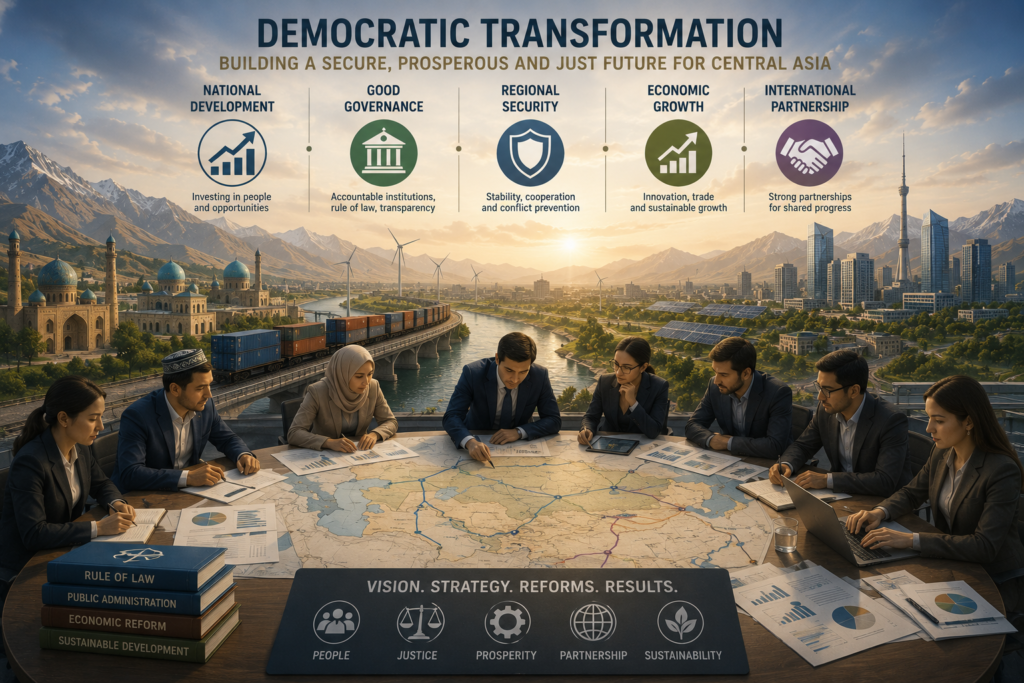
Under the new international conditions, the credibility of democratic movements increasingly depends not only on their political legitimacy but also on their policy expertise. International partners are interested not simply in declarations supporting democratic reform, but in credible evidence that such reforms can be designed and implemented successfully.
This requires a substantial expansion of the analytical capacity of democratic movements. Alongside their traditional focus on human rights, election monitoring, and civil society development, considerably greater attention should be devoted to economic policy, public administration, energy, transport infrastructure, security, education, digital transformation, and regional development.
Independent think tanks should play a particularly important role in this process. By producing high-quality policy research, reform blueprints, sectoral strategies, and regulatory impact assessments, they can demonstrate that democratic movements possess not only political legitimacy but also the professional expertise required to govern effectively and implement complex reforms.
4.4. Building the Image of a Responsible Future Partner
One of the principal obstacles to broader international support remains uncertainty about what would follow a democratic transition. For many international partners, the risk of political instability or institutional disruption often outweighs the shortcomings of existing authoritarian regimes.
Democratic forces must therefore consistently present themselves as a responsible political alternative capable of managing an orderly and predictable transition. This requires more than political declarations. It demands comprehensive reform programs, a prepared pool of future public leaders, mechanisms for constructive engagement with existing state institutions, and a clear understanding of how institutional continuity, international commitments, and domestic stability will be maintained throughout the transition process.
Ultimately, international confidence depends not only on the ability of democratic movements to advocate political change, but also on their demonstrated capacity to implement it successfully. The credibility of democratic forces will increasingly be measured by their preparedness to govern, rather than simply by their ability to oppose the existing political order.
Conclusion
The central conclusion of this report is that Central Asia’s democratic forces must adapt their strategies to a fundamentally changed international environment rather than continue to rely on assumptions shaped by the political realities of the 1990s and early 2000s. A return to the previous model of relations between Western governments and democratic movements in the region appears increasingly unlikely. The strategic challenge, therefore, is not to wait for earlier patterns of international support to re-emerge, but to adjust to the new conditions under which such support is provided.
This changing international environment does not require democratic movements to abandon their commitment to democratic principles. It does, however, require a different way of articulating their political relevance. Democracy, human rights, and the rule of law should be presented not only as universal values but also as the most effective foundations for building resilient states, improving governance, fostering economic development, attracting investment, and strengthening international partnerships.
In the years ahead, international support for democratic transformation is likely to become more selective and more competitive. It will increasingly favor those democratic forces that can offer more than criticism of existing authoritarian regimes. They will need to present credible reform agendas, develop capable leadership, articulate realistic national development strategies, and demonstrate how democratic transformation advances both the long-term interests of their own societies and the strategic priorities of their international partners.
Ultimately, the principal challenge facing Central Asia’s democratic movements is no longer to persuade the international community that democracy itself matters. Rather, it is to demonstrate that they are better equipped than the existing regimes to deliver effective democratic transformation, build stronger and more capable states, and secure the long-term development of their countries. Their future credibility—and the sustainability of international support—will increasingly depend not only on the values they defend, but also on their demonstrated capacity to translate those values into successful governance.
