
Sharofiddin Gadoev,
President of the Foundation for the Defense of Democracy in Central Asia
What Is Happening to Tajikistan’s Geoeconomic Potential?
Tajikistan possesses one of the most significant, yet simultaneously one of the least realized, geoeconomic and geopolitical potentials in post-Soviet Central Asia (PSCA). The country holds the region’s largest hydropower resources, controls a substantial share of the Amu Darya basin’s water balance, occupies a strategic position between China, Central Asia, and South Asia, and possesses a number of deposits of strategically important minerals. Taken together, these factors create the preconditions for transforming Tajikistan into a major energy, transit, and political hub of Eurasia.
Yet none of this has materialized. In 2024, Tajikistan’s nominal GDP amounted to approximately $14–15 billion—roughly eight times smaller than the economy of Uzbekistan and more than twenty times smaller than that of Kazakhstan. The country’s export structure remains narrow and poorly diversified, while the domestic market is constrained by relatively low household incomes and limited industrialization.
There is, however, one area in which Tajikistan has indeed become a leader within PSCA. Unfortunately, it is a form of negative leadership: the dependence of its economy on labor migration and the income generated by it. According to the World Bank, in some years remittances sent by Tajik migrant workers accounted for nearly 50 percent of the country’s GDP—one of the highest figures in the world. Whether the true figure is 40 percent according to some estimates or 30 percent according to others, these transfers still amount to several tens of percent of national income. This means that a significant share of foreign currency entering the country is generated not through the utilization of its own resources or geographic advantages, but through the earnings of citizens working abroad.
For Rahmon’s de facto colonial and pro-Russian regime, the choice of such a development model—the easiest available path for the national economy—was entirely predictable. Rather than compensating for the weakness of the domestic market and the scarcity of internal growth drivers through resource mobilization and effective governance, the authorities relied on exporting the “surplus” population unable to find employment at home and attracting external income through their labor abroad. As a result, labor export effectively became one of the most important sectors of the national economy, while the development of alternative export industries proceeded at a much slower pace.
This situation has largely shaped the way Tajikistan’s geoeconomic potential has been realized. Unlike Kazakhstan, which successfully used its hydrocarbon resources to attract investment and build an export-oriented economy, or Uzbekistan, which was able to develop a relatively diversified industrial base thanks to its larger domestic market, Tajikistan found itself in a position where its principal advantages existed largely in potential rather than in practice.
The most illustrative example is the hydropower sector. According to estimates by specialized international organizations, the country’s total hydropower potential exceeds 500 billion kWh annually. This places Tajikistan among the world’s leaders in terms of hydropower resources. At the same time, a substantial share of this potential remains untapped. Construction of the Rogun Hydropower Plant, which is expected to become the largest hydroelectric facility in Central Asia and one of the largest in the world, has continued for decades. Only after the completion of this project will the country be able to fully transition from a model of energy self-sufficiency to that of a major electricity exporter.
A similar pattern can be observed in the transport sector. Tajikistan’s geographic location objectively creates favorable conditions for becoming a bridge between Central and South Asia. The significance of such routes has increased further following the launch of China’s Belt and Road Initiative. Nevertheless, most of the region’s existing transport flows continue to bypass the country. The main obstacles remain the difficult mountainous terrain, the lack of access to the sea, limited railway infrastructure, and the continuing instability in Afghanistan, through which the most promising southern corridor of transport development would have to pass.
Foreign policy factors are no less important. Throughout most of the period of its nominal independence, Tajikistan remained deeply integrated into Russia’s economic and military-political sphere. The country hosts Russia’s largest military base outside the Russian Federation, while Dushanbe has for many years regarded Moscow as its principal external partner in matters of security and economic stability.
This model provided certain advantages, but at the same time constrained the country’s ability to independently pursue a number of external economic initiatives. In a sense, the Russian labor market and the Russian security system functioned as compensatory mechanisms that reduced the urgency of economic transformation and the search for new sources of growth. Dependence on Russia should therefore be viewed not only as the result of the objective proximity between the two states, but also as one of the factors that contributed to the preservation of the existing development model.
As a result, by the mid-2020s Tajikistan found itself in a situation where its key competitive advantages—hydropower, transit location, water resources, and mineral wealth—had been only partially integrated into the national economy. The fundamental problem lies not in the absence of resources or favorable geography, but in an archaic system of governance oriented toward a de facto colonial model of development, which prevents the country from making full use of its potential.
Yet that potential can be realized.
Hydropower: Tajikistan’s Principal Untapped Development Resource
If dependence on labor migration is the defining feature of Tajikistan’s current economic model, hydropower represents its most realistic alternative. Among all of the country’s geoeconomic advantages, water and energy resources possess the greatest potential to create a sustainable source of income that is not dependent on external labor markets or fluctuations in commodity prices.
Tajikistan occupies a unique position within Central Asia’s hydrographic system. Approximately 60 percent of the Amu Darya basin’s water flow originates on its territory, while the major glacier systems of the Pamirs and the Tien Shan provide a stable source of water for the region’s mountain rivers. According to international estimates, the country’s total hydropower potential amounts to roughly 527 billion kWh annually. This is the highest figure in Central Asia and one of the largest in the world. Yet less than 10 percent of this potential is currently utilized. As a result, hydropower remains the largest undeveloped economic resource available to the republic.
The significance of hydropower is determined not only by the scale of available resources but also by changes in the regional energy landscape. During the Soviet period, the states of Central Asia operated within a unified energy system. Following the collapse of the USSR, this system became partially fragmented. By the early 2020s, however, the region once again faced the need for greater coordination in energy policy. Population growth, urbanization, and industrialization have led to a rapid increase in electricity demand across virtually all Central Asian states.
Uzbekistan provides a particularly illustrative example. While the country’s population stood at approximately 20 million in the early 1990s, it now exceeds 37 million. According to official projections, electricity consumption may nearly double by 2030 compared to levels recorded in the early 2020s. Similar trends can be observed in Kazakhstan and Kyrgyzstan. Central Asia is therefore gradually transforming from a region of relative energy balance into a region characterized by growing electricity demand.
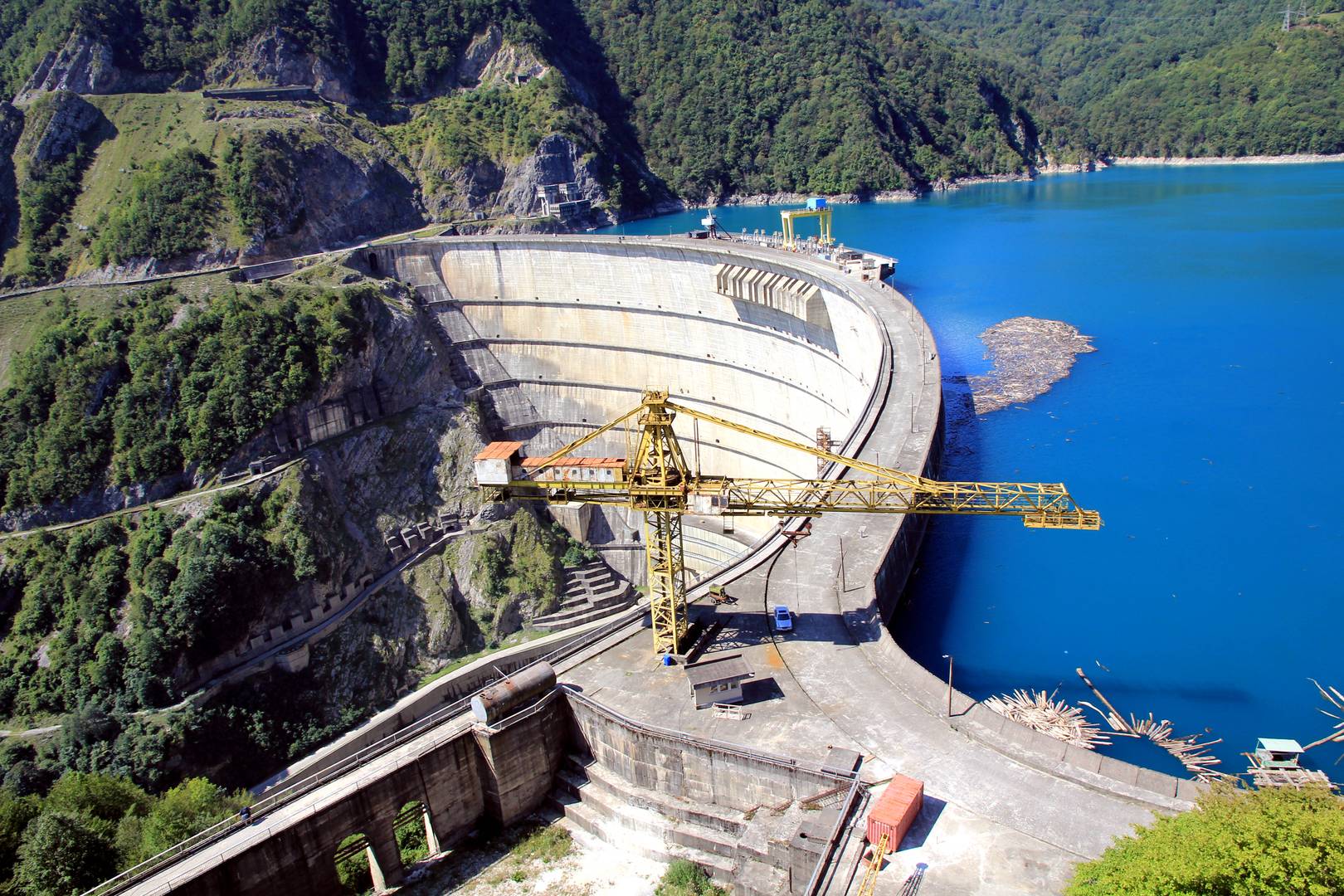
Under these circumstances, the completion of the Rogun Hydropower Plant has become Tajikistan’s foremost strategic project.
Construction of the facility began as early as 1976, but the collapse of the Soviet Union and the subsequent civil war effectively froze the project for decades. A new phase of construction only began in 2016, supported by international financing and with the Italian company Webuild serving as the general contractor.
Once completed, Rogun will become the largest hydroelectric power station in Central Asia. The dam is expected to reach a height of 335 meters, making it the tallest dam in the world. The project envisages the installation of six generating units with a capacity of approximately 600 MW each. The station’s total installed capacity will reach roughly 3.6–3.8 GW, while annual electricity generation is projected at 14–17 billion kWh.
The significance of these figures becomes evident when compared with the current scale of Tajikistan’s energy sector. In recent years, annual electricity generation in the country has amounted to approximately 22–24 billion kWh. Rogun alone is therefore capable of increasing national electricity production by more than 60 percent. In practical terms, this is not merely an expansion of the existing energy system but the creation of an entirely new economic reality.
The commissioning of additional generating capacity, however, does not in itself guarantee the achievement of strategic objectives. For Tajikistan, the key challenge is not electricity production as such, but the mechanisms through which it can be monetized. If additional generation is used solely for domestic consumption, the economic impact will remain limited. Consequently, the creation of stable export markets must become a central priority of state policy.
The first avenue lies in deepening energy integration within Central Asia. Relations between Tajikistan and Uzbekistan have improved significantly in recent years compared to the tensions of the early 2000s, when large hydropower projects generated serious political disagreements. Today, the interests of the two countries largely coincide: Uzbekistan seeks additional sources of electricity, while Tajikistan requires reliable export markets. The same logic applies to other states in the region. Dushanbe should therefore regard the regional energy market as one of the principal instruments for realizing its economic potential.
The second—and potentially more promising—direction is access to the markets of South Asia. This is where the country’s largest unrealized geoeconomic opportunity lies. The CASA-1000 project envisages the transmission of up to 1,300 MW of electricity from Tajikistan and Kyrgyzstan through Afghanistan to Pakistan. Although implementation continues to face political and infrastructural challenges, the strategic significance of the project is difficult to overstate. While the entire population of Central Asia is approximately 83 million, Pakistan alone has a population exceeding 240 million. In the longer term, the project could provide access to the much broader South Asian market, home to more than 1.8 billion people.
At the same time, limiting development to electricity exports would be a strategic mistake. The experience of many countries demonstrates that the greatest value is generated not at the stage of resource extraction or export, but through processing and industrial utilization. In this respect, Tajikistan possesses an advantage that it has so far exploited only partially. Cheap hydropower can provide the foundation for energy-intensive industries, including metallurgy, chemical production, construction materials manufacturing, and modern digital infrastructure such as data centers.
Particularly important is the potential use of inexpensive electricity to deepen the processing of the country’s own mineral resources. At present, a significant share of extracted raw materials is exported with relatively low levels of value added. Yet the combination of abundant electricity and substantial mineral reserves creates favorable conditions for the development of more sophisticated production chains within the country.
Tajikistan’s strategic objective, therefore, is not simply to complete the construction of the Rogun Hydropower Plant and increase electricity generation. The broader goal is to transition from an economy in which a substantial share of national income is derived from external remittances to a model based on energy exports and the development of energy-intensive industries. Hydropower is the sector in which the gap between existing potential and actual utilization remains the largest. At the same time, it is the area where the prospects for fundamentally transforming the country’s economic position appear the most realistic.
Transport and Transit Potential: Finding a Niche in Eurasian Logistics
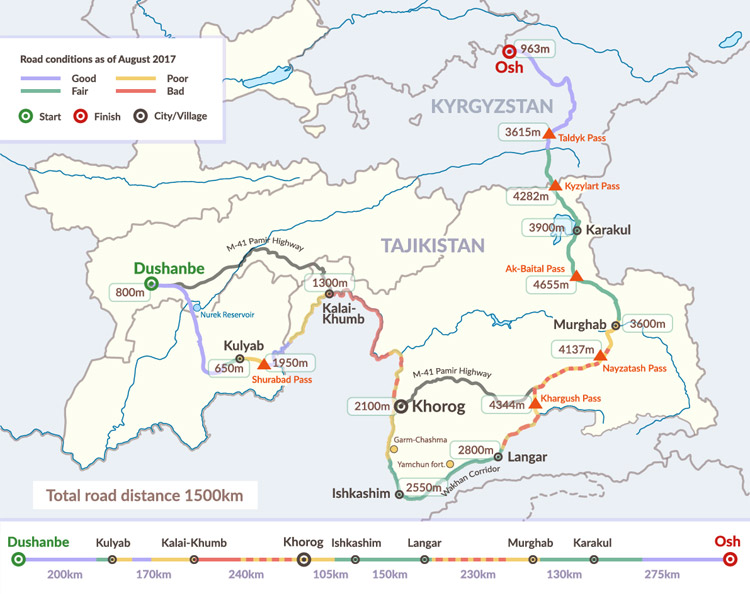
Tajikistan’s geographic position has long been regarded as one of its principal advantages. Located at the crossroads of Central and South Asia, the country shares a border of approximately 500 kilometers with China and occupies a strategic position between Xinjiang, Afghanistan, and the states of Central Asia. In theory, this configuration creates favorable conditions for transforming Tajikistan into an important transit hub within Eurasia.
The reality, however, tells a different story. Despite its advantageous location on the map, Tajikistan remains one of the least integrated countries in the region’s international transport networks. The main transport routes linking China and Europe pass through Kazakhstan, while Uzbekistan is steadily strengthening its role as the key driver of transport integration in Central Asia. As a result, Tajikistan has largely remained outside the most dynamic and rapidly expanding corridors of Eurasian trade.
The reasons for this situation are both objective and political. Approximately 93 percent of the country’s territory is mountainous, significantly increasing the cost of building and maintaining transport infrastructure. The lack of access to the sea and the dependence of virtually all external trade routes on neighboring states represent additional constraints. Yet even these factors are not the most important. A more fundamental problem is the absence of a clearly defined transport specialization.
Over the past several decades, numerous projects aimed at creating new Eurasian transport corridors have been discussed across the region. Most of them, however, have objectively bypassed Tajikistan. The China–Europe corridor through Kazakhstan enjoys obvious advantages due to its developed railway infrastructure and relatively flat terrain. Likewise, the China–Kyrgyzstan–Uzbekistan railway project is primarily oriented toward the Uzbek route. Under such circumstances, attempts to compete for transit flows between China and Europe appear largely unrealistic.
For this reason, Tajikistan’s strategic objective should not be to compete with Kazakhstan or Uzbekistan for existing transport flows, but rather to develop its own niche within regional logistics. That niche could be the creation of a transport corridor linking Central and South Asia.
It is precisely in this context that the country’s geographic position acquires particular significance. One of the principal structural challenges facing the states of Central Asia is their lack of direct access to global maritime routes. At present, a substantial share of the region’s external trade remains oriented either toward Russia or toward Chinese transport networks. Against this backdrop, access to the ports of the Indian Ocean through Afghanistan and Pakistan represents one of the most promising avenues for diversifying external economic ties.
Within the potential configuration of such a corridor, Tajikistan could serve as a crucial link between Central Asia and the Afghan route. This could include transport corridors running from Uzbekistan through Tajikistan to Afghanistan and Pakistan, as well as broader schemes connecting Kyrgyzstan, Tajikistan, and the states of South Asia. Should such projects be implemented, the country would have an opportunity to move from the status of a peripheral economy to that of an important transit intermediary between two major macro-regions.
The Chinese factor is equally significant. At present, the Kulma Pass crossing in the Gorno-Badakhshan Autonomous Region remains the only direct overland connection between Tajikistan and China. Although current transport volumes remain relatively modest, the route possesses strategic importance as the country’s sole direct gateway to the Chinese market. In the long term, infrastructure development along this axis could facilitate the emergence of an additional corridor connecting western China with Central and South Asia through Tajikistan.
At the same time, the realization of such scenarios will require substantial investment in transport infrastructure. Key priorities include the modernization of highways, the expansion of border facilities, the creation of modern logistics centers, and the development of railway connections. Equally important are the simplification of customs procedures and improvements in cross-border cooperation with neighboring states.
The central question for Tajikistan, therefore, is not how to integrate itself into the existing China–Europe transport routes, but how to leverage its geographic position to help create a new Central Asia–Afghanistan–Pakistan–Indian Ocean axis. This is the direction most capable of providing the country with a distinctive transport specialization and transforming geography from a potential advantage into a tangible source of economic growth and political influence.
The Afghan Factor: The Greatest Obstacle and the Greatest Window of Opportunity

Among all external factors affecting the realization of Tajikistan’s geoeconomic potential, Afghanistan occupies a special place.
Virtually every long-term project capable of transforming the country’s position within the regional economy is linked, in one way or another, to the Afghan direction. The shortest routes connecting Central Asia to the ports of the Indian Ocean pass through Afghan territory. The CASA-1000 project likewise depends on the transmission of electricity through Afghanistan. Finally, Afghanistan constitutes an indispensable transit link for the development of connections between Central and South Asia.
Tajikistan shares the longest border with Afghanistan among all Central Asian states, stretching approximately 1,357 kilometers. For comparison, Uzbekistan’s border with Afghanistan is roughly 144 kilometers long, while Turkmenistan’s extends for approximately 804 kilometers. Geographically, Tajikistan possesses greater opportunities than any other country in the region for developing cross-border interaction with Afghanistan. Yet these opportunities remain largely paralyzed by the Rahmon regime’s deep-seated ideological hostility toward Muslim Tajikistan—the part of the Tajik nation that, at the end of the twentieth century, did not allow itself to be transformed by the Soviet Union into another Soviet republic.
While the regime’s hostile attitude toward the Taliban movement could perhaps be understood when the movement operated as an insurgent force, maintaining the same uncompromising position after the Taliban assumed power in Afghanistan appears increasingly irrational. All other governments in post-Soviet Central Asia have established working relations with the new Afghan authorities, as has Russia, the principal external patron of the Rahmon regime. Yet while most regional states gradually shifted toward pragmatic engagement with the Islamic Emirate of Afghanistan, Tajikistan found itself in a situation of limited political dialogue with the de facto authorities of its neighboring state. As a result, the country has become both the Central Asian state most interested in the development of the Afghan direction and the one most constrained in its ability to engage with it.
At the same time, Afghanistan’s economic importance for Tajikistan continues to grow. Afghanistan’s population is currently estimated at approximately 42 million people—more than four times the population of Tajikistan itself. The country remains one of the largest importers of electricity from Central Asia. Even today, a significant share of Afghanistan’s electricity imports is supplied by Uzbekistan, Tajikistan, and Turkmenistan.
Particularly important is the CASA-1000 project, which envisages the transmission of up to 1,300 MW of electricity from Tajikistan and Kyrgyzstan through Afghanistan to Pakistan. The total value of the project exceeds $1 billion. For Dushanbe, CASA-1000 represents not only an energy initiative but also a geopolitical one, as it creates, for the first time, a major infrastructure link between Central and South Asia.
Without stable cooperation with the Afghan authorities, however, the implementation of such initiatives remains extremely difficult.
The transport dimension of the Afghan direction is even more important. At present, the states of Central Asia remain largely oriented toward routes passing through Russia, China, and the Caspian region. Yet the shortest route to the ports of the Indian Ocean runs through Afghanistan and Pakistan. For Tajikistan, this would provide potential access to the ports of Karachi and Gwadar, as well as to the markets of Pakistan and India, whose combined population exceeds 1.6 billion people.
Under these circumstances, Afghanistan should be viewed not only as a source of risks but also as a key element of future regional connectivity. Indeed, it can be argued that virtually the entire long-term transit potential of Tajikistan depends on the state of its relations with Kabul. While energy projects require cooperation with Afghanistan, major transport projects are simply impossible without it.
For this reason, one of the most important priorities of Tajik foreign policy should be the gradual development of a more pragmatic approach toward the Afghan direction. In this context, attempts by various Tajik political actors to establish contacts with the Afghan side are of particular interest. One example that attracted considerable attention was the visit of Sharofiddin Gadoev to Afghanistan, which demonstrated the possibility of alternative channels of communication between Tajik and Afghan political circles. Although such initiatives have so far had little direct impact on interstate relations, they indicate the existence of differing views within the Tajik political space regarding future engagement with Kabul.
In the long term, a shift in approaches toward Afghanistan may become one of the decisive factors in realizing the country’s geoeconomic potential. A more pragmatic policy focused on trade, energy cooperation, and transport connectivity could provide Tajikistan with access to the markets of South Asia and significantly enhance its role in regional affairs.
Afghanistan is therefore simultaneously Tajikistan’s greatest constraint and its greatest opportunity. Unlike many other factors, this is not a potential advantage that must still be created, but a geographic reality that cannot be changed. For that very reason, Tajikistan’s ability to develop an effective strategy for engagement with the Afghan direction will largely determine whether the country succeeds in realizing its energy, transport, and geopolitical potential in the decades ahead.
The China Factor: A Resource for Development or a New Dependency?
During the 2010s and 2020s, China began to play an increasingly prominent role in Tajikistan’s development. Today, Beijing possesses the financial and infrastructural resources necessary to implement many of the projects capable of transforming the country’s geoeconomic position.
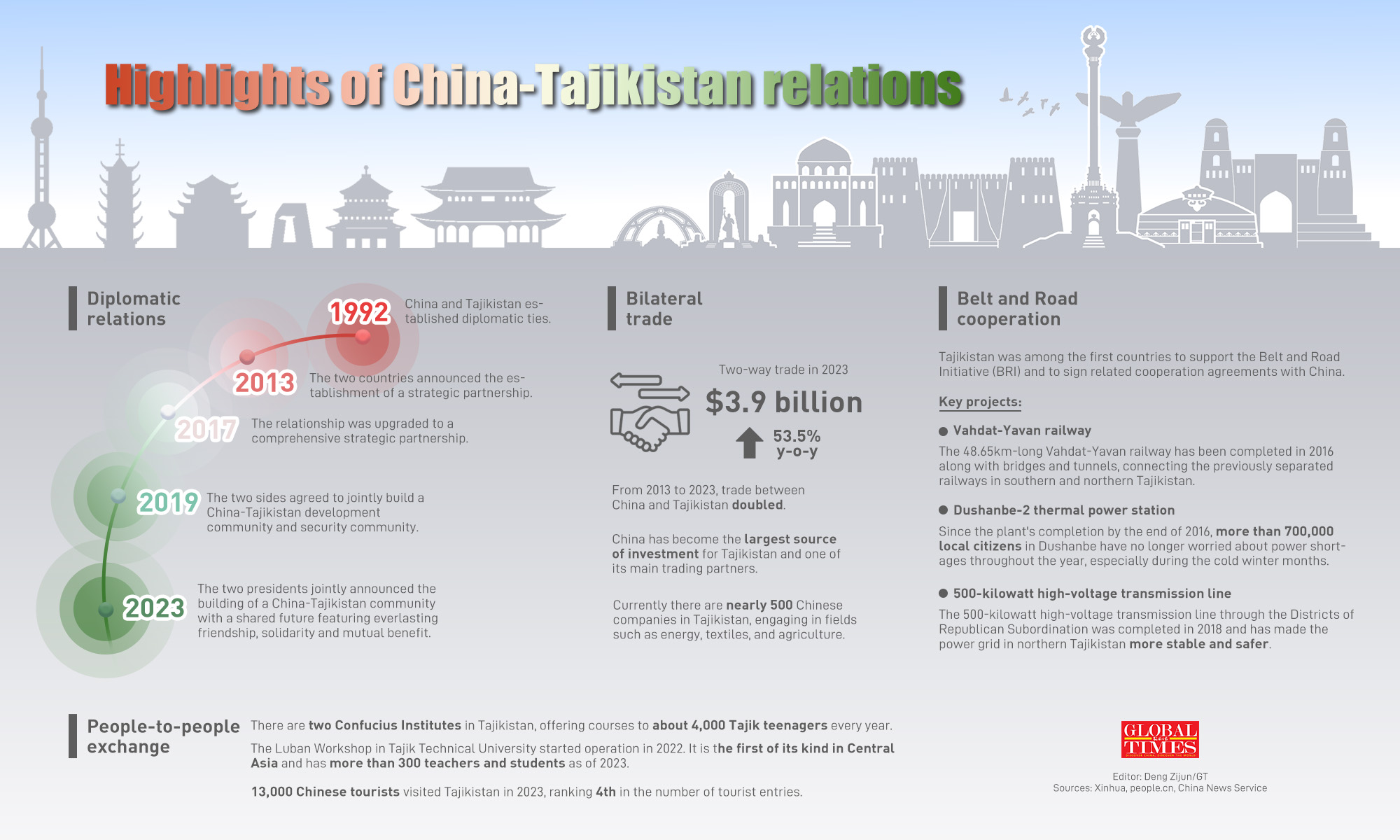
The scale of China’s presence in the Tajik economy has grown significantly over the past two decades. According to China’s General Administration of Customs, China is now Tajikistan’s largest trading partner. In 2023, bilateral trade exceeded $3.9 billion, more than twice the volume of trade with Russia. China’s share of the country’s total foreign trade turnover approached 40 percent.
China’s role as a creditor is equally significant. According to data from Tajikistan’s Ministry of Finance, debt owed to the Export-Import Bank of China (Exim Bank of China) exceeded $900 million at the beginning of 2024. This represented roughly one-third of the country’s bilateral external debt and made China the largest individual sovereign creditor of Tajikistan. A substantial portion of the country’s infrastructure projects over the past two decades has been financed through Chinese loans.
Among the most important projects are the Dushanbe–Chanak highway linking the capital with the northern regions of the country, the reconstruction of several sections of internationally significant roads, the construction of power transmission lines, and the modernization of energy infrastructure. In a country where approximately 93 percent of the territory is mountainous, such projects carry not only economic but also political significance, as they contribute to strengthening national connectivity.
The Chinese direction also plays a special role in the context of Tajikistan’s transport strategy. The country shares approximately 500 kilometers of border with China. Yet at present, the Kulma Pass crossing in the Gorno-Badakhshan Autonomous Region remains the only operational direct border crossing. Although freight volumes are modest compared to those moving through Kazakhstan, this route is strategically important as Tajikistan’s sole direct overland gateway to the Chinese market.
At the same time, it must be acknowledged that Tajikistan’s current role within China’s Belt and Road Initiative remains limited. The principal overland routes connecting China and Europe pass through Kazakhstan. Moreover, the China–Kyrgyzstan–Uzbekistan railway currently under construction is primarily oriented toward the Uzbek route. As a result, Tajikistan has yet to secure a significant place within Eurasia’s most important transport projects.
For this reason, it is crucial for Dushanbe to use Chinese resources not merely to service external transit routes but to address its own development priorities. The central problem is that much of the existing cooperation remains focused on infrastructure and raw materials. China provides loans, builds roads, and participates in the development of mineral deposits, yet the impact of these projects on the structural transformation of the economy remains limited. A far more promising approach would be to integrate Chinese investment into a broader strategy of industrialization.
Tajikistan possesses a combination of two factors that are potentially attractive to Chinese businesses: substantial mineral reserves and the largest hydropower potential in Central Asia. Once the Rogun Hydropower Plant is completed and generating capacity continues to expand, the country will be able to offer investors relatively inexpensive electricity—one of the most important prerequisites for the development of energy-intensive industries.
Particular attention should be paid to deposits of gold, silver, antimony, and rare earth elements. According to the Geological Survey of Tajikistan, the country possesses some of the largest antimony reserves in the region as well as significant gold deposits. Yet most of these resources continue to be exported with relatively little processing. Consequently, the strategic objective should not simply be attracting Chinese capital into extraction projects, but creating joint ventures capable of generating greater value added within the country.
At the same time, the growing Chinese presence also creates certain risks. China already accounts for roughly one-third of Tajikistan’s external debt, while its role in foreign trade continues to expand. Under these circumstances, there is a possibility that one form of dependency could be replaced by another. If Russia served as the principal external center of gravity for much of the past several decades, China may assume a similar role in the future.
Tajikistan’s long-term strategy should therefore not be based on replacing dependence on Russia with dependence on China, but on diversifying its external relationships. China is objectively the country’s most important source of investment and infrastructure development. However, preserving strategic autonomy will require Dushanbe to simultaneously deepen cooperation with the states of Central Asia, South Asia, Turkey, the Gulf countries, and other external partners.
The significance of China for Tajikistan is therefore determined not only by the scale of trade, investment, or lending. Beijing is perhaps the only external actor with the resources necessary to participate in projects capable of fundamentally altering the country’s geoeconomic position. Whether this potential is realized, however, will depend on the ability of Tajikistan’s leadership to use China’s presence as an instrument of modernization rather than as the foundation of a new model of dependency.
A Strategy for Realizing Tajikistan’s Potential: From a Migration Economy to an Economy of Connectivity
The analysis presented above demonstrates that Tajikistan’s principal challenge is not a lack of resources, an unfavorable geographic location, or the absence of external partners.
On the contrary, the country possesses a combination of advantages unmatched by any other state in Central Asia. These include the region’s largest hydropower potential, control over a substantial share of the Amu Darya basin’s water resources, direct proximity to China, and the longest border with Afghanistan among all Central Asian states.
For most of the post-Soviet period, however, the country’s economy developed according to a different logic. Rather than relying on its own competitive advantages, the primary mechanism for maintaining economic stability became labor migration. As a result, by the mid-2020s Tajikistan found itself in a situation where its objective potential significantly exceeded the level of its actual realization. The country’s central task in the coming decades is therefore to move from a model based on external compensatory mechanisms to one grounded in the utilization of its own geoeconomic advantages.
The first element of such a strategy should be the completion of an export-oriented energy sector. Today, Tajikistan utilizes less than 10 percent of its estimated hydropower potential of approximately 527 billion kWh annually. Once the Rogun Hydropower Plant is completed, national electricity generation could increase by more than 60 percent, while the station’s installed capacity will reach approximately 3.6–3.8 GW. Yet the economic impact will depend less on the volume of electricity produced than on the country’s ability to integrate new generating capacity into regional markets and use inexpensive electricity to support the development of energy-intensive industries at home.
The second strategic priority should be the transformation of the country’s transport policy. For decades, Tajikistan has effectively attempted to integrate itself into existing Eurasian transport routes, where it objectively faces disadvantages compared to Kazakhstan and Uzbekistan in terms of both infrastructure and geography. A more promising approach would be the development of a distinct transport specialization centered on the Central Asia–Afghanistan–Pakistan axis. Unlike the China–Europe routes, where competition has already largely been settled, the southern direction remains relatively open and has the potential to provide Tajikistan with a unique role in regional logistics.
The third element of the strategy should be a reassessment of the Afghan direction. Today, virtually all of the most promising projects related to energy exports, transit, and access to South Asian markets require cooperation with Afghanistan. At the same time, Afghanistan’s population exceeds 40 million people, while the combined population of Pakistan and India approaches 1.6 billion. From the perspective of long-term economic interests, the southern direction offers Tajikistan the most direct access to some of the world’s largest external markets.
In this context, a gradual shift from a predominantly defensive approach toward a more pragmatic model of engagement with Kabul appears both necessary and desirable. Such a policy does not imply abandoning security concerns or altering fundamental foreign policy principles. However, the implementation of major transport and energy projects requires stable channels of communication with the de facto authorities of the neighboring state. The experience of recent years demonstrates that most regional and global actors have already adapted their policies to the new realities in Afghanistan.
The fourth strategic direction should be the diversification of external partnerships. For decades, the Tajik economy remained closely linked to Russia through labor migration and security arrangements. Today, China is assuming an increasingly important role, accounting for roughly 40 percent of the country’s foreign trade and a significant share of its external debt. Yet Tajikistan’s strategic objective should not be to replace one dependency with another, but to expand its room for independent maneuver.
