
Analytical Group of the Foundation for the Defense of Democracy in Central Asia
Introduction
Labor migration remains one of the key structural factors shaping the socio-economic development of a number of post-Soviet Central Asian (PSCA) states. For Russia, migrants from the region constitute a critically important source of labor amid demographic decline, workforce shortages, and the consequences of its aggression against Ukraine. For several PSCA countries, migration simultaneously serves as a source of foreign currency inflows, a mechanism for reducing unemployment, a social safety valve, and a factor of internal stability.
However, after 2022 — and especially following the terrorist attack at Crocus City Hall in 2024 — Russian migration policy began to change rapidly. The model that had existed since the 2000s — exploitative, corrupt, yet relatively predictable — is being transformed into a system of permanent police, digital, and administrative control accompanied by growing ideological and cultural pressure.
Against this backdrop, the PSCA states have begun seeking ways to diversify migration flows in an effort to reduce their critical dependence on the Russian labor market.
This paper examines:
- the scale of migration dependence;
- its specific features across individual countries of the region;
- changes in Russia’s migration regime;
- the recruitment of migrants from the PSCA states for the war against Ukraine;
- attempts to diversify migration destinations;
- the prospects for overcoming dependence on Russia in this sphere.
1. Russia as the Center of the PSCA Migration System
Despite gradual diversification, Russia remains the primary destination for labor migration from several PSCA countries.
In 2024, approximately 6.3 million foreign citizens entered Russia, with roughly half arriving for employment and income-generating purposes.
According to Rosstat, Russia’s net migration increase in 2024 amounted to approximately 568,000 people, including:
- Tajikistan — around 128,000;
- Uzbekistan — around 107,000;
- Kyrgyzstan — around 105,000.
The principal countries of origin were:
- Uzbekistan — 23.3%;
- Tajikistan — 16.7%;
- Kyrgyzstan — 10.4%.
Thus, post-Soviet Central Asia continues to form the backbone of the Russian migration labor market.
Russia remains attractive for several reasons:
- a visa-free regime;
- the widespread use of the Russian language;
- the Soviet legacy;
- the existence of large diaspora communities;
- a low threshold for entering the labor market;
- the presence of long-established social and economic networks.
The principal sectors employing migrant labor include:
- construction;
- housing and communal services;
- warehouse logistics;
- delivery services;
- taxi services;
- trade;
- public catering;
- seasonal labor.
As can be seen, this primarily concerns low- and medium-skilled labor.
2. Labor Migration to Russia and Its Significance for the PSCA States
2.1. Tajikistan: Extreme Migration Dependence

Tajikistan represents the country in the region most dependent on labor migration to Russia.
The Scale of Dependence
According to World Bank estimates, in 2024 migrant remittances accounted for approximately 45–49% of Tajikistan’s GDP — one of the highest figures in the world.
At any given time, around 1 million Tajik citizens are present in Russia, while the annual flow of entries in 2024 reached approximately 1.7 million border crossings.
In the first half of 2024 alone, more than 17,000 Tajik citizens were expelled from Russia, compared to approximately 11,000 during the entirety of 2023.
This means that, for Tajikistan, migration functions as:
- a source of foreign currency inflows;
- a mechanism for sustaining domestic demand;
- an instrument for reducing unemployment;
- a factor of political and social stability.
The Scale of Migration
Approximately 1 million citizens of Tajikistan are simultaneously present in Russia.
The principal migrant group consists of:
- men aged 20–40;
- natives of rural regions;
- low-skilled workers.
In many parts of the country, a significant share of working-age men regularly work in Russia.
Social Consequences
Migration is deeply embedded in the structure of Tajik society:
- the widespread phenomenon of “remote families”;
- prolonged absence of men from households;
- dependence of families on remittances;
- migration as the primary channel of social mobility.
As a result, any tightening of Russia’s migration regime automatically creates:
- threats to currency stability;
- rising unemployment;
- social tensions;
- risks of political destabilization.
Tajikistan is the most vulnerable state in the region in terms of dependence on the Russian labor market. As we have previously explained, this is the consequence of the deliberate policies pursued by the Rahmon regime and of its character as a pro-Russian colonial regime.
2.2. Kyrgyzstan: An Institutionalized Migration Economy
Kyrgyzstan is also heavily dependent on migration, although the character of this dependence differs from that of Tajikistan.
Remittances
Migrant remittances account for approximately 22–24% of GDP.
Between 650,000 and 900,000 Kyrgyz citizens are simultaneously present in Russia. More than 80% of Kyrgyz labor migrants continue to work specifically in Russia.
The EAEU Factor
The key distinction in Kyrgyzstan’s case is its membership in the Eurasian Economic Union (EAEU).
This provides Kyrgyz citizens with:
- the right to work without a patent;
- simplified registration procedures;
- a more legal status;
- lower dependence on corruption schemes.
As a result, Kyrgyz migration is:
- more legalized;
- more circular in nature;
- less marginalized.
Social Profile
Kyrgyz migration is:
- more urban;
- more family-oriented;
- characterized by a larger proportion of women;
- more diversified in terms of professions.
Limitations
Despite the advantages associated with EAEU membership, after 2024 even Kyrgyz citizens faced:
- intensified police raids;
- ethnic profiling;
- growing xenophobia;
- increased police control.
Nevertheless, Russia remains the principal destination: more than 80% of Kyrgyz labor migrants continue to work there.
2.3. Uzbekistan: The Largest Supplier of Labor Force

Uzbekistan is the largest source of labor migration to Russia.
Scale
- Approximately 1.5–2 million citizens of Uzbekistan are simultaneously present in Russia.
- The annual flow of entries by Uzbek citizens into Russia in 2024 amounted to approximately 3.5–4 million border crossings, representing the largest figure in the post-Soviet space.
- Migrant remittances account for approximately 14–15% of GDP.
- In absolute terms, the volume of remittances in 2024 amounted to approximately $14–15 billion.
- In absolute terms, this represents roughly $14–15 billion annually.
The Demographic Factor
The principal driver of migration is demographic pressure.
Uzbekistan:
- has a population of approximately 37 million people;
- is characterized by high birth rates;
- annually brings hundreds of thousands of young people onto the labor market.
The state is unable to create a sufficient number of jobs quickly enough, and migration therefore performs the function of externally absorbing surplus labor force.
Characteristics of Uzbek Migration
Unlike Tajik migration, Uzbek migration is:
- more commercialized;
- more socially diverse;
- inclusive of entrepreneurial and intermediary networks;
- more deeply integrated into the international labor market.
Differences Between the Models
Uzbekistan is less dependent on remittances from Russia than Tajikistan, but remains critically dependent on migration as a mechanism of employment and social stabilization.
Whereas for Tajikistan the cessation of migration would primarily mean a currency crisis, for Uzbekistan it would mean, above all, an employment crisis and growing internal social pressure.
2.4. Kazakhstan and Turkmenistan: Peripheral Cases
2.4.1. Kazakhstan
Kazakhstan occupies a different position within the regional system and:
- is not a major exporter of labor force;
- itself receives migrants from neighboring countries;
- functions as a regional economic center.
After 2022, Kazakhstan increasingly became:
- a platform for the relocation of Russian businesses;
- an alternative migration hub;
- an independent center of attraction for labor force.
2.4.2. Turkmenistan
Turkmenistan remains the most closed state in the region, which determines such features as:
- the absence of reliable statistics;
- strict controls on exit from the country;
- limited migration networks;
- the lesser role of Russia;
- a greater orientation toward Turkey.
At the same time, the country faces:
- high unemployment;
- demographic pressure;
- economic stagnation.
3. The Tightening of Russia’s Migration Regime
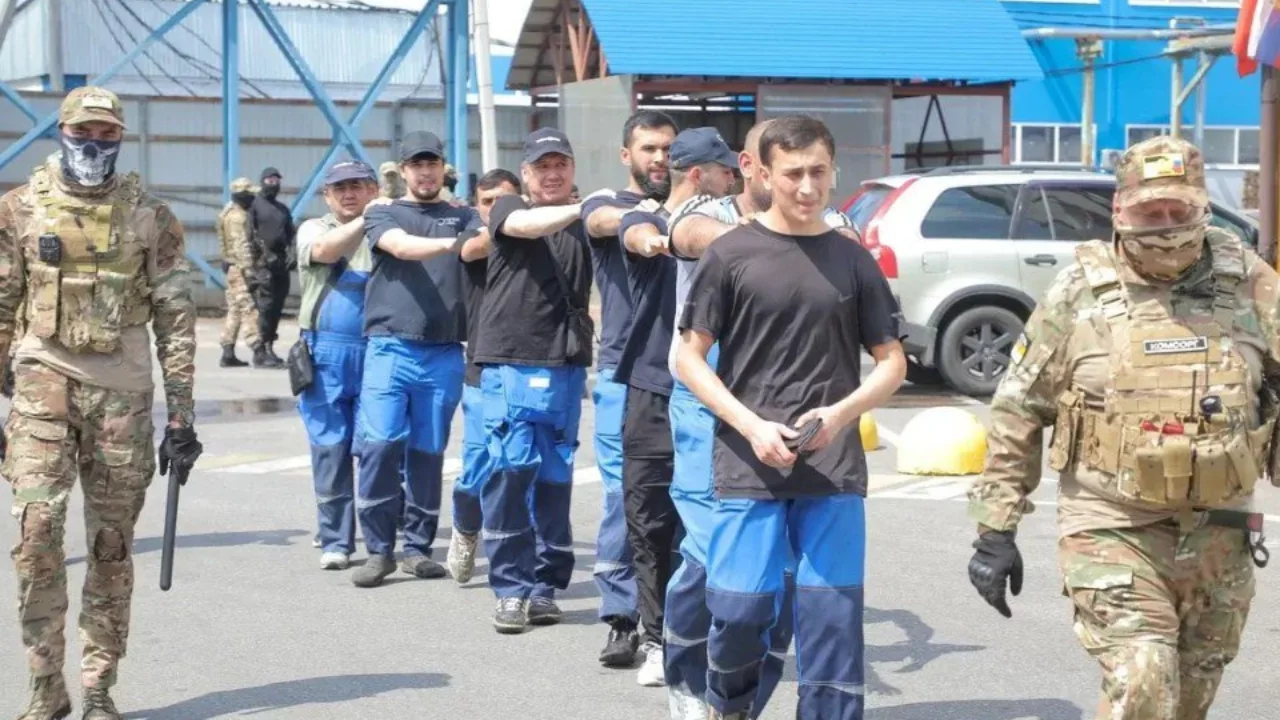
After 2022, Russia began rapidly transitioning from its previous model of migration management toward a more centralized and coercive system.
The Main Features of the New Model
- the securitization of migration;
- digital control;
- the expansion of the powers of the Ministry of Internal Affairs;
- intensified ethnic profiling;
- administrative pressure;
- regional restrictions on employment.
The Turning Point in 2024
The terrorist attack at Crocus City Hall in 2024 became a decisive turning point, after which:
- police raids sharply intensified;
- the number of deportations increased;
- xenophobia escalated;
- migrants increasingly began to be perceived as a potential security threat.
The strongest impact fell upon citizens of Tajikistan.
New Legislation
In 2024–2025, a number of measures were adopted introducing:
- a “deportation regime”;
- a registry of controlled persons;
- biometric monitoring;
- restrictions on banking operations;
- restrictions on movement;
- digital surveillance mechanisms.
Simultaneously, the following intensified:
- restrictions on employment;
- registration requirements;
- regional bans on migrant labor.
In practice, Russia is moving toward a model of permanent administrative and digital surveillance over migrants, accompanied by ideological pressure (Islamophobia) and cultural pressure (coercive Russification) directed against them.
4. Central Asian Migrants and the War Against Ukraine

Following the beginning of the full-scale war against Ukraine, the Russian authorities initiated a policy of involving migrants — including those from the PSCA states — in the war as “cannon fodder.”
Scale
According to various estimates, approximately 13,000 citizens of Central Asian countries who signed contracts with the Russian army have been identified.
Estimated figures include:
- Uzbeks — approximately 2,400–4,700;
- Tajiks — approximately 1,900;
- Kyrgyz — approximately 840;
- Kazakhs — approximately 1,400;
- Turkmens — approximately 360.
The largest groups consisted of:
- Uzbeks;
- Tajiks;
- Kazakhs;
- Kyrgyz.
Recruitment Channels
The principal mechanisms included:
- promises of citizenship;
- high financial payments;
- pressure through migration status;
- recruitment in prisons;
- coercion of naturalized Russian citizens;
- fraudulent employment schemes.
Casualties
The number of Central Asians killed in Russia’s war against Ukraine is estimated at no fewer than several hundred people.
According to verified data from BBC Russian Service and Mediazona, among confirmed foreign citizen fatalities the largest groups consisted of:
- Tajik citizens — at least 72 killed;
- Uzbek citizens — at least 66 killed.
In reality, these losses are most likely significantly higher due to:
- the large number of missing persons;
- the reluctance to officially recognize migrants as killed in order to avoid paying financial compensation to their families.
Consequences
Russia has effectively integrated part of Central Asia’s migration infrastructure into its military system.
In turn, this has intensified:
- anxiety among migrants;
- tensions in relations between Moscow and the PSCA states;
- the desire of Central Asian governments to seek alternative migration destinations.
5. Diversification of Migration Flows
After 2022, the states of Central Asia began more actively seeking alternatives to the Russian labor market.
5.1. Uzbekistan
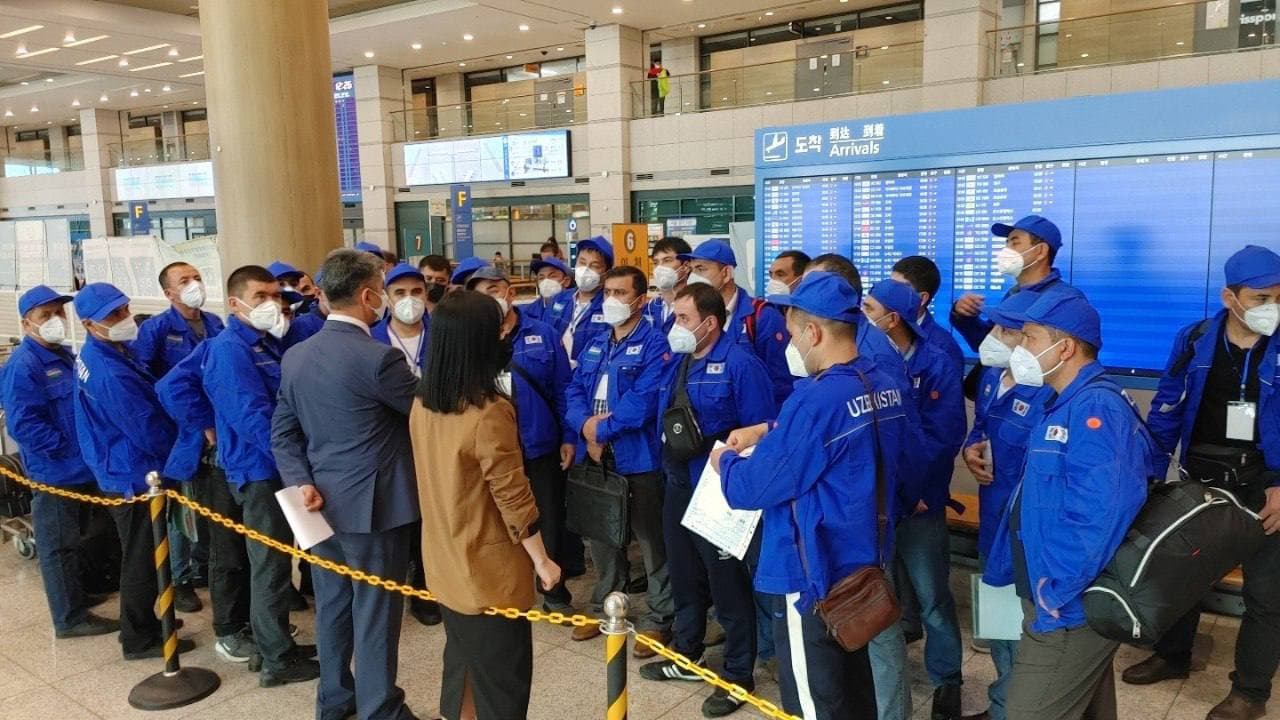
Uzbekistan is pursuing the most active policy of migration diversification in the region.
The Uzbek authorities have set the goal of employing more than 200,000 citizens in “high-wage countries” in 2025.
The principal destinations include:
- South Korea;
- Germany;
- the United Kingdom;
- Poland;
- Turkey;
- the Gulf states.
For its part, the Uzbek government:
- is developing organized recruitment programs;
- is creating training centers;
- is financing language education;
- is concluding intergovernmental agreements.
5.2. Kyrgyzstan
Kyrgyzstan is developing:
- organized migration mechanisms;
- vocational training programs;
- migration channels to South Korea and the United Kingdom.
However, due to EAEU membership and deep integration with the Russian labor market, diversification is proceeding more slowly.
5.3. Tajikistan
The Tajik authorities are, in practice, undertaking no systematic efforts to reduce migration dependence on Russia. Only limited alternative migration channels to Kazakhstan, South Korea, Japan, and EU countries are being developed.
More broadly, the existing regime appears fully comfortable with the situation of total dependence on its military-political patron.
6. The Results of Diversification
Despite the visible growth of alternative destinations, Russia still retains a dominant position as the principal labor migration market for citizens of the PSCA states.
At the same time:
- the number of work permits issued to Central Asian citizens in the EU between 2021 and 2024 increased approximately threefold, reaching nearly 79,000;
- the importance of South Korea is growing;
- organized migration is expanding;
- the role of qualifications and language training is increasing.
Nevertheless:
- the scale of the new destinations remains incomparable to the Russian market;
- social and linguistic networks remain largely tied to Russia;
- the cost of migration to Russia remains lower.
However, the most important shift has already occurred: Russia’s monopoly as the region’s sole migration center has begun to erode. Tajikistan, for the time being, remains at the tail end of this trend.
7. Prospects
The orientation of the majority of PSCA states toward the Russian labor market continues to be sustained by several factors:
- the inertia of the Soviet legacy, including the widespread knowledge of the Russian language among their citizens;
- significant diaspora communities already rooted in Russia and attracting compatriots and relatives there;
- easier access both to the country itself and to its labor market compared to a number of other states;
- relative geographical proximity and established transport links;
- the scale of the Russian labor market;
- in the case of Tajikistan, the policies of the existing authorities, which effectively push Tajiks out of the country in general and toward Russia in particular.
Nevertheless, a number of factors are turning the migration dependence of the PSCA states on the Russian labor market into an increasingly serious problem:
- the tightening of Russia’s migration regime;
- the growth of everyday xenophobia in Russia, encouraged by the authorities through the activities of controlled xenophobic groups;
- the strengthening within the Russian authorities themselves of chauvinistic attitudes, whose proponents openly call for using the economic — including migration — dependence of post-Soviet states on Russia as a mechanism for limiting their sovereignty;
- the involvement of citizens of the PSCA states in Russia’s war against Ukraine and potentially in other Russian wars in the event of further escalation in Moscow’s relations with the EU and NATO countries (particularly in the Baltic region);
- the expansion of the geography of war onto Russian territory itself, accompanied by growing threats to the civilian population, including environmental disasters, as occurred following strikes on oil industry facilities in Tuapse.
Particular attention should also be paid to the threat of destabilization within Russia itself, which may ultimately prove unable to withstand the burden of a large-scale war, as already occurred at both the beginning (the First World War) and the end (the Cold War) of the twentieth century. In such a scenario, many migrants from the PSCA states could not only lose their sources of income, but also become victims of spontaneous or organized violence marked by ethnic and confessional hostility.
Thus, the authorities of all PSCA states that continue to depend on the export of labor migration to the Russian market should follow Uzbekistan’s example in diversifying labor migration and reducing dependence on Russia.
Possible practical steps in this direction in the context of international cooperation will be examined in future publications of the Central Asia Democracy Defense Foundation.
