
Author: Maksim Baidak
Vice President, Foundation for the Defense of Democracy in Central Asia
For post-Soviet Central Asia (PSCA), the South Caucasus (and, prospectively, the Greater Caucasus) represents the main corridor to the outside world, creating an alternative to vassalization vis-à-vis Russia and China.
While in the relations between Central Asian countries and Azerbaijan this understanding has already taken shape and is now reflected in the de facto inclusion of the latter into the club of the former (the 5+1 format), the positions of the two other South Caucasus states—Georgia and Armenia—require separate analysis.
This paper focuses on the processes taking place in and around Armenia, which have implications for the future of the broader macro-region of Central Asia and the Caucasus. Although developments in and around Georgia also require attention, the primary focus at this stage is on Armenia due to:
- the parliamentary elections scheduled for early June 2026, the outcome of which will determine the country’s development trajectory;
- the Kremlin’s overt attempts to influence these elections and to prevent Armenia from moving out of Russia’s sphere of influence and transforming into a component of the Europe–South Caucasus–Central Asia interaction space.
The Kremlin’s respective actions and its broader policy toward the countries of the region will be examined below. However, in order to better understand the deeper historical background and future trajectory of the ethno-geopolitical processes unfolding around Armenia, it is necessary to turn to the history of its national development.
Armenia at a Crossroads: From Romantic Resentment-Based Nationalism to a Modern Nation
As has been demonstrated by the experience of a number of other post-Soviet states, their national development under the Soviet empire was characterized by a certain duality. Unlike its predecessor—tsarist Russia—which largely denied national self-determination, the Soviet system formally recognized the right of peoples to self-determination and statehood, while in practice Moscow constrained their development as full-fledged nations and nation-states, preserving them instead in the form of symbolic Soviet “nationalities.”
As a result, by the time of independence many of these peoples (including the Russians themselves) were not fully prepared to develop an adequate form of national self-consciousness. One of the consequences was the dominance of romantic, yet unscientific, interpretations of national history and borders, which in turn led to territorial claims against neighboring states (Armenia–Azerbaijan), and in some cases even to the denial of the very right of others to independent nation-statehood (Russia–Ukraine).
It should be noted that, despite the presence of ethnically related populations living compactly outside the borders of their respective states, neither Azerbaijan, nor Tajikistan, nor Uzbekistan, nor Turkmenistan advanced territorial claims against their neighbors, let alone attempted to enforce them by military means. Among all post-Soviet states, only Armenia at the time of the USSR’s collapse—and later Russia, toward which certain Armenian circles remain oriented—pursued such a course.
At the same time, Armenia directed such claims only toward Azerbaijan, but not toward another neighbor, Georgia, where Armenians also live compactly in certain regions (notably Javakheti). This was not accidental, but rather reflected a defining feature of Armenian resentment-based nationalism—namely, Turkophobia and Islamophobia—which had been preserved and cultivated during the Soviet period.
This particular character of Armenian nationalism—resentment-driven, anti-Turkic, and anti-Islamic—was of interest not only to its émigré leaders but also to Soviet security services. After the Second World War, the latter entered into cooperation with the former in their foreign operations, which in turn ensured a relatively tolerant attitude of the KGB toward their activities within the USSR (especially in comparison to other nationalist movements). Given that representatives of these security structures quickly came to power in post-Soviet Russia, while their Armenian counterparts did the same in Armenia, the latter effectively became a kind of outpost of the former in the Caucasus.
The situation changed dramatically after the Velvet Revolution of 2016, which removed pro-Russian, resentment-based nationalist elites from power in Armenia, and the subsequent Azerbaijan‘s military campaigns of 2020 and 2023. As a result of these developments, Azerbaijan fully restored control over the territories of Karabakh that had been seized by Armenian irredentist forces and maintained with the support of both previous Armenian authorities and Moscow. This, in turn, confronted the new Armenian leadership with a strategic choice: either to recognize the new geopolitical reality and build relations with neighbors and external actors accordingly, or to continue following the logic of resentment-driven nationalism and pursue revanchist goals. The latter option—given Azerbaijan’s growing strength and determination, as well as its own counter-narrative regarding Azerbaijanis displaced from what it refers to as Western Azerbaijan (i.e., present-day Armenia)—could risk the ultimate loss of Armenian statehood.
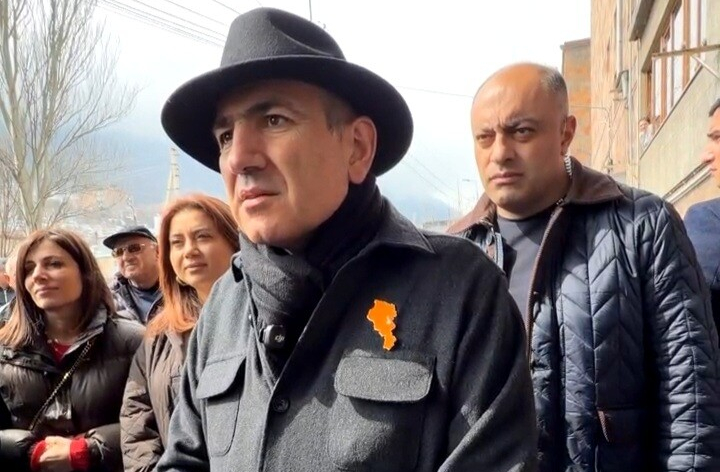
Under these circumstances, Armenia’s Prime Minister Nikol Pashinyan and his supporters have opted for a decisive geopolitical and historiosophical reset of Armenian statehood and identity. In practical terms, this implies the mutual recognition by Armenia and Azerbaijan of each other’s internationally recognized borders and a shift from confrontation to cooperation. At the doctrinal level, it entails abandoning the resentment-based concept of “historical Armenia” or “Greater Armenia” in favor of a pragmatic vision of a “real Armenia.” A visible symbol of this concept has been the map of Armenia within its internationally recognized borders, actively promoted by Pashinyan.
In turn, supporters of the resentment-based, revanchist version of Armenian nationalism accuse Pashinyan not only of national betrayal but of undermining the very foundations of Armenian identity. In doing so, they rely on the support of Moscow, which has little interest in Armenia’s geopolitical emancipation.
However, the conflict between “pragmatism” and “romanticism” reflects deeper contradictions. It is therefore not surprising that supporters of the current Armenian leadership increasingly argue that not only the pro-Russian orientation of previous governments was mistaken, but also the broader trajectory of Armenian nationalist thought since the late nineteenth century. At that time, Armenian nationalism was one of many romantic nationalist movements that sought to build the future of their people not on the basis of existing statehood or even ethnodemographic realities, but on visions of a lost great kingdom and attempts to restore it. Unsurprisingly, efforts to (re)create Armenia on territories where for centuries there had been neither Armenian statehood nor even an Armenian ethnodemographic majority—while confronting the states and societies within which Armenian communities actually lived—resulted in catastrophe for those communities.
The borders of the modern Armenian nation-state, which emerged as a result of these dramatic processes and are recognized by the international community, differ significantly from the imagined borders of the lost “Greater Armenia.”
However, a similar discrepancy exists elsewhere: the internationally recognized borders of Azerbaijan, Turkmenistan, Uzbekistan, and Tajikistan do not fully correspond to the settlement patterns of their titular nations, just as the borders of Afghanistan do not coincide with the territory inhabited by the Pashtun population. This mismatch does not necessarily reflect historical injustice, as romantic nationalists tend to argue, but rather the divergence between modern state-based nations and the pre-modern peoples with which they are symbolically associated.
In this context, Nikol Pashinyan can be seen as attempting to act as a founder of modern Armenian statehood and national identity—somewhat analogous to Mustafa Kemal Atatürk, who, by rejecting both Ottoman and pan-Turkist paradigms, is regarded in Turkey as the creator of the modern Turkish state and nation.
The New Course of the New Armenia
Following the defeat of the main forces of the Armenian irredentist entity in Karabakh by the Azerbaijani army in 2020, the governments of Armenia and Azerbaijan have been gradually moving—albeit not without difficulties and disagreements—toward the normalization of bilateral relations.
The key milestones along this path include:
- December 14, 2021 – the first trilateral meeting between the leaders of Armenia and Azerbaijan and the President of the European Council Charles Michel in Brussels, which resulted in agreements to begin the delimitation of the state border, restore border communications, and conduct exchanges of prisoners and minefield maps;
- April 6, 2022 – the second trilateral meeting in Brussels with the participation of Charles Michel, where the parties agreed to launch discussions on a bilateral peace treaty and to establish a permanent border commission;
- October 6, 2022 – a meeting between the leaders of Armenia and Azerbaijan in Prague, attended by Charles Michel and Emmanuel Macron, during which both sides affirmed their recognition of each other’s territorial integrity;
- March 13, 2025 – a joint statement by the authorities of Armenia and Azerbaijan announcing that the text of a peace agreement had been finalized and expressing readiness to sign it;
- July 10, 2025 – direct bilateral negotiations between the leaders of the two countries in Abu Dhabi, which confirmed further progress in the peace process;
- August 8, 2025 – a trilateral meeting between the leaders of Armenia and Azerbaijan in Washington, held in the presence of the President of the United States, during which the peace treaty was initialed and a Joint Declaration was signed. The declaration предусматривает, among other things, the creation of the Trump Route for International Peace and Prosperity (TRIPP)—a transport corridor to be administered by the United States for a period of 49 years, linking mainland Azerbaijan with its Nakhchivan Autonomous Republic through Armenian territory (Syunik–Zangezur);
- February 4, 2026 – another bilateral meeting between the leaders of Armenia and Azerbaijan, which resulted in agreements to further develop the emerging economic cooperation between the two countries.

At present, Armenia—previously under blockade by Azerbaijan—has already begun receiving various goods from Azerbaijani territory, for which Armenia’s Prime Minister Nikol Pashinyan publicly expressed gratitude to the Azerbaijani president.
As for the full conclusion of a peace treaty, followed by parliamentary ratification and the establishment of diplomatic relations, Azerbaijan has set a key condition: the removal from Armenia’s Constitution of the preamble containing territorial claims to Karabakh. For their part, Nikol Pashinyan and his allies have agreed to this requirement and prepared the necessary amendments. However, their adoption will require either a nationwide referendum or the delegation of such authority to parliament.
Both options are expected to become feasible after the parliamentary elections in Armenia scheduled for June 7, 2026.
Armenia’s Choice and Russian Pressure
.jpg)
The outcome of the parliamentary elections scheduled for June 7, 2026 may determine not only the composition of Armenia’s future government (as Armenia is a parliamentary republic), but also the broader historical trajectory of the country. In turn, the election results will largely depend on the performance of two opposing political camps: those that can be described as the “party of peace,” or the party of Armenian realism, and those that may be characterized as the “party of war,” or the party of Armenian resentment and revanchism.
- The “party of peace” is primarily represented in the electoral race by the Civil Contract party of Nikol Pashinyan and the Republic party led by former Prime Minister Aram Sargsyan.
- The main representative of the “party of war” and Armenian revanchism is the Armenia bloc led by former President Robert Kocharyan, which includes the Armenian Revolutionary Federation (Dashnaktsutyun), a core ideological structure of Armenian resentment-based nationalism. This camp also encompasses politicians and smaller parties aligned with similar views, including the Republican Party associated with former Prime Minister Serzh Sargsyan.
- The political project associated with Russian-Armenian billionaire Samvel Karapetyan does not formally advocate revanchism, but in practice echoes Dashnak rhetoric about Pashinyan’s alleged “concessions” of Armenian national interests and calls for a tougher stance toward Azerbaijan.
- A somewhat more moderate version of this rhetoric is found among supporters of another businessman, Gagik Tsarukyan, and his Prosperous Armenia party. Although he previously cooperated with Nikol Pashinyan—earning a reputation among hardliners as a “traitor”—he has now pledged not to enter into a post-election coalition with him.
In the context of a parliamentary system, three basic electoral scenarios appear possible:
- Civil Contract secures a majority either independently or in coalition with similarly oriented parties such as Republic;
- A coalition of revanchist and populist forces—centered around the Armenia bloc and including other actors such as Prosperous Armenia—gains a parliamentary majority;
- Civil Contract manages to form a government, but only in coalition with opposition forces such as Prosperous Armenia.
While the first scenario would allow for the continuation and consolidation of Armenia’s current course of positive transformation and normalization with its neighbors, the second would likely entail a clear reversal of this trajectory. The third scenario introduces a degree of uncertainty, the resolution of which would ultimately require a choice between these two strategic directions.
At the same time, Russia is actively seeking to obstruct Pashinyan’s new course and to return Armenia to its sphere of influence through several mechanisms:
- financial and informational support for anti-Pashinyan forces, particularly via Armenian diaspora networks in Russia and Dashnak-linked structures;
- mobilization of opposition to the new course among followers of the Armenian Apostolic Church, with whose leadership Pashinyan has entered into an increasingly antagonistic relationship, seeking to depoliticize it;
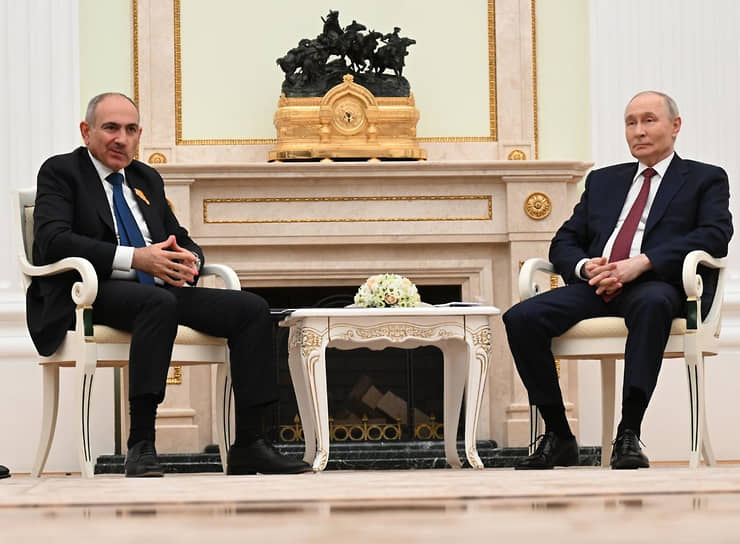
- direct pressure on Armenia’s leadership by Russian authorities. A notable example occurred during the meeting between Vladimir Putin and Nikol Pashinyan on April 1, 2026, when the former reportedly warned that further integration of Armenia with the EU could lead to a significant increase in gas prices.
Russia’s behavior toward Armenia is, in many ways, understandable. The visible deterioration of relations between Moscow and Baku in 2025, combined with the equally evident rapprochement between Azerbaijan and Yerevan, and the still uncertain trajectory of Georgia (which requires separate analysis), suggests that if Nikol Pashinyan successfully implements his domestic and foreign policy agenda, Russia risks losing its influence across the entire South Caucasus.
However, while for Russia the outcome of Armenia’s elections may determine the future of its influence over a former imperial region, for the Armenian people the stakes are even higher—the future of their national statehood itself. Over the past year, Baku has demonstrated a willingness to allow reasonable time for Nikol Pashinyan to implement the necessary steps for establishing lasting peace (such as constitutional amendments), recognizing that he is broadly moving in that direction. At the same time, Azerbaijani officials have repeatedly signaled the existence of a “Plan B” in the event of Armenia’s return to revanchist policies—whether through the political displacement of Pashinyan or his coercion into adopting such a course.
In such a scenario, a renewed Armenian emphasis on the issue of “Artsakh” (the Armenian term for Nagorno-Karabakh) could prompt Baku to advance its own counter-project of “Western Azerbaijan” and to pursue it using the means at its disposal. This, in turn, could ultimately lead to the collapse of Armenian statehood within its internationally recognized borders.
Armenia’s Choice and Russian Pressure
The outcome of the parliamentary elections scheduled for June 7, 2026 may determine not only the composition of Armenia’s future government (as Armenia is a parliamentary republic), but also the broader historical trajectory of the country. In turn, the election results will largely depend on the performance of two opposing political camps: those that can be described as the “party of peace,” or the party of Armenian realism, and those that may be characterized as the “party of war,” or the party of Armenian resentment and revanchism.
- The “party of peace” is primarily represented in the electoral race by the Civil Contract party of Nikol Pashinyan and the Republic party led by former Prime Minister Aram Sargsyan.
- The main representative of the “party of war” and Armenian revanchism is the Armenia bloc led by former President Robert Kocharyan, which includes the Armenian Revolutionary Federation (Dashnaktsutyun), a core ideological structure of Armenian resentment-based nationalism. This camp also encompasses politicians and smaller parties aligned with similar views, including the Republican Party associated with former Prime Minister Serzh Sargsyan.
- The political project associated with Russian-Armenian billionaire Samvel Karapetyan does not formally advocate revanchism, but in practice echoes Dashnak rhetoric about Pashinyan’s alleged “concessions” of Armenian national interests and calls for a tougher stance toward Azerbaijan.
- A somewhat more moderate version of this rhetoric is found among supporters of another businessman, Gagik Tsarukyan, and his Prosperous Armenia party. Although he previously cooperated with Nikol Pashinyan—earning a reputation among hardliners as a “traitor”—he has now pledged not to enter into a post-election coalition with him.
In the context of a parliamentary system, three basic electoral scenarios appear possible:
- Civil Contract secures a majority either independently or in coalition with similarly oriented parties such as Republic;
- A coalition of revanchist and populist forces—centered around the Armenia bloc and including other actors such as Prosperous Armenia—gains a parliamentary majority;
- Civil Contract manages to form a government, but only in coalition with opposition forces such as Prosperous Armenia.
While the first scenario would allow for the continuation and consolidation of Armenia’s current course of positive transformation and normalization with its neighbors, the second would likely entail a clear reversal of this trajectory. The third scenario introduces a degree of uncertainty, the resolution of which would ultimately require a choice between these two strategic directions.
At the same time, Russia is actively seeking to obstruct Pashinyan’s new course and to return Armenia to its sphere of influence through several mechanisms:
- financial and informational support for anti-Pashinyan forces, particularly via Armenian diaspora networks in Russia and Dashnak-linked structures;
- mobilization of opposition to the new course among followers of the Armenian Apostolic Church, with whose leadership Pashinyan has entered into an increasingly antagonistic relationship, seeking to depoliticize it;
- direct pressure on Armenia’s leadership by Russian authorities. A notable example occurred during the meeting between Vladimir Putin and Nikol Pashinyan on April 1, 2026, when the former reportedly warned that further integration of Armenia with the EU could lead to a significant increase in gas prices.
Russia’s behavior toward Armenia is, in many ways, understandable. The visible deterioration of relations between Moscow and Baku in 2025, combined with the equally evident rapprochement between Azerbaijan and Yerevan, and the still uncertain trajectory of Georgia (which requires separate analysis), suggests that if Nikol Pashinyan successfully implements his domestic and foreign policy agenda, Russia risks losing its influence across the entire South Caucasus.
However, while for Russia the outcome of Armenia’s elections may determine the future of its influence over a former imperial region, for the Armenian people the stakes are even higher—the future of their national statehood itself. Over the past year, Baku has demonstrated a willingness to allow reasonable time for Nikol Pashinyan to implement the necessary steps for establishing lasting peace (such as constitutional amendments), recognizing that he is broadly moving in that direction. At the same time, Azerbaijani officials have repeatedly signaled the existence of a “Plan B” in the event of Armenia’s return to revanchist policies—whether through the political displacement of Pashinyan or his coercion into adopting such a course.
In such a scenario, a renewed Armenian emphasis on the issue of “Artsakh” (the Armenian term for Nagorno-Karabakh) could prompt Baku to advance its own counter-project of “Western Azerbaijan” and to pursue it using the means at its disposal. This, in turn, could ultimately lead to the collapse of Armenian statehood within its internationally recognized borders.
Armenia’s Experience for the PSCA States
For the countries of post-Soviet Central Asia (PSCA), the experience of Pashinyan’s Armenia may be of interest as an example of:
- a gradual reduction of deep structural dependence on Russia;
- the implementation of successful institutional reforms aimed at transforming a corrupt, neopatrimonial system into a modern state aligned with European standards.
This agenda constituted the core of the revolution that took place in Armenia in 2016, suggesting the theoretical existence of two alternative paths:
- either such reforms are carried out gradually and evolutionarily by the existing authorities, thereby opening the way for national dialogue;
- or, by ignoring societal demands, the authorities push the country toward revolutionary change.
In the view of those Armenians who recognize the necessity of Nikol Pashinyan’s reforms and support them, these transformations came at the cost of the “loss of Artsakh,” responsibility for which they—unlike anti-Pashinyan revanchists—attribute to the previous authorities and to Russia, which backed them.
For the peoples of the PSCA, revolutionary change does not carry risks symmetrical to those faced by Armenia, but rather asymmetrical ones. None of the PSCA states disputes the internationally recognized borders of its neighbors (despite the existence of historical grievances and claims in some cases), nor do they control territories seized through irredentist policies that could be lost in the event of political upheaval. At the same time, within Armenia’s internationally recognized borders, both the state and society have demonstrated resilience and, despite internal tensions, have not descended into civil war—a scenario that often follows revolutions.
It is also noteworthy that Armenia’s shift in foreign policy, including its gradual distancing from Russia, has been conducted in a measured and incremental manner. The new authorities have not demanded the immediate withdrawal of the Russian military base in Gyumri, nor have they abruptly terminated Russian concessions in key sectors of the economy, thereby preserving—for the time being—preferential prices for Russian energy supplies. This reflects not inconsistency, but rather an awareness of the complexity of both domestic and foreign policy conditions, and a deliberate effort to prepare the ground for change by developing alternative frameworks in security, politics, and economics before dismantling existing arrangements.
In this regard, if Armenia’s current leadership succeeds in implementing its broader vision of domestic and foreign policy transformation, the country may evolve not only into an important logistical and trade partner for the PSCA states, but also into a model of successful transformation for their societies.
