
Sharofiddin Gadoev
Chairman of the Foundation for the Defense of Democracy in Central Asia
Amid the escalation of the conflict between the United States and Israel on the one hand and Iran on the other, various media outlets have voiced accusations against Moscow and Dushanbe, alleging that under the guise of humanitarian aid, the regimes of Russia and Tajikistan are supplying Iran with weapons or dual-use goods. At present, it is not possible to determine whether these accusations are substantiated or unfounded.
However, one evident fact is that since 2020, cooperation between the regimes in Dushanbe and Tehran has been actively developing, and that the possible fall of the latter represents a significant risk factor for the former. For objective reasons, this concern extends not only to the regime in Dushanbe but to all states of post-Soviet Central Asia, as will be discussed below. Nevertheless, the interconnections between Iran and Tajikistan—both as states and in terms of their current regimes—possess a distinct character and require separate consideration.
Tehran–Dushanbe: Support Despite Rhetoric
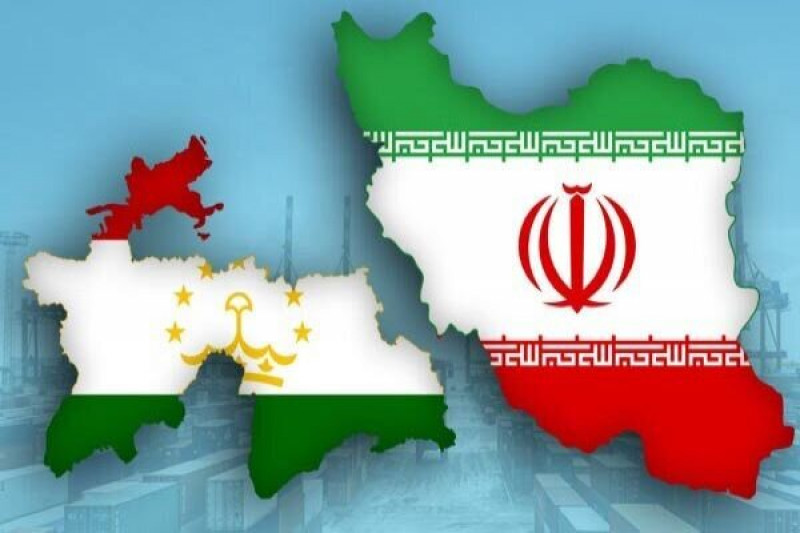
Among all the states of post-Soviet Central Asia (PSCA), Tajikistan is the only Persian-speaking country, which objectively gives its relations with Iran a particular specificity. However, the shared linguistic background constitutes merely a symbolic framework; to understand the real nature of these relations, it is necessary to consider both the genesis of Rahmon’s regime in Dushanbe and the policy pursued by the Iranian regime toward it and toward Tajikistan more broadly.
Rahmon’s power in Tajikistan was established as a neo-colonial, pro-Russian regime with the support of Russia, both during the active phase of the so-called civil war and in the subsequent hybrid phase marked by the rollback of national dialogue policies and the consolidation of a direct dictatorship.
It is important to note that, contrary to insinuations that the Iranian regime allegedly supported the Tajik opposition during the civil war and thereafter, Tehran’s actual policy toward Tajikistan served Moscow’s interests.
This represents an important lesson for the peoples of Central Asia, and for Tajikistan in particular, especially given that the rhetoric of the Iranian regime—enshrined, among other places, in Iran’s constitution—presupposes support for the export of the Islamic revolution and for the oppressed in their struggle against oppressors. A significant part of the Tajik opposition has consisted, and continues to consist, of Islamic forces, whose political representative is generally considered to be the Islamic Renaissance Party of Tajikistan (IRPT). Unlike a number of purist Sunni groups, this party, while Sunni in its foundation, has historically been open to engagement with Iran and has sought its support.
However, while making use of this openness in order to exert influence over the IRPT itself, the Tehran regime did not provide any real support either to this party or to the Tajik opposition as a whole—neither during the armed phase of the struggle against neo-colonial forces nor in the period that followed.
Tehran actively assisted Moscow in achieving a format of “national reconciliation” that offered no real guarantees to the Tajik opposition, was effectively violated by Rahmon from the outset, and was ultimately abandoned by him altogether. Thus, in the name of geopolitical considerations aimed at preserving Moscow’s influence in the post-Soviet space in opposition to the West, the Tehran regime effectively sacrificed the interests of Tajikistan’s Muslims, including those who had counted on its support. Implications for the PSCA Countries and Prospects for Tajikistan.
From Deterioration to Active Cooperation

Relations between Dushanbe and Tehran sharply deteriorated in 2015, when, amid the beginning of Rahmon’s dictatorship’s repressions against the IRPT, its leader Muhiddin Kabiri was invited to the Islamic Unity Conference in Tehran, where he met with Iran’s then Supreme Leader, Ayatollah Ali Khamenei.
Rahmon’s regime perceived this move as support from Tehran for its enemies, prompting a reaction in the form of a de facto rupture in bilateral relations (including the closure of Iranian cultural centers) and a propaganda campaign in which the Tehran regime was (unfoundedly) accused of supporting the Tajik opposition during the civil war.
In reality, Rahmon could not have failed to understand that Tehran had effectively helped him politically neutralize the Tajik opposition, despite its declarative rhetoric and its lack of any real support for that opposition. As for Kabiri’s invitation to a public event in Tehran in 2015, its motives are not entirely clear. It is possible that Tehran failed to fully assess the changing political environment in Rahmon’s Tajikistan, where the IRPT had until recently been a legal political party. It is also possible that the invitation was intended as a symbolic gesture of support for its leader in the face of repression unleashed against the party—and against the Tajik opposition more broadly—by the regime.
Nevertheless, it is evident that a serious confrontation with Rahmon’s regime over the repression of the Tajik opposition, including the IRPT, was not part of Tehran’s plans. Consequently, from 2020 onward, at Tehran’s initiative, a normalization of relations between Tehran and Dushanbe began, effectively signifying acceptance of Rahmon’s repressive domestic policies—including those targeting religiously observant Muslims in Tajikistan—as the new norm.
In 2022, Rahmon visited Tehran, and in 2023, the President of Iran paid a return visit to Dushanbe. New agreements were signed and joint projects were launched.
It is important to emphasize that the interaction between Dushanbe and Tehran is being underpinned by an ideological framework within which Rahmon’s Tajikistan is viewed by Khomeinist Iran as a counterweight to its competitors. These include:
- pan-Iranism — as a counterbalance to regional cooperation within the Organization of Turkic States;
- coordination of policy toward Afghanistan — as a counterbalance to the new Afghan authorities.
The Objective Dimension of PSCA–Iran Relations
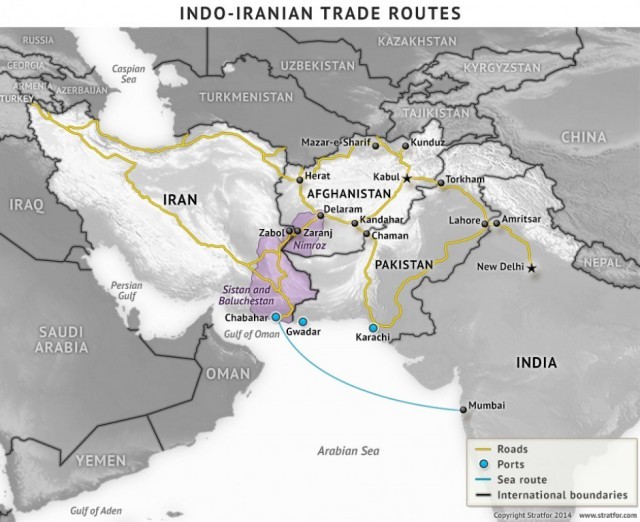
The relations between the Tehran regime and the regime in Dushanbe, as well as with the authorities of other PSCA countries, should be considered in a separate analytical dimension, while not losing sight of a parallel one—namely, the objective interdependence of all these states in matters of logistics, energy resources, water resources, migration flows, and security.
A paradox of the current geopolitical situation lies in the fact that while the Iranian regime has contributed to keeping PSCA countries within Moscow’s sphere of influence (while not opposing the expansion of China’s role), for these states themselves, cooperation with Iran, on the contrary, serves as a means of reducing their dependence on Russia.
For PSCA states, Iran is significant as:
- an outlet to the global ocean bypassing Russia and China—as part of the Southern Corridor (via the Bandar Abbas and Chabahar routes);
- a supplier of fuel, electricity, construction materials, and food products;
- a market for exports, particularly agricultural goods and metals;
- a buffer and shock absorber for return migration flows from Afghanistan.
For this reason, PSCA countries are objectively not interested in the destabilization of Iran, which could:
- disrupt critical supply chains;
- deprive them of access to the Iranian market;
- sever the Southern Corridor, thereby increasing their logistical dependence on Russia and China;
- trigger large-scale refugee flows, both from Afghanistan and from Iran itself.
Given the above, the official position of PSCA governments regarding the Iranian crisis—namely, calls for de-escalation and a pragmatic resolution—appears to objectively align not only with the interests of the current authorities but also with the national interests of these states themselves. At the same time, it is important to recognize that PSCA countries are not capable of controlling the trajectory of the Iranian crisis, whose escalation is driven, among other factors (though not exclusively), by the policies of the Iranian regime.
Therefore, regardless of how interested PSCA states, as well as most of Iran’s neighbors and other countries involved in the crisis, may be in its resolution, it is necessary to consider various scenarios for its development and their potential consequences for the region.
Scenarios for the Development of the Situation in Iran
A. De-escalation of the Conflict and Evolutionary Regime Change in Iran
At present, for many geopolitical actors, the de-escalation of the conflict between the United States and Israel on the one hand and Iran on the other represents the most preferable scenario, as the continuation and escalation of this conflict would lead to:
- rising energy prices and, consequently, an inflationary spiral and a deepening economic crisis;
- the United States becoming entangled in the conflict and the potential involvement of Europe, which could weaken Ukraine’s ability to resist Russian aggression and, moreover, provoke its expansion to the Baltic states;
- destabilization across a number of neighboring countries and regions (to be discussed below).
De-escalation could be achieved through mediation efforts by countries interested in freezing the conflict, such as China, Turkey, Qatar, Pakistan, European states, and others. However, this scenario is not coincidentally considered here only in conjunction with that of an evolutionary regime change in Iran.
In its current, increasingly radicalized form—where the Islamic Revolutionary Guard Corps (IRGC) has come to the forefront—Iran is unlikely to agree to de-escalation on terms acceptable to the United States, while, conversely, terms acceptable to Washington would be unacceptable to Tehran. This applies not only to Tehran’s demands for reparations (which, theoretically, could be addressed within the framework of some form of a “deal” in the style associated with President Trump), but above all to guarantees of security for Iran’s proxy structures, such as Lebanon’s Hezbollah—conditions that the United States and/or Israel are unlikely to accept.
Tehran’s rejection from such conditions would effectively amount to an acknowledgment of defeat for the IRGC. However, this would only become possible if a more pragmatic segment of the existing establishment were to come to power in Iran through an evolutionary process (including, potentially, an internal elite shift), and agree to halt hostilities without imposing unattainable conditions and to abandon attempts to develop nuclear weapons.
For the PSCA states, such a scenario would also be optimal for two reasons:
- it would help avoid the risks associated with escalation outlined above;
- it would establish a precedent of evolutionary regime change accompanied by internal liberalization, without revolutionary upheaval.
At the same time, it should be understood that despite the attractiveness of this scenario for many external actors and for Iran itself, its feasibility remains highly uncertain—both due to the radicalization of the Iranian regime and due to the actions of the United States, and especially Israel, which further stimulate this process.
B. Escalation of the Conflict and the Victory/Consolidation of the Iranian Regime
The failure of a U.S. military operation—including its ground component, should it be carried out ineffectively—could lead to Washington’s de facto capitulation under both domestic pressure (due to heavy human losses) and external pressure (due to significant economic costs).
If Washington were forced to accept demands from the Tehran regime that currently appear unattainable, this would only strengthen the latter domestically and enhance its position on the international stage. Such a scenario would be unacceptable not only for the United States and Israel, but also for a number of other key actors, as it would:
- entail a U.S. withdrawal from the Gulf states, accompanied by their falling under Tehran’s control and either a full or partial transformation of their regimes and foreign policies (a “Finlandization” scenario);
- weaken Turkey’s position as a geopolitical actor and, as a consequence, destabilize its current government, for which recent geopolitical successes have been an important source of legitimacy;
- create risks of geopolitical pressure on other neighboring countries perceived by the IRGC-led regime as unfriendly, including Azerbaijan—particularly through vulnerable issues such as relations with Armenia, the Zangezur corridor, and similar matters;
- establish a precedent for the triumph not only of an authoritarian but also of a radicalized regime, thereby significantly reinforcing de-democratization trends, especially in the region.
At present, however, this scenario also appears unlikely, as despite the associated costs (borne primarily by other countries), it is the United States and Israel that retain the military initiative and are inflicting damage on Iran that is far greater than what Iran is able to inflict on them.
C. Escalation, Fragmentation of the Regime and of Iran Itself
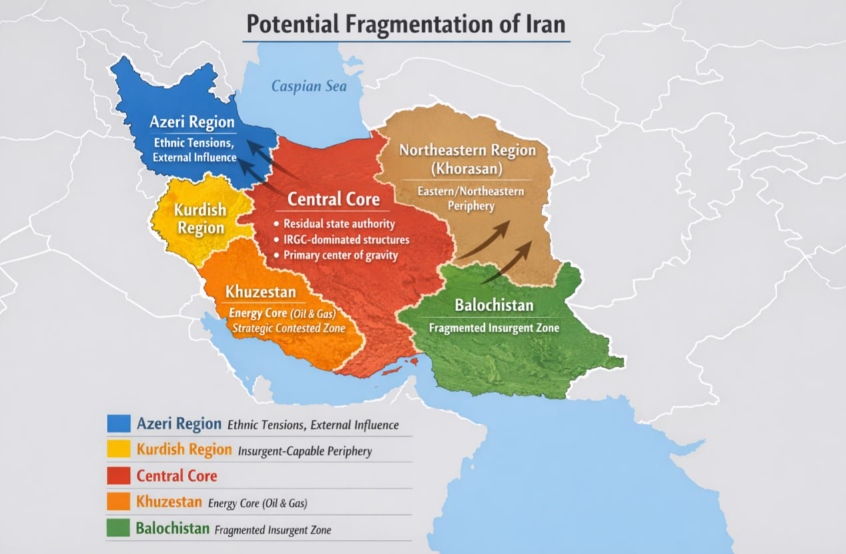
Despite the significant costs of escalation for the United States and Israel (not to mention other countries in the region and their partners), in the event that the conflict enters a ground phase, a scenario involving the fragmentation of both the regime and Iran’s statehood as a whole appears more likely.
It should be emphasized that such a scenario does not imply the automatic defeat of the IRGC-led regime by the United States and Israel. The experience of Afghanistan demonstrates that structures similar to the Taliban, when subjected to overwhelming external pressure, may shift from centralized governance to a mode of guerrilla resistance, engaging in prolonged confrontation that exhausts their adversaries. Such dynamics are inevitably accompanied by the fragmentation of the country, the possible forms of which are outlined below. The outcome of such a confrontation may include:
- the ruprture of the country;
- the victory of a reconstituted guerrilla regime (the Afghan scenario);
- or the restoration of the country’s unity in a new format.
It is important to note that in such cases one is not dealing with a “division of empire” along the lines of the former USSR or Yugoslavia—where dissolution followed pre-existing administrative borders—but rather with a Syrian-type scenario, involving the emergence of zones of control held by different actors in a civil and insurgent conflict. In the case of Iran, such a scenario could result in the formation of several such zones:
1. The Iranian (predominantly Persian) core (heartland): Tehran, Isfahan, Qom, Yazd, Semnan, parts of Fars, likely Kerman, and much of the Caspian north. This is where the regime’s main institutions, security apparatus, logistics, and command centers are concentrated. Even in a guerrilla format, regime structures would likely retain at least strong positions, if not full control, in this area.
2. The Khorasan mosaic: The northeastern and eastern periphery of Iran, bordering Turkmenistan and Afghanistan, effectively consists of three regions (northern, central, and southern). It represents an ethnically mixed space populated by Persians (primarily in urban areas), Turkic groups, Afghan irredentist communities, as well as Kurds and Baloch. As a result, the emergence of stable alternative national states here is unlikely. However, in the event of a collapse of Iranian authority, this space could become a zone of activity for transnational armed groups, including terrorist organizations.
3. The Kurdish West: Provinces with significant Kurdish populations, including parts of Kermanshah and West Azerbaijan. Informal ethnic armed structures already exist here and could come to the forefront in the event of fragmentation of central authority, potentially interacting with various internal and external actors. However, the Kurdish factor is perceived by Turkey as a major threat, which could lead to its involvement in the conflict to prevent the emergence of an Iranian Kurdistan. One potential zone of confrontation could be areas of Kurdish–Azerbaijani ethnic intermixing, where tensions also exist over access to water resources.
4. The Baloch Southeast: Sistan and Baluchestan may rapidly evolve into an autonomous military-political zone, as even now they are only loosely controlled by the Iranian regime. Just as the Kurdish factor is viewed as a threat by Turkey, the Baloch factor is perceived as a threat by Pakistan, which may also intervene to prevent irredentist developments affecting its own Baloch periphery. This would be facilitated by the fact that Iranian Baluchestan, like Kurdistan, is unlikely to form a modern state and would instead consist of networks of tribal structures, religious authorities, and smuggling-mafia groups.
5. Arab Khuzestan: The principal strategic prize in the disintegration of Iran, accompanied by high risks. Khuzestan contains around 80% of Iran’s oil reserves and has a significant Arab population. However, analysts note that Arab armed groups possess less capacity than Kurdish or Baloch forces, making it more difficult for them to establish control over the region or shield it from external interference, particularly in the absence of outside support.
6. The Azerbaijani Northwest: Tabriz, Ardabil, Zanjan, and parts of Hamadan and Qazvin. Iranian Azerbaijan is often described as a potential candidate for independence in the event of Iran’s collapse, or even for irredentist unification with the Republic of Azerbaijan. However, this is far from certain for three reasons:
- the statehood and social organization of the Republic of Azerbaijan are based on fundamentally different foundations—post-Soviet, secular, and clan-authoritarian—and do not imply integration with a large (and numerically superior) population shaped by a different socio-political culture, namely Iranian Azerbaijanis;
- while many Azerbaijanis—or more precisely Turkic-identifying groups—in Iran possess an ethnocentric consciousness, a significant portion combines Azerbaijani-Turkic identity with a broader Iranian civic and cultural identity;
- part of the territory of a hypothetical Iranian Azerbaijan lies within zones of Kurdish–Azerbaijani ethnic intermixing with considerable conflict potential.
Based on this, the Republic of Azerbaijan is objectively not interested either in absorbing Iranian Azerbaijan or even in its radical separation from Tehran. At the same time, in the event of a collapse of Iranian statehood, Baku—due to the risks associated with Iranian Azerbaijan—would not be able to remain on the sidelines and would most likely be compelled (possibly together with Turkey) to facilitate the creation of a buffer Iranian-Azerbaijani entity along its southern borders, or at least a security zone.
Thus, the scenario of Iran’s fragmentation does not imply a rapid disintegration into stable states along the lines of the former USSR or Yugoslavia, but rather entails prolonged destabilization, with the risks and negative consequences outlined above for PSCA countries, including the possibility of a reconstituted old regime returning to power once the conflict subsides.
An alternative scenario involving a rapid and effective regime change on a nationwide scale—including a return to power by Reza Pahlavi—also appears unlikely.
At the same time, although PSCA countries are objectively not interested in such destabilization of Iran, they will not be capable of preventing it. Therefore, it is necessary to consider both how these states might seek to mitigate its consequences at the level of their current authorities and what implications such developments may have for those authorities themselves.
Risks and a Window of Opportunity for Tajikistan
Among all PSCA states, Rahmon’s regime in Dushanbe is the most closely linked to the Iranian regime—both because it came to power with the support of external actors (Moscow and the Karimov regime, with Tehran’s facilitation), and because it is particularly vulnerable to the consequences of external destabilization and is structurally embedded as a transit link within the Moscow–Tehran axis.
The destabilization of Iran, including new refugee flows and the activation of cross-border armed groups, could push Rahmon’s regime into a serious crisis, potentially culminating in its collapse. Such a collapse could create a window of opportunity for forces advocating the renewal of Tajikistan. However, the problem lies in the possibility that events may unfold along a Syrian scenario or a scenario similar to a destabilizing Iran—that is, the fragmentation of the country and the transfer of its territories under the control of various groups.
As in the case of Iran, such a scenario could be prevented through an evolutionary regime change, involving the removal from power of its most odious figures (in the case of Tajikistan, Rahmon himself), the emergence of compromise-oriented and pragmatic actors, and the initiation of a genuine (rather than imitative, as previously occurred in Tajikistan) process of national dialogue, implying the return of a real opposition to both politics and governance.
Responsible patriots of Tajikistan—both within the current authorities and in the opposition—must be prepared to jointly implement such a scenario of national transition in order to prevent catastrophic outcomes for the country. At the same time, it should be clear that, as in the case of Iran, attempts by the existing regime to blackmail both its own population and neighboring states with the consequences of its potential collapse will not be able to block the changes that have already matured, but will only exacerbate the situation.
For their part, responsible forces advocating the transformation of Tajikistan must carefully analyze ongoing developments and prepare for a scenario of national transition, including the formulation of appropriate programmatic and personnel proposals.
