
By the Analytical Group of the Foundation for the Defence of Democracy in Central Asia (FDDCA)
Kazakhstan is the largest country in post-Soviet Central Asia (PSCA), and the geopolitical future of the entire region depends to a significant extent on its trajectory.
Since independence, Kazakhstan has achieved considerable success in shedding the status of a Soviet-Russian colony and transforming itself into a fully functioning state. Nevertheless, while acknowledging these achievements and their importance, it must be noted that the geopolitical position of Kazakhstan — like that of all PSCA states that emerged from Kremlin control — remains dual and unstable.
Against the backdrop of U.S. policy in the Western Hemisphere, calls are increasingly heard in Russia for revoking the independence of PSCA states and placing them under direct military-political control by Moscow, potentially even incorporating them into a restored Union State. Although Russia’s difficulties in the war against Ukraine may currently make such ambitions seem unrealistic, ignoring this threat would be a mistake.
Due to both Kazakhstan’s geography and its economic and geopolitical potential, the preservation and strengthening of its independence — or, conversely, its loss — will be decisive for the geopolitical future of the entire PSCA. Accordingly, this report outlines both the prerequisites for maintaining Kazakhstan’s independence and the risks to it, followed by recommendations on how to encourage the former scenario and prevent the latter.
Independent Kazakhstan and the Path of Decolonization
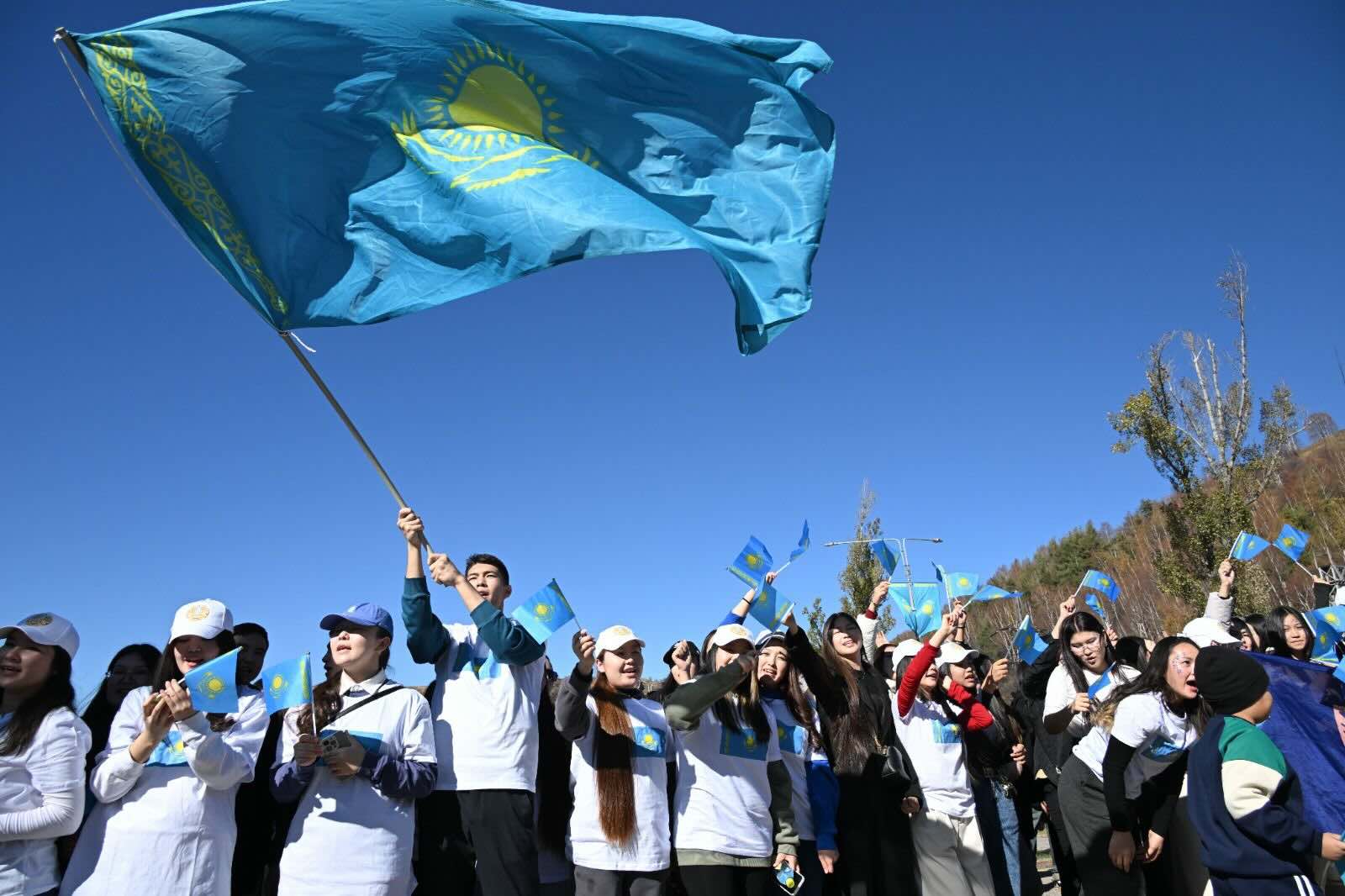
Kazakhstan’s emancipation from Moscow’s dominance and the “Russian world” has taken place across several spheres, most importantly national revival, economic diversification, and political diversification.
National Revival of the Kazakhs
The principal achievement of Kazakhstan’s state independence has been its transformation from a Russified colony of the Russian world, in which the titular nation occupied a marginal position, into a country predominantly populated by Kazakhs with strengthening positions of the Kazakh language.
In 1989, in Soviet Kazakhstan:
- Kazakhs constituted only 39.75% of the population;
- about 67% of all schoolchildren studied exclusively in Russian;
- fewer than 1% of the non-Kazakh population knew the Kazakh language.
By 2010, in independent Kazakhstan:
- 70.4% of the population were Kazakhs;
- 53% of schoolchildren studied in Kazakh and another 28.9% in both Kazakh and Russian;
- more than 90% of Kazakhs and around 25% of Russian-speakers possessed at least some knowledge of Kazakh.
Importantly, these changes were achieved without ethnic cleansing, through natural and evolutionary processes, primarily due to:
- higher birth rates among Kazakhs;
- repatriation of ethnic Kazakhs from abroad;
- the gradual and peaceful outflow from Kazakhstan of that portion of the Russian-speaking population unwilling to live in an independent state rather than as part of the Russian world.
These trends should not be taken for granted. Evidence of this is the ongoing Russification in the Turkic republics that remained within Russia — Bashkortostan, Tatarstan, Chuvashia, Khakassia, and others. With high probability, had Kazakhstan not gained independence, the Kazakhs might today face the fate of Russia’s Turkic peoples: culturally disappearing and marginalized ethnic groups on their own land, rather than a full-fledged nation within its own state.
The turning point of this national-state crossroads came in 1986, when Moscow removed the head of Soviet Kazakhstan, Dinmukhamed Kunaev, fearing the strengthening of nationally oriented forces, and appointed instead a Russian official sent from the RSFSR, Gennady Kolbin. The Kazakhs understood that this could turn Kazakhstan into something akin to a Russian autonomous republic and protested decisively against such colonialism. Although the protests were brutally suppressed, Moscow ultimately had to appoint Nursultan Nazarbayev to calm tensions — and under his leadership, in conditions of independence, a peaceful Kazakh “reconquista” of Kazakhstan occurred.
Economic Diversification
Post-Soviet Kazakhstan managed to end its exclusive economic orientation toward Russia and substantially balance it through economic relations with other partners: China, EU countries, the United Kingdom, Turkey, and others.
By 2014, Kazakhstan’s total foreign trade turnover reached $141.4 billion (exports: $81.6 billion; imports: $59.8 billion). The main partners’ shares were:
- 22.9% — Italy (the main importer and de facto hub for re-exporting Kazakh oil to the West; Italian capital also participates in extraction and processing);
- 18.3% — China;
- 11.7% — Russia.
Thus, Russia fell to third place with a modest $25.9 billion (11.7%). In investment, Russia’s position is even weaker. In accumulated FDI stock:
According to OECD:
- Netherlands — 29.75%
- United States — 18.23%
- Switzerland — 9.86%
- Belgium — 5.57%
- China — 5.11%
According to Lloyds Bank Trade:
- Netherlands — 23.3%
- United States — 19.6%
- Russia — 7.7%
- United Kingdom — 6.1%
- China — 5.5%
- France — 5.4%
Kazakhstan’s growing economic interaction with the EU is also notable:
- 2021: about $24 billion
- 2022: about $32 billion
- 2023: about $35–36 billion
- 2024: over $38 billion
Kazakhstan’s trade with the EU alone is already twice its trade with Russia, while the combined West (EU+USA+UK+Switzerland) accounts for roughly 65–70% of the country’s FDI stock.
Political Emancipation

Kazakhstan’s political emancipation from Russia manifests itself in several key aspects.
1) The Eurasian Economic Union (EAEU) did not become a basis for political integration (including Kazakhstan’s accession to the Union State), and its share in Kazakhstan’s trade turnover has not grown but declined — from 26–27% in 2015 to about 21–22% in 2024.
2) Cooperation in the Turkic world
In 2009 Kazakhstan became a co-founder of the Cooperation Council of Turkic-Speaking States, which in 2021 was transformed into the Organization of Turkic States (OTS). Unlike the EAEU, Kazakhstan’s trade with OTS countries has steadily increased:
- 2015: ~$4.5–5 billion
- 2019: ~$6.2 billion
- 2021: ~$7.5–8 billion
- 2023: ~$11–12 billion
- 2024 (estimate): ~$12–13 billion
An important symbolic marker was the 2017 decision to gradually shift the Kazakh language to the Latin script. Kazakh scholars also play an active role in OTS expert work on the unification of Turkic alphabets and orthography.
3) Regional Central Asian cooperation
In 2018 Kazakhstan initiated the Consultative Meetings of the Heads of State of Central Asia, whose activity intensified after 2022. These meetings address key PSCA issues. Notably, intra-regional trade has grown:
- 2016: ~$5–6 billion
- 2023: ~$15–16 billion
In 2025 Azerbaijan was incorporated into this format, notably amid worsening Azerbaijan-Russia relations.
4) Limiting open proponents of the “Russian world”
Kazakhstan’s authorities have taken action against figures openly questioning the country’s independence. The high-profile cases of Yermek Taichibekov (2015), Sergey Shevtsov (2022), Evgeny Belousov (2022), and Aslan Tolegenov (2025) represent only the visible part of a broader policy suppressing openly pro-Russian and anti-Kazakhstani propaganda.
5) Distancing from Russia’s aggression against Ukraine
After the full-scale invasion in 2022 Kazakhstan reaffirmed its recognition of Ukraine’s internationally recognized borders. In practical terms this distancing has included:
- criminalization of participation by Kazakh citizens in the Russia-Ukraine war;
- partial and pragmatic compliance with sanctions against Russia.
Persisting Risks from Russia
Despite these factors, potential threats to Kazakhstan’s sovereignty and territorial integrity should not be underestimated.
The seriousness of these risks stems from the combination of two conditions:
- the persistence — and intensification — in Russia of geopolitical ressentiment and revanchism which, amid losses in the war against Ukraine and shifts in U.S. policy, increasingly translates into ambitions to effectively annul the sovereignty of post-Soviet states and place them into Moscow’s formal sphere of influence (a Russian analogue to the Monroe Doctrine);
- Russia’s retention of leverage over Kazakhstan.
Russian Military Infrastructure
Russia retains military-related infrastructure in Kazakhstan:
- Baikonur Cosmodrome
- Sary-Shagan test range
- Chkalov range
- Kapustin Yar range
Additionally, in early 2022 Russian troops effectively took partial control of key infrastructure when deployed at President Tokayev’s request during unrest — rehearsing intervention logistics.
The “Crimea/Donbas” Scenario
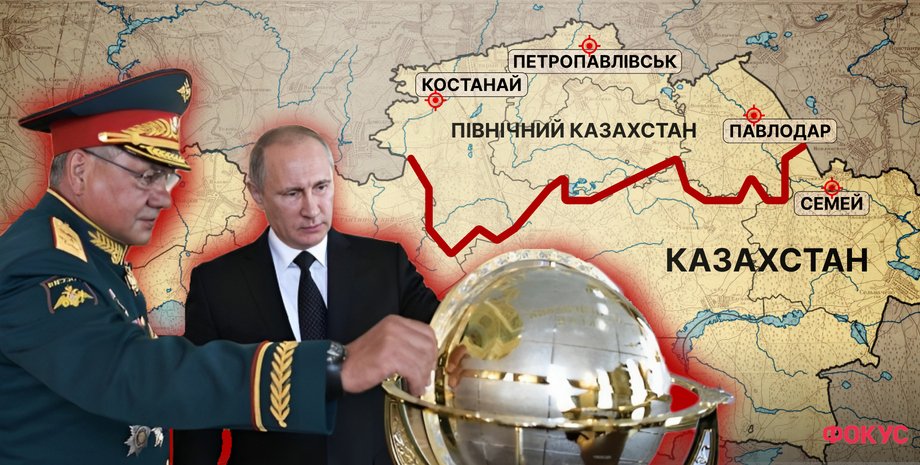
Several northern regions still contain large Russian-speaking populations:
- North Kazakhstan — 44.48% Russians
- East Kazakhstan — 44.23%
- Kostanay — 33.5%
- Karaganda — 31.1%
- Pavlodar — 28.9%
- Akmola — 26.3%
These territories, adjacent to Russia, are sometimes described in Russian discourse as “Northern Kazakhstan,” analogous to “Novorossiya.” As in Ukraine, demographic reality would not prevent annexation attempts under certain conditions.
Ambivalence in Kazakhstan’s Policy
Despite positive trends, the government maintains dependence signals:
- defense of continued Russian language primacy in public life;
- invitation of Russian troops in 2022;
- rhetoric implying Russia cannot be defeated in Ukraine;
- use of Russian Black Sea ports for exports.
The Need for Policy Hardening
Statements by numerous Russian politicians and propagandists make clear that Moscow increasingly views Kazakhstan’s current policy as unfriendly. Reportedly, this message was conveyed to former president Nursultan Nazarbayev during a widely publicized closed meeting with Vladimir Putin in late 2025.
Any end to the Russia-Ukraine war short of a decisive defeat of Russia — whether a freeze or a Russian victory — would free significant Russian resources and political energy that could be redirected toward weaker neighbors. Statements by Russian officials advocating a shift from a “carrot policy” to a “stick policy,” and open calls by ideologues such as Aleksandr Dugin and Vladimir Solovyov for subjugating the post-Soviet space, reinforce this assessment.
The Foundation for Defence of Democracy in Central Asia therefore recommends that Kazakhstan’s authorities and society recognize the real nature of the Russian threat and undertake the following measures:
- prepare the military and population for potential aggression;
- remove Russian military infrastructure and end military use of Baikonur;
- counter “Russian world” ideology and strengthen Kazakh civic nationhood;
- publicly recognize the Ukraine war as directly relevant to Kazakhstan’s future;
- build a national consensus around sovereignty and decolonization.
Azerbaijan’s example shows policy adjustment is possible even without regime change: strengthening the army, confronting pro-Russian networks, and aligning politically with resistance to revanchism.
Given this example, the Foundation for Defence of Democracy in Central Asia believes Kazakhstan can also adjust its policy rapidly enough to avoid becoming a victim of the imperial ambitions of the Russian world.
