
By the Analytical Group of the Foundation for the Defence of Democracy in Central Asia (FDDCA)
Over three decades of uninterrupted rule by President Emomali Rahmon, Tajikistan has evolved into a state with limited geopolitical autonomy. A Russian military presence remains stationed on its territory (the 201st base), and a substantial share of the country’s economy depends on remittances from labor migrants working in Russia.
Within Russia, Tajik migrants have long faced stigmatization, harassment, and periodic violence. The tragedy in Odintsovo in December 2025 — in which a ten-year-old Tajik schoolboy, Kobiljon Aliev, was murdered at a Moscow-region school by a minor attacker who explicitly cited ethnic motives — shocked observers far beyond the region. Equally striking, however, was the reaction in segments of the Russian public sphere: thousands of online commentators attempted to justify or minimize the crime, while some highly visible bloggers openly endorsed it.
The killing of Kobiljon was not an isolated case. During the same period in which large-scale labor migration from Tajikistan to Russia expanded, multiple high-profile killings of Tajik children occurred there, including the deaths of Daler Bobiev, Khuvaydo Tillozoda, Umarali Nazarov, Khursheda Sultanova, and Nilufar Sangboeva.
The number of Tajik citizens killed in Russia more broadly reaches into the hundreds, possibly more. Additional casualties have occurred in the war against Ukraine, where migrants have been recruited or pressured into military service through a combination of legal vulnerability, economic necessity, and incentives connected to the acquisition of citizenship.
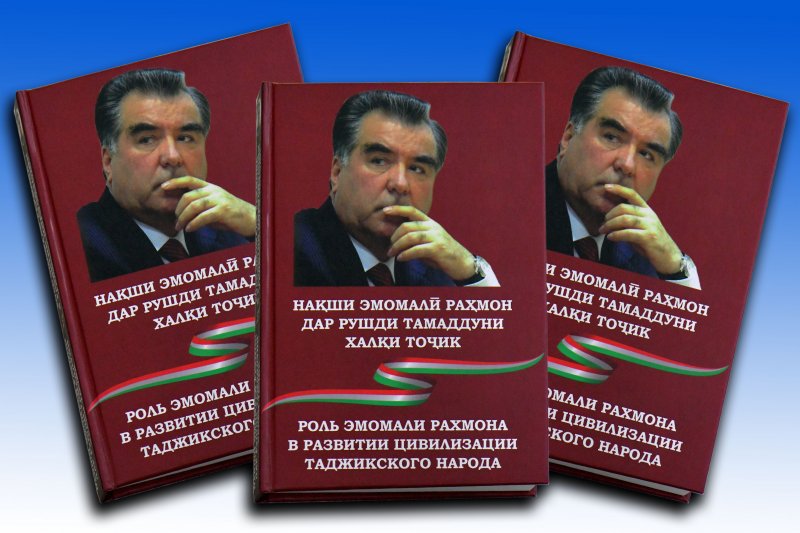
At the same time, the political discourse of the Tajik leadership presents the country as a civilizational center of great historical significance. Rahmon has repeatedly described Tajiks as representatives of an ancient “Aryan civilization,” and pro-government commentators often contrast Tajiks with their Turkic-speaking neighbors, portraying the latter as culturally inferior. This rhetoric has developed while the neighboring Turkic-speaking states have expanded cooperation through the Organization of Turkic States, strengthening economic and geopolitical coordination, whereas Tajikistan remains heavily dependent on Russia as a labor source and security partner.
To avoid misunderstanding, it should be emphasized that Tajiks are indeed heirs to a rich cultural heritage. Yet historical legacy alone does not ensure contemporary development. When political discourse relies on symbolic glorification of the past without corresponding modernization, it ceases to strengthen national dignity and instead risks substituting identity rhetoric for strategy. In this sense, presenting Tajiks primarily as heirs of an “Aryan civilization,” while maintaining structural dependency and limited economic development, functions less as nation-building and more as symbolic nationalism. The accompanying contrast with neighboring Turkic societies likewise reflects a political narrative rather than either pragmatic national interests or contemporary scholarship, and may reinforce patterns of neo-colonial dependence.
National Rhetoric and Political Practice

During the late Soviet period, as the imperial system weakened and national movements emerged across the USSR, the appearance of cultural revivalist ideas among Tajik intellectuals associated with the Rastokhez movement was historically understandable. Tajik society began reassessing its colonial experience, including the national-territorial delimitation that left large portions of Tajik populations and cultural centers outside the borders of the Tajik Soviet republic.
However, the absence of a politically autonomous national elite during the Soviet period, combined with imperial administrative strategies, redirected much of this emerging national consciousness toward tensions with neighboring peoples who had themselves experienced similar forms of subordination.
In contemporary political discourse Rahmon often presents himself domestically as a defender of national identity. In practice, however, national symbolism has frequently coexisted with policies that reinforce external dependence — including reliance on migrant labor remittances and the hosting of foreign military infrastructure. Historical memory also tends to omit the extent to which regional actors, including both Russia and neighboring Uzbekistan during the civil war period, contributed to the consolidation of his rule.
As a result, identity-based rhetoric has increasingly functioned less as a program of national development and more as a legitimizing framework for an externally dependent political order. A comparable pattern can be observed elsewhere in the post-Soviet space, where forms of ressentiment-based nationalism have served to maintain geopolitical alignment with Moscow rather than to promote genuine sovereignty.
Armenia: Anti-Turkic Ressentiment and Geopolitical Alignment
Analysts of Soviet nationality policy have long noted that its core objective was not the elimination of national forms but the prevention of genuinely independent national elites capable of political autonomy from Moscow.
In certain cases, this objective was achieved not only through repression but also through the encouragement of a type of symbolic or instrumental nationalism that did not threaten imperial cohesion. The defining feature of such nationalism was that it was directed not against imperial dependence, but against neighboring peoples — who were portrayed as unjustly privileged — while political expectations were oriented toward protection from the imperial center.
A frequently cited example is the development of Armenian political discourse in the late Soviet and early post-Soviet periods. During the mid-twentieth century, diaspora and domestic political currents emphasizing confrontation with Turkey and Azerbaijan and strategic reliance on Russia gained prominence, while alternative approaches advocating regional reconciliation were marginalized.
By the late Soviet period, networks linking the Armenian SSR and diaspora organizations were permitted to function more openly than comparable contacts in most other Soviet republics. As the Soviet Union weakened, political mobilization in Armenia increasingly focused on confrontation with neighboring states rather than on cooperative regional development. The resulting conflicts contributed to Armenia’s geopolitical isolation and deepened its reliance on Russian security guarantees.
This orientation was accompanied by a narrative framework portraying Russia as a protector, Turkey as a historical enemy, and Azerbaijan as an unjust beneficiary of Soviet territorial arrangements. Cultural narratives often emphasized civilizational hierarchy, presenting Armenians as an ancient settled civilization and neighboring Turkic peoples as nomadic outsiders.
At the same time, the regional balance evolved differently: neighboring states developed economic and military capacity, while Armenia experienced demographic decline and economic constraints. Decades of conflict culminated in the loss of control over Nagorno-Karabakh in 2020 and again in 2023.
The political changes in Armenia after 2018 opened space for reassessing this ideological framework. The emerging leadership gradually shifted toward a strategy prioritizing state development, normalized relations with neighbors, and a more conventional foreign policy in which Russia was treated as one external partner among others rather than as a civilizational patron.
The long-term consequences of the earlier approach included significant human losses, economic isolation, refugee displacement, large-scale military expenditure, and sustained emigration. These outcomes are frequently cited as illustrating the risks associated with symbolic or ressentiment-driven nationalism when it substitutes for pragmatic state strategy.
Post-Soviet Tajikistan: A Moderated Parallel
Fortunately, relations between Tajikistan and its Turkic-speaking neighbors — especially Uzbekistan — never escalated into large-scale interstate war comparable to the Armenian–Azerbaijani conflicts. One explanation may be that, unlike Armenia’s relatively consolidated political elite, Tajikistan’s ruling structures were shaped primarily through internal conflict and relied heavily on external security support.
Nevertheless, in moderated form, the symbolic nationalism promoted in Tajikistan displays similar features. Public rhetoric depicts Tajiks as a civilizational outpost surrounded by culturally alien neighbors, while external security reliance is justified as protection against those neighbors.
Meanwhile, Turkic-speaking states of the region have expanded institutional cooperation through the Organization of Turkic States, implementing projects in investment coordination, financial policy cooperation, digital economic exchange, business integration, special economic zones, and academic cooperation. These initiatives aim not at historical symbolism but at contemporary economic and technological development.
Tajikistan’s absence from such frameworks limits its participation in regional economic integration, while alternative civilizational narratives provide little practical economic or geopolitical benefit. Iran lacks direct geographic connectivity and follows its own strategic priorities; Afghanistan is perceived primarily through security concerns; and Russia, despite rhetorical cultural affinity, treats Tajik migrants largely within a labor-migration framework rather than as civilizational partners.
As a result, preference for distant or symbolic affiliations over cooperation with immediate neighbors risks placing Tajikistan at the periphery of regional development processes.
From Symbolic Nationalism to a Development-Oriented National Strategy
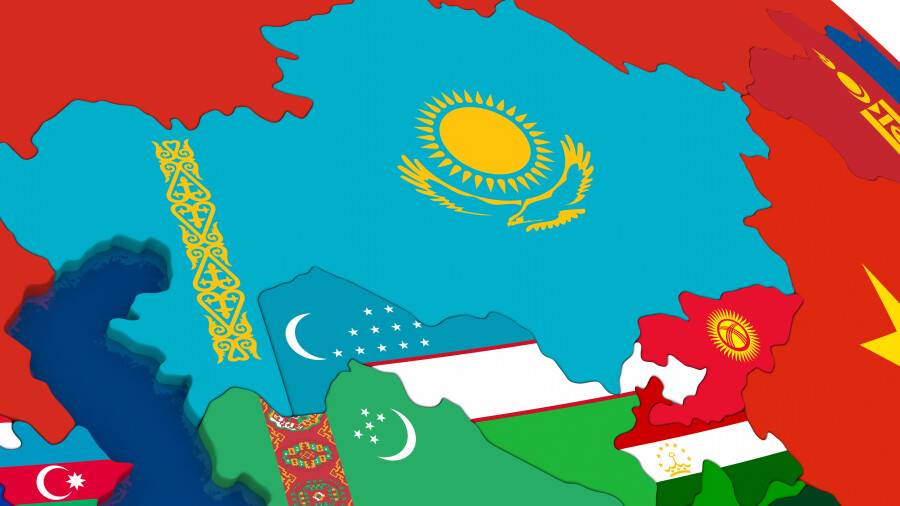
The continued existence of the Tajik people, with their Persian-language cultural heritage, is already secured by the presence of an internationally recognized state — Tajikistan — to whose territory no neighboring country advances formal claims.
This represents a major historical achievement. Statehood provides a foundation not only for cultural preservation but also for political and economic development.
The principal challenge instead lies in overcoming structural dependence and the vulnerability experienced by citizens abroad. Addressing this challenge requires closer cooperation with neighboring states, including Uzbekistan and Kyrgyzstan directly and, more broadly, Kazakhstan, Turkmenistan, and Azerbaijan.
Such a shift would require moving beyond ideological frameworks formed during the late Soviet period that emphasized civilizational opposition between Tajiks and Turkic peoples. Historical evidence suggests that over the past millennium Tajiks developed not only as a Persian-speaking population but also as part of a broader Islamic civilizational space in which Persians, Turks, Arabs, Kurds, and other peoples coexisted and interacted.
In Central Asia, major urban centers such as Samarkand and Bukhara historically functioned as shared cultural environments in which linguistic and ethnic distinctions were secondary to religious affiliation, local community ties, and political loyalty. Modern ethnic divisions were shaped largely by imperial administrative policies that introduced rigid territorial categories into a historically interconnected region.
A more constructive approach would involve gradual normalization of regional relations, renunciation of territorial claims, respect for cultural rights of minorities, and expansion of cross-border cooperation. Such policies would strengthen both stability and economic development.
Within this framework, participation by Tajikistan — for example in observer or partnership formats — in regional cooperative institutions such as the Organization of Turkic States could facilitate economic and educational exchange. This would not negate linguistic or cultural distinctiveness but could instead encourage complementary identities and multilingual interaction, historically common in the societies of Central Asia.
The frequently invoked narrative of a timeless opposition between “Iran” and “Turan” reflects literary symbolism rather than modern political reality. Contemporary Persian- and Turkic-speaking peoples share centuries of interconnected history, cultural exchange, and religious traditions.
For Tajikistan, long-term national development is therefore more likely to emerge from pragmatic regional cooperation and economic modernization than from symbolic civilizational competition. A strategy combining cultural self-confidence with regional integration may provide the most viable path toward genuine national renewal.
