
by Maksim Baidak, Vice President
The Foundation for Defence of Democracy in Central Asia (FDDCA)
As noted in the report “The Dynamics of De-democratization and the Prospects for Democratization in the Post-Soviet Central Asian States,” until recently Kyrgyzstan was widely regarded as the most democratic political system in the region. Among all post-Soviet Central Asian countries (PSCA), Western analytical organizations classified only Kyrgyzstan as “partly free,” while the remaining PSCA states were categorized as “not free.”
Until recently, Kyrgyzstan remained the only country in the PSCA without a system of personalized and effectively lifelong rule. Over the post-Soviet period the country experienced six presidential turnovers, three of which occurred as a result of mass protest mobilization and another through an early resignation. The political order was characterized by a competitive multiparty environment, relatively open public debate, and the presence of independent media outlets.
These conditions contributed not only to the inflow of Western investment — including companies such as Centerra, KICB, and DemirBank, as well as joint projects with the World Bank and the EBRD — but also to extensive academic cooperation. Kyrgyz universities became participants in international programs such as Erasmus+, Tempus, Fulbright, and DAAD, opening access for many Kyrgyz scholars and students to the Western academic sphere.
As the aforementioned report on de-democratization processes in the PSCA indicates, the situation began to change following the rise to power of Sadyr Japarov in 2020. Kyrgyzstan moved from being the only partly free state in the PSCA to a classification similar to that of its regional neighbors, while its positions in global democracy indices deteriorated rapidly.
However, according to experts from the Central Asia Democracy Protection Foundation, attention should be paid not only to the deterioration of formal democratic indicators in Kyrgyzstan, but also to deeper structural processes taking place within the country, which may represent a long-term challenge both for the development of Kyrgyz national statehood and for the broader PSCA region.
“Unusual Nationalists” in Power
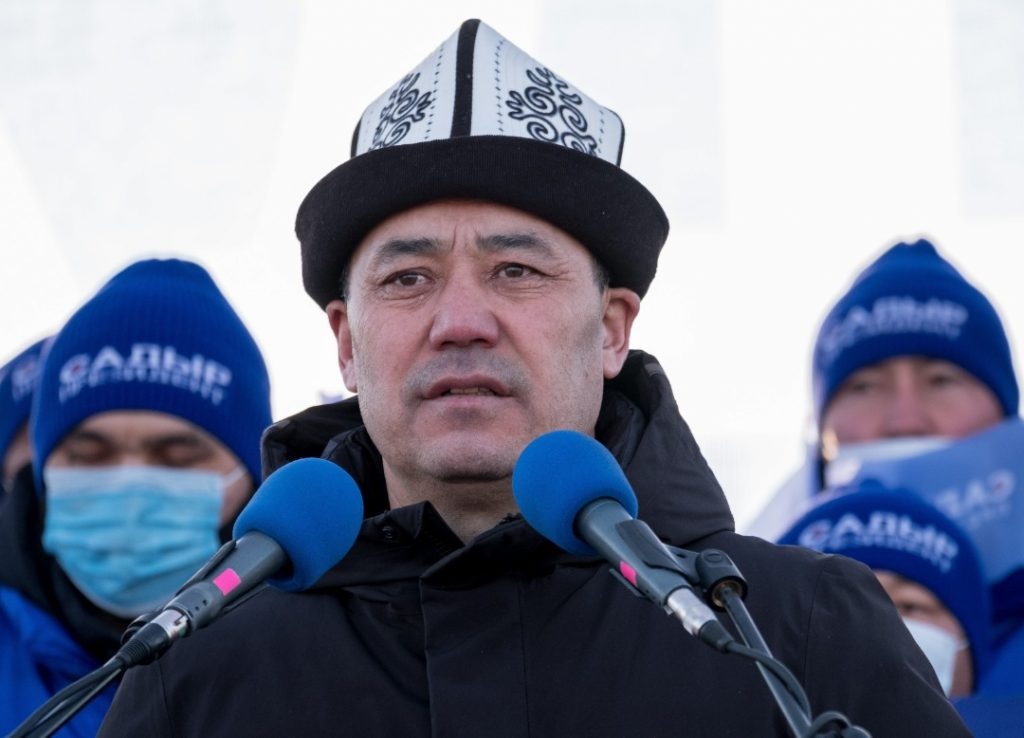
Some Western commentators were quick to explain the curtailment of democratic freedoms in Kyrgyzstan after 2020 by the rise to power of the “nationalist” Sadyr Japarov. As often occurs with such assessments — particularly when developments in post-colonial societies are interpreted primarily through a liberalism-versus-nationalism framework — this characterization may be misleading for those seeking to understand the dynamics unfolding in the country.
If the situation in Kyrgyzstan is to be analyzed through the lens of nationalism, which is frequently attributed to the current authorities by their Western critics, it is first necessary to clarify what nationalism would be expected to mean in this specific historical context.
Despite the existence of localized border disputes (as in the case of Tajikistan) or interethnic tensions (for example between Kyrgyz and Uzbeks in Osh), none of these issues constitutes the central axis of Kyrgyz national self-definition, nor were they at the core of Japarov’s political mobilization in 2020.
The historical character of Kyrgyz national development is shaped primarily by its post-colonial trajectory. Kyrgyzstan emerged as a state through the external partition of the historically interconnected Turkic space of Turkestan and the creation of mutually separated and weakened quasi-national Soviet republics. It acquired sovereignty following the collapse of the Soviet imperial system that had governed the region. The country experienced both mass repression and demographic engineering within the USSR, as well as earlier colonial violence during the 1916 uprising under the Russian Empire, remembered in Kyrgyz historical memory as the Urkun. It still hosts a military presence of the successor state to these imperial formations, while a significant share of the population continues to use the language of the former metropole rather than the state language. At the same time, Kyrgyzstan remains a major source of migrant labor for that same state, creating economic and political leverage that includes pressure connected to migration and historical interpretation.
In many post-colonial contexts, nationalism typically manifests as an effort to overcome such dependencies and to continue the emancipation of a young state and nation from imperial structures. In Kyrgyzstan, however, recent political developments appear to have moved in a different direction.
After coming to power, Japarov and his political team did not raise the issue of withdrawing Russian military forces from Kyrgyz territory, emphasized the practical importance of maintaining the Russian language, and did not restrict the activity of pro-Russian media networks operating in the country. In certain cases they facilitated the emergence of new ones. Notably, Deputy Prime Minister Edil Baisalov publicly stated that “Kyrgyzstan is part of the Russian world,” a concept that carries significant ideological meaning in contemporary Russian political discourse.
Given Kyrgyzstan’s post-colonial background, such policies are difficult to interpret within a conventional framework of nationalizing statehood. This raises an important analytical question: why has the present Kyrgyz leadership nevertheless come to be widely described in parts of the Western expert community as “nationalist,” and why is its recent political trajectory often explained through that label?
Not Nationalism but Anti-Western Populism
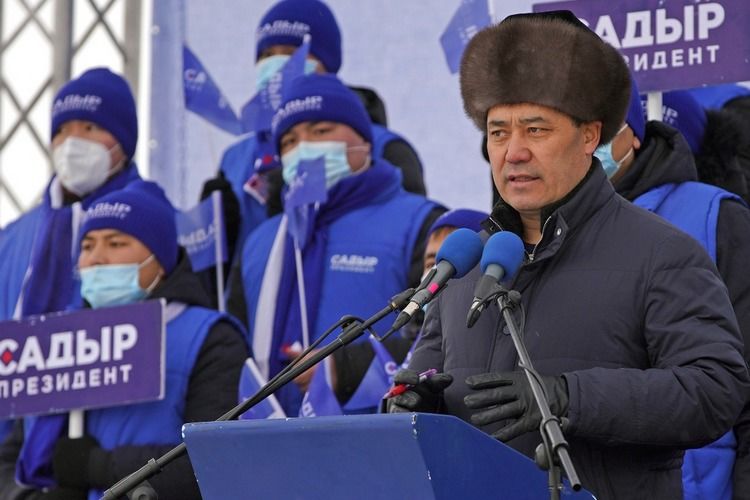
The classification of Japarov and his policies as nationalist has largely been based on several actions undertaken by the new authorities: the promotion of a strong-state narrative as an embodiment of national unity, the expansion of presidential powers, pressure on Western capital including the nationalization of the Kumtor gold mine previously operated by the Canadian company Centerra, and rhetoric about “external interference” accompanied by restrictions on NGOs with Western connections.
For this reason, Japarov’s political course may be more accurately described not as nationalism — a term that risks obscuring both the nature and the sources of the problem — but as a form of anti-Western populism accompanied by a growing pro-Russian and pro-Chinese external orientation. Given that Kyrgyzstan historically developed within the imperial and post-imperial space of Russia, the redirection of political rhetoric toward the West while simultaneously strengthening relations with Moscow — and increasingly with Beijing — can be interpreted as a geopolitical realignment rather than a nationalizing project.
In this respect, developments in Kyrgyzstan resemble processes observed in Georgia under the rule of Georgian Dream, which has sought normalization with Russia while entering into increasing tension with Western partners that had supported Georgia’s independence from Moscow.
Accordingly, the situation in Kyrgyzstan may be understood as a gradual populist-authoritarian transformation of the political order accompanied by closer political orientation toward Russia and a movement toward incorporation into the ideological space commonly referred to as the Russian world.
A Potential Russkii mir Outpost in Central Asia
The broader context of simultaneous resistance to “Western influence” and encouragement of Russian presence is illustrated by a number of recent actions taken by the authorities in Bishkek across the media, ideological, and diplomatic spheres.
The government of President Japarov has tightened regulatory measures affecting independent media and outlets with foreign participation, complicating the work of platforms such as Azattyk (RFE/RL), Kloop, and 24.kg, which had played a significant role in public debate and in counterbalancing pro-Kremlin narratives.
At the same time, the launch of a new pro-Russian media initiative, NOMAD, was announced. The project is intended to broadcast to Russian-speaking audiences in both Kyrgyzstan and Kazakhstan. The producer is Anna Abakumova, a journalist associated with RT who reported on Russia’s war against Ukraine, while the financial backer is Ilan Shor, a Moldovan oligarch under international sanctions and widely reported to have links with Kremlin-aligned political networks. The editorial team includes former personnel connected with Russian state media in Kyrgyzstan.
Recruitment for the project was conducted openly at the Kyrgyz-Russian Slavic University in Bishkek, illustrating the role educational and cultural institutions can play within broader transnational influence networks. Investigative reporting by the Moldovan media outlet IPN has additionally claimed that Japarov has used a business jet belonging to Shor, reportedly purchased through a Gulfstream G650 transaction valued at approximately $21.8 million.
Bishkek also hosted a summit of the Russia-led Collective Security Treaty Organization (CSTO) in November 2025, and Deputy Prime Minister Edil Baisalov publicly stated that “Kyrgyzstan is part of the Russian world.” The concept has acquired explicit ideological connotations in contemporary Russian political discourse.
Taken together, these developments suggest that Kyrgyzstan could increasingly function as a regional platform for the projection of Russian world influence in Central Asia.
An Analytical Framework: National Democracy and Post-Imperial Dependence
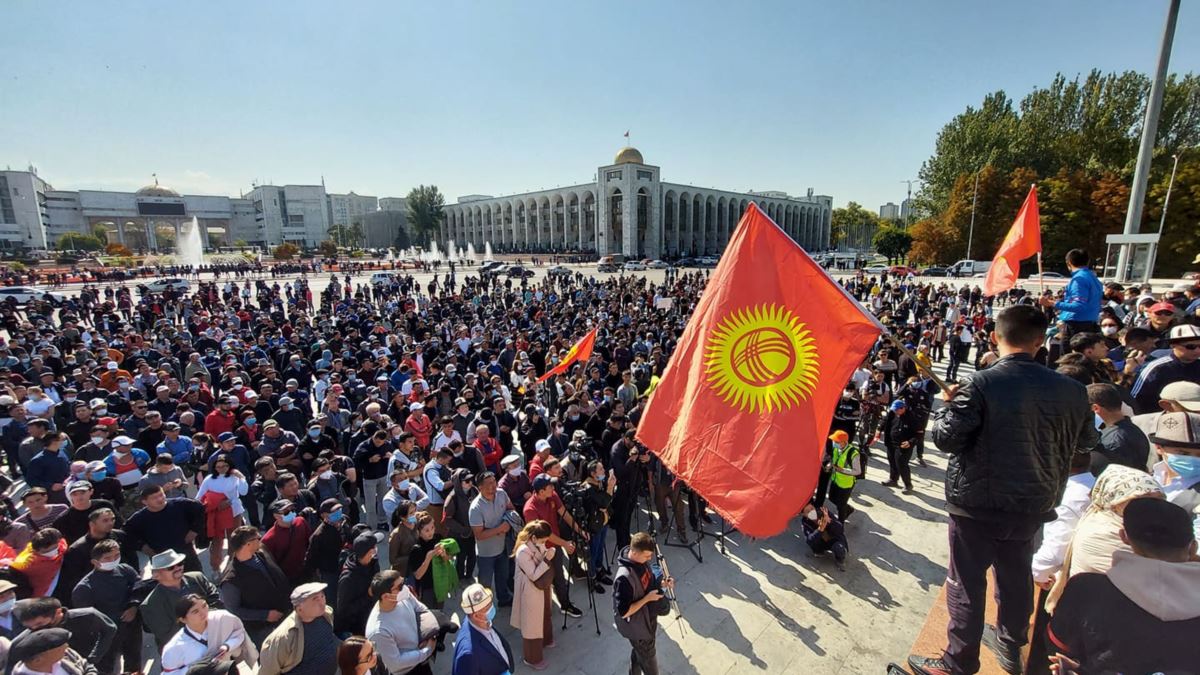
In light of the above, developments in Kyrgyzstan are more adequately understood not as a confrontation between nationalism and democracy but within the framework of post-colonial political transformation.
In such contexts, national democratic movements often combine state-building with democratization, as illustrated by reformist politics in Georgia during the presidency of Mikheil Saakashvili. A central task of national movements in post-colonial societies is the overcoming of imperial legacies and the reconstruction of identities shaped by external domination.
For the Kyrgyz — historically a Turkic and predominantly Muslim society rooted in the broader cultural space of Turkestan — identity formation is more closely connected with the Turkic world than with the ideological construct known as the Russian world, which draws upon imperial continuity and seeks to preserve influence in former imperial territories.
From this perspective, the political course pursued under Japarov may be viewed as a form of political dependence on Moscow combined with anti-Western rhetoric presented as resistance to foreign influence, weakening international partnerships while deepening integration into the Russkii mir geopolitical and ideological space.
Experiences in other post-Soviet countries — such as Georgia during the Saakashvili period or Ukraine during the Orange Revolution and after the 2014 Revolution of Dignity — suggest that in post-colonial settings democratization and national emancipation from imperial structures frequently develop simultaneously rather than in opposition.
