
Uzbekistan: Between Reform and the Risk of Stagnation
Author: Maksim Baidak
Vice President, Foundation for the Defense of Democracy in Central Asia
Uzbekistan is one of the countries whose trajectory will shape the future of the entire post-Soviet Central Asian (PSCA) region.
If Kazakhstan is the largest state in the region by territory, Uzbekistan is the largest by population. Its population is approaching 40 million and continues to grow, with a median age of about 29.
Beyond demographics, several structural factors underpin Uzbekistan’s potential:
- significant reserves of natural gas, uranium, copper, and gold (the Muruntau mine is among the largest gold deposits in the world);
- relative independence in water resources due to the Amu Darya and Syr Darya rivers flowing through its territory;
- an overwhelming majority of indigenous population (over 90%, including roughly 85% ethnic Uzbeks) and—unlike Kazakhstan—no major vulnerability to territorial claims under irredentist narratives (the Karakalpak factor is discussed separately below);
- the absence of Russian military bases or comparable foreign military infrastructure on its territory.
At the same time, Uzbekistan has a complicated recent political history, marked both by dark chapters in the past and contradictory trends in the present. As a result, its potential could either be realized under a favorable development path or constrained by stagnation—and in a worst-case scenario undermined by destabilization.
A Brief Look at Modern Uzbek History
The Late Soviet Period

By the final years of the USSR, post-Soviet Central Asia remained an “unfinished” imperial periphery whose future depended on the evolution of the Soviet system as a whole.
Colonization of the region began under the Russian Empire and peaked during the Stalinist period. Afterwards, demographic trends began to work against it: the Slavic population had been severely weakened by two world wars, a civil war, repression, and urbanization, while the indigenous populations experienced rapid growth.
In the 1980s Moscow attempted to reverse this trend. In 1986, Dinmukhamed Kunaev, an ethnic Kazakh and the de facto leader of Soviet Kazakhstan, was replaced by Gennady Kolbin, a Russian official, triggering mass protests. A similar effort in Uzbekistan took the form of the so-called “cotton affair,” a large corruption investigation in the cotton sector conducted by investigators from Moscow and intensified during Perestroika.
During the Soviet period, Uzbekistan’s economy was structured as essentially mono-sectoral: about 70% of republican revenue depended on cotton production and deliveries to the center, while most necessary goods were supplied from outside. At the same time, the shadow economy within the cotton sector allowed the Uzbek nomenklatura to consolidate financial and administrative resources and gain relative autonomy from Moscow. The “cotton affair” was effectively an attempt to break that autonomy.
Instead, it produced the opposite effect—consolidation of both local elites and the titular nation around them. As a result, local communist leaders came to power in independent states: Nursultan Nazarbayev in Kazakhstan and Islam Karimov in Uzbekistan, both of whom led their countries after the dissolution of the USSR.
The Establishment of the Karimov Regime

These circumstances shaped the trajectory of post-Soviet Uzbekistan and the nature of the political regime that emerged. Key factors included:
- consolidation of the late-Soviet Uzbek elite, with Islam Karimov as its leading figure;
- the weakness of the national intelligentsia and civil society, a legacy not only of totalitarianism but also of the colonial character of Soviet governance in the region;
- the 1989 interethnic violence in the Fergana Valley, which discredited democratic reforms and created public demand for authoritarian “order”;
- concern among ruling elites about the potential mobilizing power of traditional Muslim communities.
The radical course adopted by Juma Namangani and his associates, who formed the Islamic Movement of Uzbekistan, objectively strengthened Karimov’s position by allowing broad repression against religious activity in general. This distinguished Uzbekistan from Tajikistan, where moderate Islamic forces participated in a broader civil opposition coalition.
Consolidation and Hardening of the Regime

1991–1992: Elimination of Political Competition
The 1991 presidential election was the last competitive election in Uzbekistan. Even then it was tightly controlled by the emerging regime. Opposition candidate Muhammad Salih officially received 12.5% against Karimov’s 87.1%, though the results were widely regarded as falsified. Other opposition leaders were barred from participation. After opposition forces rejected the results, the authorities moved toward systematic repression.
1992–1998: Institutionalization of Repression
The National Security Service (SNB), created from the republican KGB, became the backbone of the regime. Repression intensified: torture in prisons, media bans, and intimidation of civic activists became widespread.
Uzbekistan also played a major role in the Tajik civil war (1992–1995) as a staging ground for intervention against democratic and moderate Islamic forces. This reinforced both the anti-democratic and strongly anti-Islamist character of the regime. At the same time, unlike Tajikistan, Uzbekistan avoided hosting permanent Russian troops.
1999–2016: Escalation
The 1999 bombings near government buildings in Tashkent triggered a major escalation of repression, particularly against practicing Muslims—mosque closures, arrests of imams, and thousands of detentions.
In 2005 mass protests in Andijan, including the seizure of a local government building, were brutally suppressed with hundreds killed. The authorities responded with further repression.
By the end of Karimov’s rule:
- independent media were eliminated;
- human rights activity was banned;
- independent religious life was tightly controlled;
- opposition figures were imprisoned or exiled;
- relations with Western countries deteriorated significantly.
Post-Karimov Uzbekistan: Limited Liberalization
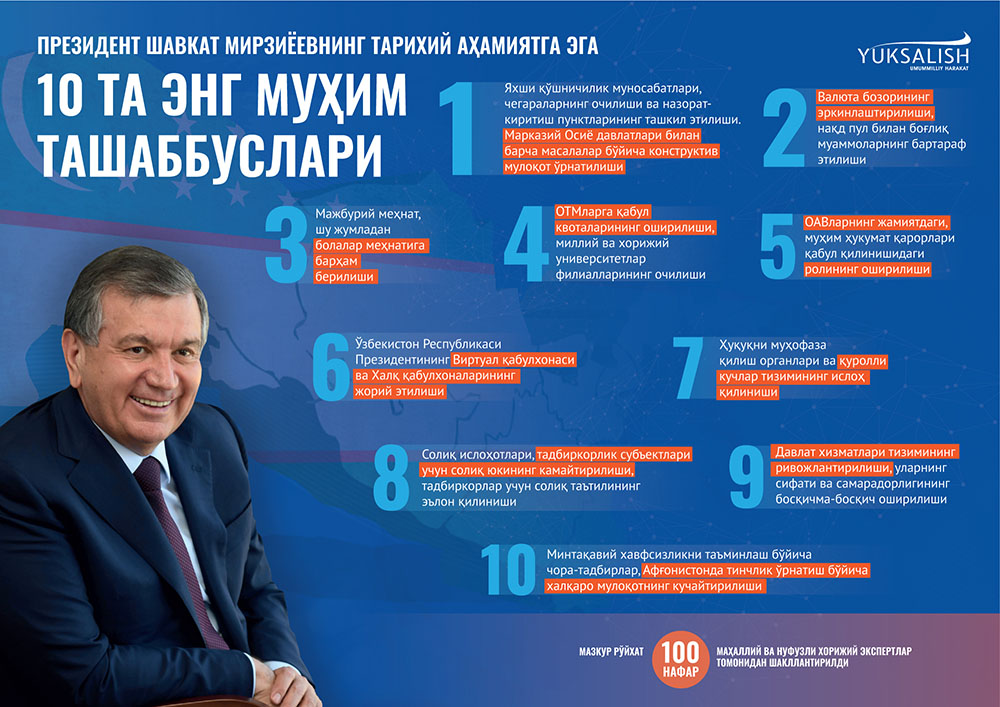
The sudden death of Islam Karimov and the rise of former Prime Minister Shavkat Mirziyoyev led to an unexpected thaw in 2016–2019. The new leadership showed greater openness toward society and reduced the intensity of repression. Religious restrictions were partially relaxed.
Economic reforms were more substantial than political ones. They included:
- currency liberalization and elimination of the gap between official and market exchange rates;
- significant trade liberalization and tariff reductions;
- removal of many import permits and simplified customs procedures;
- privatization in small and medium-sized business and services;
- increased independence of the Central Bank and development of market lending;
- abolition of forced cotton harvesting.
These reforms contributed to the emergence of a modern urban middle class.
Limits of Liberalization and the Risk of Stagnation

Mirziyoyev achieved a key objective: Uzbekistan shed the international isolation associated with the Karimov era and became an acceptable partner. In 2019 the U.S. State Department removed the country from its list of “Countries of Particular Concern” on religious freedom.
However, recent years have revealed the limits of liberalization. Parliamentary elections in 2020 were held without real opposition, and exiled parties were not allowed to return. At the same time, repression against critics—including bloggers—continues.
Events in 2022–2023 marked a clear authoritarian rollback:
- protests in Nukus against constitutional changes reducing Karakalpakstan’s autonomy were forcefully suppressed;
- constitutional amendments extended the presidential term to seven years and reset term limits, followed by early elections securing Mirziyoyev’s presidency until at least 2030.
The political framework thus remained fundamentally authoritarian despite partial reforms.
Uzbekistan in Foreign Policy
Under Karimov
Foreign policy combined cooperation and distancing. Uzbekistan supported security integration in the early 1990s but withdrew from the Collective Security Treaty Organization (CSTO) in 1999, rejoined in 2006 after the Andijan crisis, and left again in 2012. Despite fluctuations in relations with Moscow, Uzbekistan avoided permanent Russian military bases.
Under Mirziyoyev
Mirziyoyev has pursued a multi-vector policy and gradual distancing from Russia:
- openness to Chinese investment;
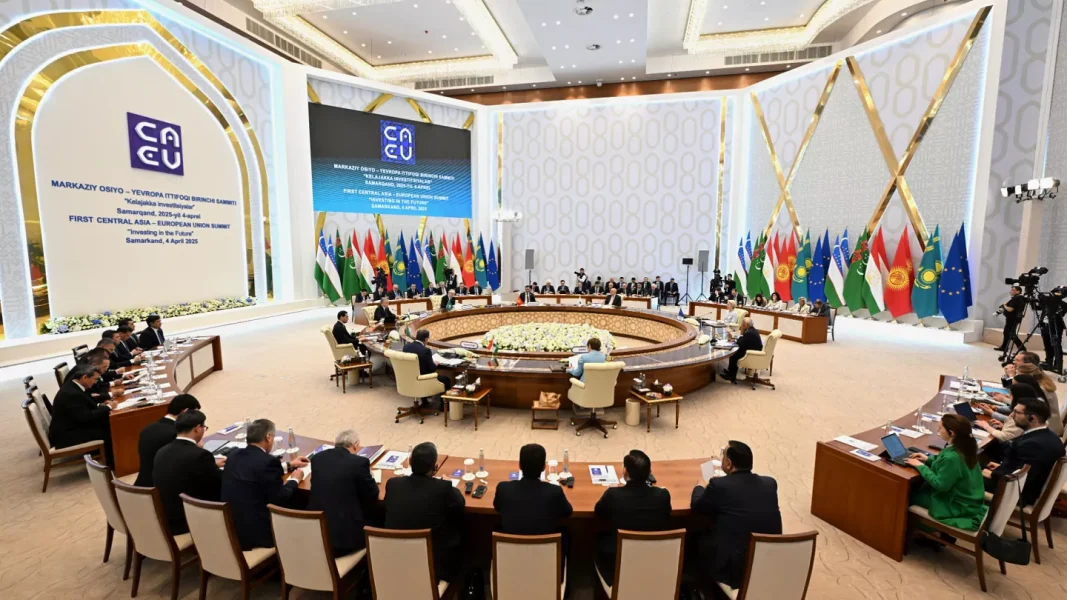
- improved relations with the West (including participation in regional meetings with the United States and the EU–Central Asia summit in Samarkand);
- cooperation with regional and Turkic organizations;
- a gradual transition to the Latin alphabet and stronger national cultural policy.
Conclusion

The importance of Uzbekistan for post-Soviet Central Asia (PSCA) cannot be overstated. In addition to being the most populous country in the region, it is also the one demonstrating the highest rates of economic growth. Following economic liberalization in the post-Karimov period, Uzbekistan has shown the following growth indicators:
- 2017 — ~4.5% (the year of reforms)
- 2018 — ~5.4%
- 2019 — ~5.8%
- 2020 — ~1.9% (pandemic year, but without economic contraction — a unique case in the post-Soviet space)
- 2021 — ~7.4%
- 2022 — ~5.7%
- 2023 — ~6.0%
- 2024 — ~6%
- forecast for 2025–2026 — approximately 5–6% annually.
Thus, in both economic and demographic terms, Uzbekistan can be described as a kind of “Central Asian tiger.”
The country also plays one of the central roles in the most strategically significant logistics and transit initiative in PSCA — the Trans-Caspian International Transport Route (TITR).
As long as Kazakhstan and Kyrgyzstan are able to maintain a degree of independence from Russia, Moscow will not be able to directly threaten Uzbekistan’s sovereignty, since the country has no direct border with Russia and lacks a large Russian-speaking population and its territorial enclaves.
Nevertheless, despite economic growth, the political stagnation into which Uzbekistan entered in the 2020s poses long-term risks for the country. As demonstrated by the experience of the Arab Spring, in the absence of dialogue between the state and society and of mechanisms through which citizens can influence government decisions, the apparent stability of authoritarian regimes can turn into sudden destabilization. Given Uzbekistan’s population size and its dense ethnic and territorial interconnections with neighboring states, such a scenario could destabilize the entire PSCA region.
In light of the above, while the Uzbek authorities still retain the initiative, it would be advisable for them to return to political liberalization and to pursue inclusive policies toward marginalized social groups, particularly the Karakalpak and Tajik communities and the religiously observant segment of the population.
